
A Controversial Shift in Policy
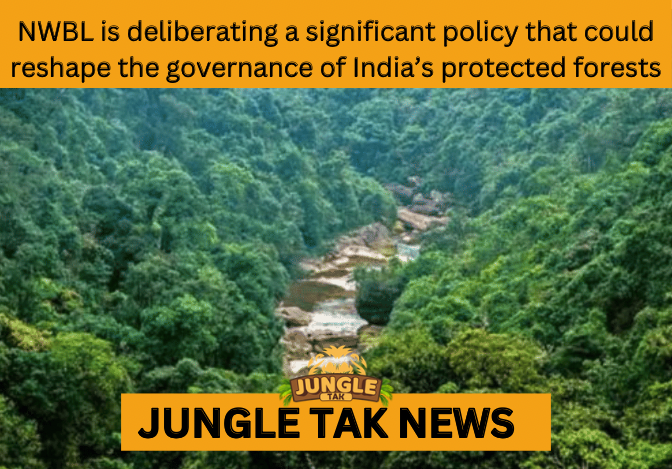
NEW DELHI: In a move that has sent shockwaves through the conservation community, the Standing Committee of the National Board for Wildlife (NBWL) is deliberating a significant policy change that could reshape the governance of India’s protected forests. According to documents from the committee’s recent meeting in December 2025, the central body is considering a proposal to delegate the authority for clearing oil, petroleum, and slurry pipeline projects to State Boards for Wildlife (SBWL). If approved, this shift would allow state-level authorities to sanction these high-risk infrastructure projects within the Right of Way (RoW) of existing roads cutting through national parks and wildlife sanctuaries, bypassing the rigorous central scrutiny previously mandated for such interventions in protected forests.
The Argument for Streamlining
The rationale behind this proposal, as outlined in the agenda of the NBWL’s 87th Standing Committee meeting, rests on the principle of administrative consistency and “ease of doing business.” Currently, under the Van (Sanrakshan Evam Samvardhan) Rules, 2023, state boards already possess the power to approve underground utilities such as drinking water pipelines, optical fiber cables, and electricity lines up to 11 kilovolts within protected forests. The environment ministry argues that extending this delegation to oil and slurry pipelines would harmonize the regulatory framework, removing “bottlenecks” and speeding up critical energy infrastructure development. However, critics argue that equating benign water pipes with hazardous oil conduits is a dangerous oversimplification of the risks posed to protected forests.
False Equivalence: Water vs. Oil
Environmentalists and legal experts have sharply criticized the logic of treating crude oil pipelines the same as telephone cables or water pipes. A leak in a drinking water pipeline might cause minor erosion, but an oil spill within the delicate ecosystem of protected forests can be catastrophic. Crude oil contains toxic compounds that can contaminate soil and water sources for decades, poisoning the flora and fauna that the legal status of “protected area” is meant to shield. By decentralizing the clearance process, the NBWL risks handing over complex ecological decisions to state bodies that may lack the scientific expertise or the political will to resist industrial pressure, thereby endangering the integrity of protected forests.
The Risk of State-Level Pressures
One of the primary concerns regarding this delegation of power is the susceptibility of state boards to local political and economic exigencies. Central oversight by the NBWL has historically served as a check against parochial interests, ensuring that the national imperative of conservation is not sacrificed for short-term state revenue. History has shown that state wildlife boards are often chaired by Chief Ministers who may prioritize industrial investments over ecological security. Devolving the power to clear oil projects could open the floodgates for hasty approvals, leading to a fragmented landscape where the sanctity of protected forests is gradually eroded by a web of pipelines and the maintenance traffic they necessitate.
Fragmenting the Wild
The construction and maintenance of pipelines require more than just a tube in the ground; they necessitate regular human access, machinery, and often the widening of existing paths. This increased human footprint is a known driver of habitat fragmentation. In protected forests, where isolation is key to the survival of sensitive species like tigers and elephants, such disturbances can be fatal. The noise, pollution, and potential for accidents associated with oil infrastructure introduce a permanent stressor into these habitats. Conservationists fear that by easing the legal path for these projects, the government is effectively prioritizing industrial connectivity over the ecological connectivity essential for the health of protected forests.
Bypassing Expert Scrutiny
The NBWL’s Standing Committee includes independent experts whose role is to evaluate the environmental impact of proposed projects objectively. By shifting the decision-making authority to the state level for these pipelines, the proposal effectively bypasses this layer of expert scrutiny. State boards often lack the specialized ecologists and scientists needed to assess the long-term impacts of a crude oil spill or the disruption caused by pipeline slurry. This removal of high-level scientific oversight raises serious questions about the government’s commitment to scientifically informed management of protected forests.
A Pattern of Dilution
This proposal is not an isolated incident but appears to be part of a broader trend of diluting environmental safeguards in India. Recent years have seen amendments to the Forest Conservation Act and the Wildlife Protection Act that have generally eased the diversion of forest land for non-forestry purposes. The push to allow oil pipelines in protected forests without central clearance aligns with this pattern, suggesting a systematic shift where economic utility is increasingly valued over ecological preservation. It signals a move away from the precautionary principle, which dictates that when the risks to protected forests are high and uncertain, caution should be the default policy.
The Legal and Ethical Dimension
Legally, the Supreme Court of India has often intervened to protect the country’s wildlife heritage, emphasizing that protected forests are a public trust. Delegating crucial clearance powers for hazardous projects might invite legal challenges, as it could be seen as an abdication of the NBWL’s statutory duty to protect wildlife. Ethically, it raises the question of stewardship: do we have the right to expose our most vulnerable wildlife to the risk of industrial disasters? The silence of the forests cannot be interpreted as consent. Every policy that weakens the shield around protected forests is a step away from our constitutional duty to protect the natural environment.
CONTINUE READING WITH JUNGLETAK – MAINPAT’S SILENT STRUGGLE
The Need for Central Vigilance
As the proposal moves through the bureaucratic machinery, the fate of many sensitive ecosystems hangs in the balance. While infrastructure development is necessary, it cannot come at the cost of the country’s ecological security. The unique dangers posed by oil and slurry pipelines demand the highest level of scrutiny, not a diluted, decentralized process. To safeguard the future of India’s wildlife, the NBWL must reconsider this proposal and recognize that protected forests are not merely vacant lots for industrial plumbing, but complex, irreplaceable sanctuaries that once destroyed, cannot be rebuilt by any administrative order.