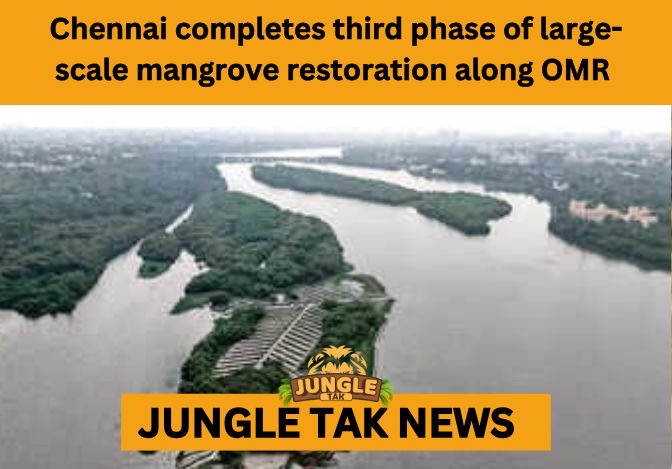

The landscape of Chennai’s IT corridor is undergoing a profound ecological transformation as the city successfully concludes the third phase of the Chennai mangrove restoration project. Spanning across the tidal mudflats and backwaters adjacent to Old Mahabalipuram Road (OMR), this initiative marks a significant step toward reclaiming lost wetlands. Environmentalists and state authorities have hailed the progress, noting that the Chennai mangrove restoration is currently one of the largest urban afforestation efforts in Southern India.
Restoring the Lungs of the IT Corridor
The completion of this third phase focuses specifically on the sensitive ecosystem near the Muttukadu backwaters, a region that had previously suffered from heavy siltation and waste dumping. By clearing these obstructions, the Chennai mangrove restoration team has created an ideal environment for native halophyte species to thrive. This strategic intervention ensures that the Chennai mangrove restoration effort is not just about planting trees, but about reviving the hydrological balance of the entire coastal stretch.
Technological and Biological Precision
Unlike traditional plantation drives, the Chennai mangrove restoration uses advanced GIS mapping to identify the precise elevations required for different mangrove species. During this third phase, thousands of Avicennia marina and Rhizophora mucronata saplings were carefully integrated into the intertidal zones. The success of the Chennai mangrove restoration relies heavily on this scientific approach, ensuring that the young plants can survive the fluctuating salinity levels of the OMR backwaters.
A Natural Shield Against Urban Flooding
One of the primary drivers behind the Chennai mangrove restoration is the urgent need for flood mitigation in the rapidly developing southern suburbs. Mangroves act as a natural sponge, absorbing excess rainwater and reducing the velocity of storm surges during the monsoon season. By investing in the Chennai mangrove restoration, the city is building a bio-shield that protects the multi-million dollar infrastructure along OMR from the increasing threats of sea-level rise and cyclonic activities.
Boosting Local Biodiversity and Marine Life
Beyond coastal protection, the Chennai mangrove restoration is already showing positive signs of biological recovery in the region. Local birdwatchers and researchers have reported an increase in migratory bird sightings and a resurgence of juvenile fish populations within the newly planted clusters. This return of wildlife is a testament to the fact that the Chennai mangrove restoration is effectively rebuilding a food chain that had been broken by decades of urban encroachment and pollution.
Community Involvement and Economic Impact
The sustainability of the Chennai mangrove restoration is deeply tied to the involvement of local fishing communities who act as the primary guardians of these wetlands. By providing employment opportunities in nurseries and plantation maintenance, the restoration project has created a sense of ownership among the residents of nearby hamlets. These stakeholders recognize that a healthy Chennai mangrove restoration site translates to better fish yields and a more stable environment for their families.
Carbon Sequestration and Climate Goals
In the global fight against rising CO2 levels, the Chennai mangrove restoration serves as a vital carbon sink for the metropolitan area. Mangroves are known to sequester up to four times more carbon than terrestrial forests, making this project a cornerstone of Tamil Nadu’s climate action plan. Every hectare added through the Chennai mangrove restoration helps offset the carbon footprint of the bustling OMR traffic and the surrounding industrial zones, contributing to a cooler and cleaner microclimate.
Challenges Overcome During Phase Three
Completing the third phase was not without its hurdles, as the mangrove restoration team had to navigate issues like plastic pollution and illegal sewage discharge. To ensure the survival of the saplings, specialized barriers were constructed to prevent debris from choking the young roots during high tide. The resilience shown by the Chennai mangrove restoration workers in cleaning these zones has been crucial in maintaining the health of the estuarine ecosystem throughout the planting season.
Future Outlook: Heading Toward Phase Four
As the city celebrates the success of the current stage, plans are already being drafted for the fourth phase of the mangrove restoration which will extend further toward the Kovalam creek. Authorities intend to incorporate more community-led eco-tourism initiatives that will allow citizens to witness the beauty of the mangrove restoration firsthand. This long-term vision ensures that the Chennai mangrove restoration remains a priority for the government, balancing urban development with ecological sanity.
CONTINUE READING WITH JUNGLETAK – SENGOTTAI ROAD PROJECT
A Model for Coastal Cities
The successful completion of the third phase along OMR sets a benchmark for how modern cities can coexist with nature through a dedicated mangrove restoration strategy. It proves that with scientific planning and public support, degraded wetlands can be turned into thriving green corridors once again. As we look toward a future defined by climate uncertainty, the Chennai mangrove restoration stands as a beacon of hope and a practical solution for a more resilient and sustainable urban coastline.