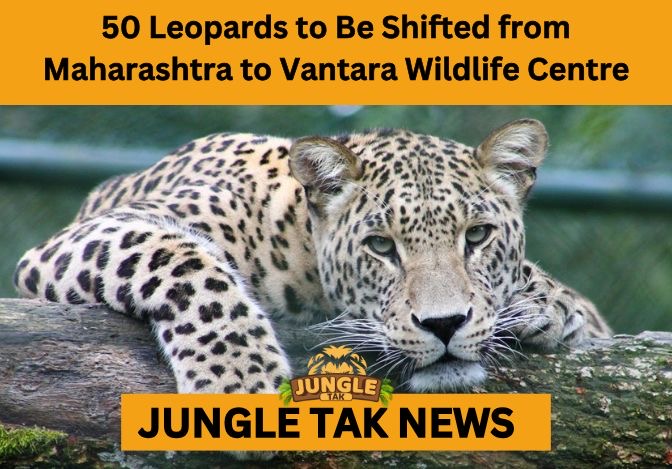

In a landmark decision aimed at mitigating the rising human-wildlife conflict in Maharashtra, the state forest department has officially approved the relocation of 50 leopards to the Vantara Wildlife Centre in Jamnagar, Gujarat. This ambitious project marks one of the largest inter-state transfers of big cats in recent Indian history. The Vantara Wildlife Centre, an initiative spearheaded by Reliance Industries and Anant Ambani, is set to provide a permanent, high-tech sanctuary for these animals, many of whom have spent years in cramped rescue facilities across Maharashtra.
Addressing the Leopard Crisis in Maharashtra
The decision comes at a critical time when Maharashtra is grappling with a surplus of rescued leopards in its primary care centers. Due to extreme population density in regions like Junnar, Nashik, and Akola, leopards frequently wander into sugarcane fields and human settlements, leading to dangerous and often fatal encounters. By shifting 50 of these captive cats to the Vantara Wildlife Centre, the Maharashtra Forest Department hopes to decongest its local facilities and provide a more naturalistic environment for the animals. The Vantara Wildlife Centre has quickly emerged as a key global player in handling such large-scale wildlife management and rehabilitation challenges.
World-Class Infrastructure for Big Cats
What sets the Vantara Wildlife Centre apart from traditional zoos is its world-class infrastructure designed specifically for the long-term care of rescued wildlife. Spread over thousands of acres within the Jamnagar refinery complex, the facility offers massive enclosures that meticulously mimic the natural scrub and deciduous forests of India. Leopards arriving at the Vantara Wildlife Centre will have access to advanced medical diagnostic tools, including specialized MRI machines, CT scans, and dedicated surgical suites, ensuring they receive the highest standard of veterinary care available in the country.
Logistics and Safety During Transit
Transporting 50 big cats across state lines is a Herculean logistical challenge that requires specialized expertise and extreme caution. The Maharashtra Forest Department has ensured that the leopards will be moved in phases, with each animal undergoing a rigorous health screening before being dispatched to the Vantara Wildlife Centre. Dedicated veterinary teams and wildlife biologists will accompany the convoys in climate-controlled vehicles to monitor the stress levels and physical well-being of the leopards during the long journey to the Vantara Wildlife Centre, ensuring their safety remains the absolute priority.
Formal Agreements and Government Oversight
State officials have clarified that this relocation to the Vantara Wildlife Centre is part of a broader, well-regulated strategy to improve animal welfare standards. Instead of keeping “problem” leopards in small cages with little room for movement, the government opted for a collaborative approach with the Jamnagar facility. The Memorandum of Understanding (MOU) signed between the state and the Vantara Wildlife Centre emphasizes that while the daily upkeep and specialized care are handled by the private facility, the oversight and regulatory compliance remain under the purview of the Central Zoo Authority and the respective forest departments.
Expert Perspectives on the Relocation
Wildlife experts have voiced a mix of cautious optimism regarding the transfer of these animals to the Vantara Wildlife Centre. While some conservationists emphasize the long-term importance of habitat restoration and corridor protection in Maharashtra, most agree that for leopards that cannot be released back into the wild, the Vantara Wildlife Centre offers a far superior quality of life. The massive financial and technical resources available at the Vantara Wildlife Centre allow for a level of individualized dietary and medical attention that state-run rescue centers often struggle to provide due to budgetary constraints.
Private-Public Partnerships in Conservation
This move is also seen as a significant testament to the growing role of private-public partnerships in India’s wildlife conservation landscape through the Vantara Wildlife Centre. As natural habitats shrink and human-animal conflict zones expand, the need for safe, well-funded havens for displaced animals becomes increasingly critical. The Vantara Wildlife Centre serves as a modern blueprint for how corporate social responsibility and large-scale private investments can effectively support government initiatives to protect and rehabilitate India’s most iconic predator species.
CONTINUE READING WITH JUNGLETAK – MALE TIGER SHILEDAR
The Future of the Maharashtra 50
As the first batch of leopards prepares for the journey to Gujarat, all eyes are on Jamnagar to see how these majestic cats adapt to their new surroundings. The success of this massive relocation to the Vantara Wildlife Centre could pave the way for similar future collaborations involving other distressed species, such as elephants or tigers. Ultimately, the goal is to ensure that these 50 leopards find peace, health, and security within the expansive and lush confines of the Vantara Wildlife Centre, safely removed from the perils of human-animal conflict and the limitations of overcrowded rescue pens.