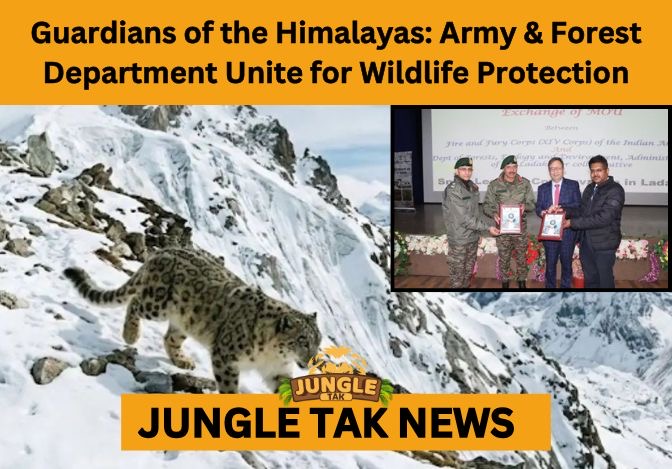

Formation of the Army and Forest Department Collab
High in the jagged, snow-dusted peaks of the Eastern Himalayas, a unique partnership is reshaping the future of conservation. The rugged terrain of states like Arunachal Pradesh and Sikkim has long been a challenge for environmental monitoring, but the recent formalization of the Army and Forest Department collaboration is changing the narrative. By combining the logistical might of the Indian Army with the ecological expertise of foresters, a new frontline has been established to protect some of the world’s most elusive species from the dual threats of poaching and habitat loss.
The necessity of this Army and Forest Department collaboration stems from the extreme geography of the border regions. Forest officials often lack the high-altitude gear, specialized transport, and vast manpower required to patrol the “Line of Actual Control” where many rare animals reside. Conversely, the Army maintains a constant presence in these remote sectors. By working together, the two entities ensure that national security and ecological security go hand-in-hand, proving that defending the borders also means defending the natural heritage of the land.
One of the primary focuses of this Army and Forest Department collaboration is the protection of the “Ghost of the Mountains”—the Snow Leopard. These apex predators roam across vast, international boundaries, making them vulnerable to illegal wildlife trade. Soldiers stationed at high-altitude observation posts now act as the “eyes and ears” for the Forest Department, reporting sightings and suspicious human activity in areas that were previously unmonitored. This real-time data sharing has become a cornerstone of modern Himalayan wildlife management.
In addition to anti-poaching efforts, the Army and Forest Department collaboration is playing a vital role in data collection and scientific research. In many “Red Zones” where civilian researchers face restricted access due to security concerns, Army personnel are being trained to set up and maintain camera traps. These motion-sensor cameras have recently captured historic footage of rare species like the Red Panda and the Himalayan Black Bear, providing the Forest Department with invaluable insights into the population health and migratory patterns of these animals.
The impact of the Army and Forest Department collaboration also extends to the mitigation of infrastructure-related ecological damage. As the military constructs essential strategic roads and outposts in the border regions, forest officers are now consulted to ensure that these projects minimize their footprint on sensitive habitats. This integrated planning helps prevent the fragmentation of wildlife corridors, ensuring that the march of development does not cut off the vital paths used by herds of blue sheep and musk deer.
Furthermore, the Army and Forest Department collaboration has introduced specialized environmental sensitization programs for soldiers. Workshops are being conducted at various military stations to educate “Jawans” (soldiers) about the Wildlife Protection Act and the identification of endangered flora and fauna. By transforming soldiers into “Green Warriors,” the initiative ensures that the thousands of personnel living in high-altitude camps become active participants in conservation rather than passive bystanders in the wilderness.
Technological integration is another highlight of the Army and Forest Department collaboration. The military’s use of advanced drones and satellite imagery for border surveillance is now being leveraged to detect forest fires and illegal logging operations in deep valleys. This dual-use technology allows for a rapid response to environmental emergencies that would otherwise go unnoticed for days, effectively creating a high-tech safety net over the fragile Himalayan ecosystem.
Beyond the logistical benefits, the Army and Forest Department collaboration is fostering a deeper connection with the local indigenous communities. Many high-altitude tribes have historically been wary of government intervention, but the joint outreach programs conducted by the Army and foresters have helped build trust. These programs focus on sustainable livelihoods and wildlife education, encouraging local villagers to move away from hunting and toward becoming community-based conservation guides.
As climate change accelerates the melting of glaciers and shifts the timberline higher, the Army and Forest Department collaboration will become even more critical. The shifting habitats mean that animals are moving into new territories, often bringing them closer to military installations and human settlements. A coordinated response is the only way to manage these changes without leading to increased conflict, ensuring that both human occupants and wild residents can adapt to a changing environment.
CONTINUE READING WITH JUNGLETAK – PM AWAS HOUSES
Ultimately, the “Guardians of the Himalayas” initiative serves as a global model for how military and civil agencies can unite for the greater good. The Army and Forest Department collaboration proves that conservation is not just the responsibility of a single department, but a collective national duty. As this partnership grows, it ensures that the majestic peaks of the Himalayas remain a safe sanctuary for wildlife, protected by the very men and women who stand guard over the nation’s sovereignty.