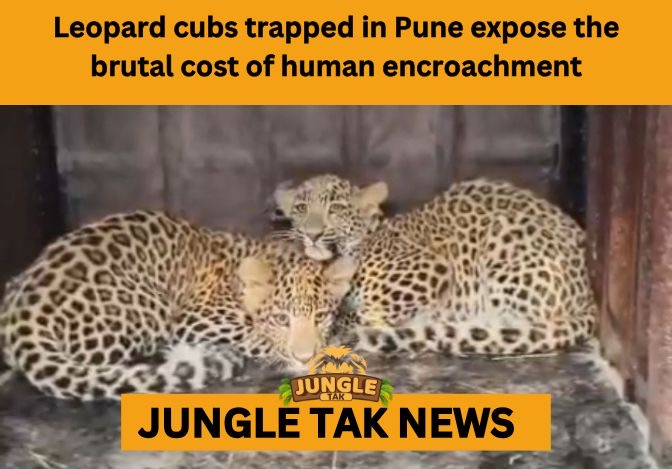

The rapid expansion of urban boundaries in Maharashtra has reached a tipping point, as evidenced by a heart-wrenching incident in the district’s rural belt. The discovery of young predators trapped amidst human settlements has sparked a national conversation about the Pune leopard cub crisis. This event serves as a stark reminder that as concrete jungles expand and agricultural lands push deeper into traditional forest corridors, the natural world is being squeezed into increasingly dangerous corners.
The incident began when local farmers in the Junnar and Ambegaon regions, areas now synonymous with the Pune leopard cub crisis, discovered two tiny cubs huddled in a sugarcane field. These fields, which offer a mimicry of the tall grasses of their natural habitat, have become unintended nurseries for female leopards. However, during the harvest season, these hiding spots become death traps, exposing the vulnerable young to heavy machinery and panicked human crowds.
The Sugarcane Trap: A New Breeding Ground
In recent years, the landscape of Pune has shifted from scrub forests to intensive sugarcane cultivation. This ecological shift is a primary driver of the Pune leopard cub crisis, as the big cats have adapted to living in these man-made “forests.” While the leopards have learned to navigate the fields to hunt smaller prey, the lack of actual forest cover means they are living in a state of constant, high-stress proximity to human activity.
When the harvest begins, the protective canopy of the sugarcane is stripped away in hours. This sudden exposure is the catalyst for the Pune leopard cub crisis, leaving mothers separated from their offspring. In the most recent case, the cubs were found shivering and dehydrated, having been left behind as their mother fled the noise of tractors and laborers. This separation often leads to permanent abandonment if intervention is not swift and scientific.
The Brutal Cost of Human Encroachment
Human encroachment is not merely about building houses; it is about the fragmentation of ancient migratory paths. The Pune leopard cub crisis highlights the “brutal cost” mentioned by conservationists—a cost paid in the lives of animals and the safety of rural residents. As highways and residential complexes bisect the leopard’s territory, the animals are forced into “stepping-stone” habitats that bring them into direct conflict with livestock and domestic pets.
Wildlife experts argue that the Pune leopard cub crisis is a symptom of a larger systemic failure in urban planning. When we fail to provide adequate buffer zones between forests and farms, we essentially invite large carnivores into our backyards. The resulting fear often leads to retaliatory killings or the permanent removal of these animals from the wild, further depleting the genetic diversity of the local leopard population.
Efforts in Rescue and Reunification
Despite the grim circumstances, the response from the Maharashtra Forest Department has been a beacon of hope during the Pune leopard cub crisis. Recognizing that the best outcome for a cub is to be with its mother, officials have perfected the “reunification” protocol. In this latest instance, the cubs were placed in a secure plastic crate near the spot they were found, monitored by high-tech trap cameras to ensure the mother could reclaim them under the cover of darkness.
These reunification efforts are a critical part of managing the Pune leopard cub crisis, as they prevent the animals from ending up in lifetime captivity. However, the success of these operations depends heavily on the cooperation of the local community. Farmers are increasingly being trained to stop work and alert authorities the moment a cub is spotted, rather than taking matters into their own hands, which significantly improves the survival rate of the cubs.
Building a Future of Coexistence
The long-term solution to the Pune leopard cub crisis requires more than just reactive rescues; it demands a fundamental shift in how we share the landscape. Implementing better lighting in villages, securing livestock in leopard-proof sheds, and establishing dedicated wildlife corridors are essential steps. Without these measures, the cycle of trapping and conflict will only intensify as the city continues its relentless outward march.
CONTINUE READING WITH JUNGLETAK – THE STALLED ASIATIC LION TRANSLOCATION PROJECT
As the two rescued cubs were eventually reunited with their mother and disappeared back into the shadows, the immediate danger passed, but the underlying issue remains. The Pune leopard cub crisis is a call to action for policymakers to prioritize ecological balance alongside economic growth. Only through a conscious effort to respect the boundaries of the natural world can we hope to end the brutal cost of encroachment and ensure a future where both humans and leopards can thrive in the heart of Maharashtra.