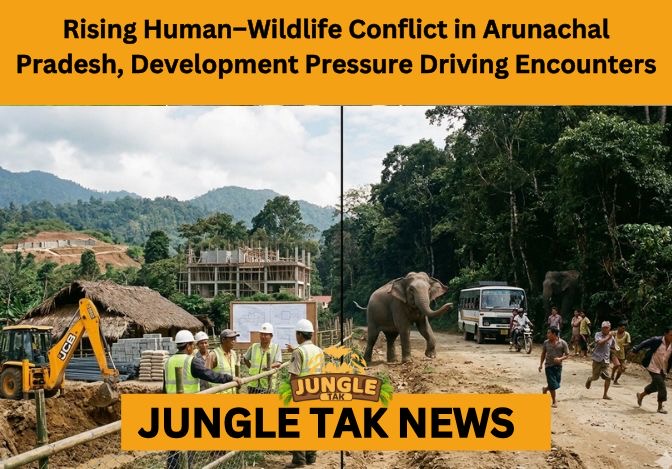

Intensity of human-wildlife conflict in Arunachal Pradesh
The mist-covered mountains of India’s northeastern frontier are currently the site of a growing ecological crisis. In recent years, the frequency and intensity of human-wildlife conflict in Arunachal Pradesh have reached unprecedented levels, creating a state of emergency for both conservationists and local villagers. While the region was once celebrated for its deep-rooted cultural harmony with nature, the rapid modernization of the “Land of the Rising Sun” is fundamentally altering the relationship between the people and the predators that roam the Eastern Himalayas.
For decades, the dense forest canopy of the state served as a natural barrier, but that barrier is rapidly dissolving. The primary catalyst for the rising human-wildlife conflict in Arunachal Pradesh is the relentless push for infrastructure development. Ambitious projects, such as the Trans-Arunachal Highway and various high-capacity hydropower dams, are carving through ancient migration routes. As these massive construction projects bisect the landscape, wild animals—particularly elephants and leopards—are finding their traditional territories smaller and more fragmented than ever before.
This geographical squeeze has led to a dramatic spike in property damage and loss of life. In districts like Namsai, Lohit, and Lower Dibang Valley, the human-wildlife conflict in Arunachal Pradesh is most visible in the flattened paddy fields and destroyed granaries left behind by wandering elephant herds. Farmers, who rely almost entirely on seasonal harvests, are finding themselves on the front lines of a battle they are ill-equipped to fight. When the forest can no longer provide sufficient fodder due to land clearing, animals naturally gravitate toward the high-calorie crops grown by human settlers.
Beyond the visible destruction of crops, there is a rising psychological toll on the indigenous communities. The daily threat of human-wildlife conflict in Arunachal Pradesh has forced many villages to adopt nocturnal vigils, with men guarding their homes with torches and firecrackers. However, these makeshift deterrents are often insufficient against a hungry three-ton elephant or a stealthy Himalayan black bear. The fear of an attack has changed the social fabric of rural life, restricting movement after dark and creating a climate of constant anxiety.
Environmentalists point out that the push for monoculture plantations, specifically oil palm cultivation, is further exacerbating the human-wildlife conflict in Arunachal Pradesh. Large swathes of diverse, secondary forests are being cleared to make way for commercial agriculture. This loss of biodiversity means that herbivores lose their natural food sources, while predators lose their cover. Without a diverse ecosystem to support them, wildlife species are forced to scavenge in human-dominated landscapes, leading to inevitable and often fatal encounters.
The impact on the state’s rare wildlife is equally devastating. As human-wildlife conflict in Arunachal Pradesh intensifies, the incidence of retaliatory killings has climbed. Villagers, desperate to protect their families and livelihoods, sometimes resort to poisoning or using high-voltage electric fences to ward off intruders. These desperate measures have resulted in the deaths of several endangered species, including tigers and elephants, threatening the long-term survival of some of India’s most iconic biodiversity.
To address this crisis, the state government and various NGOs are looking toward technology and better urban planning. Mitigating the human-wildlife conflict in Arunachal Pradesh requires the immediate implementation of “eco-sensitive zones” and the construction of wildlife underpasses beneath new highways. Early warning systems, which use sensors and mobile alerts to notify villagers of animal movements, are also being trialed in high-risk zones. However, these technological fixes are only temporary bandages if the underlying issue of habitat loss is not addressed.
Furthermore, policy experts argue that the compensation process for victims of human-wildlife conflict in Arunachal Pradesh must be streamlined. Currently, many farmers face a bureaucratic nightmare when trying to claim damages for lost crops or livestock. By providing swift and fair financial relief, the government can reduce the animosity that villagers feel toward wild animals, thereby discouraging retaliatory violence and fostering a sense of shared responsibility for the environment.
The future of the Eastern Himalayas depends on finding a middle ground between economic aspirations and ecological preservation. As long as development projects ignore the biological needs of the forest’s inhabitants, the human-wildlife conflict in Arunachal Pradesh will continue to escalate. It is no longer a question of “if” more encounters will happen, but “how” the state will manage the inevitable friction of a growing human footprint in a wild land.
CONTINUE READING WITH JUNGLETAK – HUMAN-ELEPHANT CONFLICT IN CHIKKAMAGALURU
Ultimately, the goal must be a return to the coexistence that defined the region for centuries. Solving the human-wildlife conflict in Arunachal Pradesh is not just about saving animals or protecting property; it is about ensuring that the state’s progress does not come at the cost of its soul. Only through integrated land-use planning and a deep respect for natural corridors can Arunachal Pradesh remain a sanctuary for both its people and its magnificent wildlife.