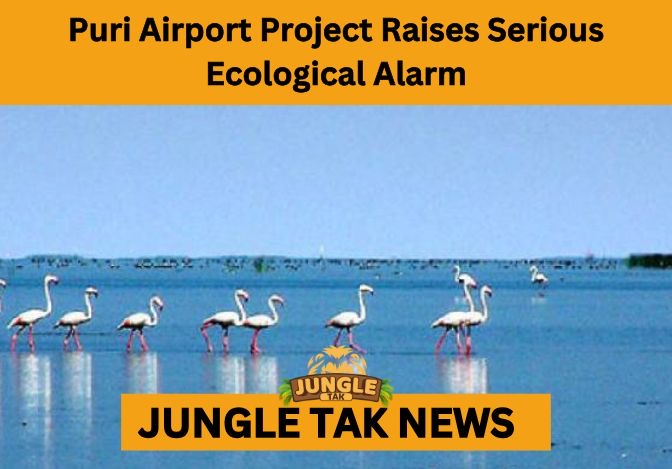

Critical Facet of the Puri airport ecological impact
The spiritual capital of Odisha, Puri, is on the verge of a massive infrastructural transformation with the proposed Sri Jagannath International Airport. While the project promises to put the holy city on the global aviation map and bolster tourism, it has simultaneously ignited a fierce debate regarding the Puri airport ecological impact. As the state government pushes for rapid industrialization, environmentalists are raising red flags about the potential irreversible damage to the region’s fragile coastal ecosystem. The tension highlights a classic dilemma: how to facilitate modern transit without sacrificing the natural safeguards that protect the coastline.
One of the primary concerns cited by experts is the site’s proximity to the Balukhand-Konark Wildlife Sanctuary. Critics argue that the Puri airport ecological impact could be catastrophic for the sanctuary’s resident population of blackbucks and spotted deer. The noise pollution from frequent take-offs and landings, coupled with the light pollution from a 24/7 international terminal, threatens to disrupt the migratory patterns and breeding cycles of these sensitive species. For a region that prides itself on its biological diversity, the encroachment of a massive concrete runway represents a significant shift in land-use priorities.
The project requires the diversion of nearly 200 acres of forest land, which currently serves as a vital natural shield against the Bay of Bengal’s frequent cyclones. The Puri airport ecological impact involves the felling of thousands of casuarina and cashew trees that act as windbreaks and prevent soil erosion. Without these green belts, the surrounding villages and the city of Puri itself could become more vulnerable to the high-velocity winds and storm surges that characterize the region’s monsoon seasons. Environmental activists argue that removing these trees is akin to dismantling the city’s first line of defense against climate change.
Water security is another critical facet of the Puri airport ecological impact that often goes overlooked in developmental blueprints. The proposed site sits atop significant freshwater aquifers that provide water to the local communities and sustain the nearby flora. The construction of a sprawling airport complex involves extensive paving, which prevents rainwater harvesting and risks contaminating the groundwater with aviation fuel and chemical runoff. Residents fear that the long-term Puri airport ecological impact will manifest as a localized water crisis, affecting both agriculture and daily consumption.
The coastal location also places the project in direct conflict with Coastal Regulation Zone (CRZ) norms designed to protect marine life. Specifically, the Puri airport ecological impact on the nesting grounds of the endangered Olive Ridley turtles is a major point of contention. These turtles frequent the nearby beaches to lay eggs, and any change in the coastal topography or artificial lighting from the airport could disorient the hatchlings. Conservationists are demanding a more rigorous environmental impact assessment (EIA) to ensure that the “Blue Flag” status of Puri’s beaches isn’t compromised by industrial runoff.
Beyond the biological sphere, the Puri airport ecological impact extends to the social ecology of the local fishing and farming communities. Hundreds of families who rely on the land and sea for their livelihood face displacement or the loss of their traditional workspace. While the government promises compensation and job creation, the loss of an ancestral relationship with the land is an intangible yet significant part of the Puri airport ecological impact. Protesters have voiced their concerns during public hearings, emphasizing that “development” should not come at the cost of their primary ecological resources.
In response to the growing outcry, proponents of the project suggest that modern “green airport” technologies can mitigate many of these issues. They argue that the Puri airport ecological impact can be minimized through solar power integration, zero-waste management systems, and compensatory afforestation programs. However, skeptics remain unconvinced, noting that a newly planted sapling cannot replace the ecological services of a mature forest for decades. The debate over the Puri airport ecological impact serves as a litmus test for the state’s commitment to sustainable development goals.
CONTINUE READING WITH JUNGLETAK – SPITI RED FOX PLASTIC CRISIS
As the Ministry of Environment, Forest and Climate Change (MoEFCC) reviews the project’s clearances, the future of Puri’s coastline remains in the balance. The Puri airport ecological impact is not just a local issue but a national example of the friction between economic ambition and environmental stewardship. If the project proceeds, it will require unprecedented levels of transparency and ecological oversight to ensure that the roar of jet engines does not drown out the sounds of the sea. Ultimately, the success of the airport will be measured not just by passenger footfall, but by the health of the ecosystem it leaves behind.