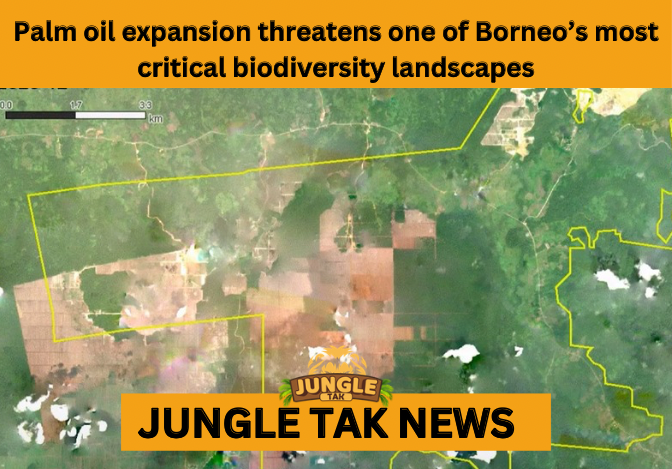

The lush landscapes of Southeast Asia are facing an unprecedented ecological crisis as palm oil expansion in Borneo continues to fragment some of the world’s most vital ecosystems. Borneo, the third-largest island in the world, is home to a staggering array of flora and fauna, many of which are found nowhere else on Earth. However, the relentless demand for vegetable oil in global supply chains has led to the clearing of massive swathes of primary forest. This industrial growth is not just a local issue but a global environmental concern that threatens the very stability of our planet’s climate.
A Biodiversity Hotspot Under Siege
For decades, the dense jungles of the Kinabatangan River and the “Heart of Borneo” have served as a sanctuary for rare species. Unfortunately, the recent acceleration of palm oil expansion in Borneo has significantly encroached upon these protected areas. As pristine forests are replaced by monoculture plantations, the natural corridors that animals use for migration and foraging are being severed. This loss of connectivity makes it increasingly difficult for wildlife populations to maintain genetic diversity and find adequate food sources.
Conservationists warn that the current rate of palm oil expansion in Borneo is unsustainable for the island’s unique ecosystem. When tropical forests are cleared, the complex web of life that supports thousands of insect, bird, and plant species is dismantled. This degradation doesn’t just affect the animals; it also impacts the indigenous communities who have relied on the forest’s natural resources for generations. The transformation of diverse jungles into uniform rows of oil palms is a visual and biological tragedy.
The Plight of the Orangutan and Pygmy Elephant
Among the most visible victims of palm oil expansion in Borneo are the Critically Endangered Bornean orangutans. These “gardeners of the forest” rely on a continuous canopy for survival, but as their homes are bulldozed, they are often left stranded in isolated patches of trees. Without the ability to roam freely, these primates face increased risks of starvation and conflict with humans. Reports of orangutans wandering into plantations in search of food have become alarmingly common as their natural habitat vanishes.
Similarly, the Bornean pygmy elephant is facing a dire future due to palm oil expansion in Borneo. These smaller, more docile elephants require large territories to roam, but their traditional pathways are now blocked by fences and trenches designed to protect palm crops. This leads to dangerous human-wildlife encounters, often resulting in casualties on both sides. The narrowing of their habitat not only stresses the herds but also disrupts the ecological balance that these “mega-herbivores” help maintain through seed dispersal.
Carbon Sinks and Climate Implications
The environmental impact of palm oil expansion in Borneo extends far beyond the loss of charismatic wildlife. The island’s peatlands are among the world’s most efficient carbon sinks, storing billions of tons of carbon underground. When these peatlands are drained and cleared for plantations, they release massive amounts of carbon dioxide into the atmosphere, contributing significantly to global warming. The recurring forest fires in the region, often started to clear land cheaply, further exacerbate this carbon release and create a toxic haze that affects air quality across Southeast Asia.
Halting the palm oil expansion in Borneo into high-carbon stock forests is essential for meeting international climate goals. Scientists have pointed out that the destruction of these forests creates a “carbon debt” that takes centuries to repay. While the industry provides a cheap ingredient for everything from chocolate to shampoo, the long-term environmental cost of releasing sequestered carbon is a price that future generations will have to pay.
Seeking Sustainable Alternatives and Policy Reform
In response to the growing outcry, there has been a push for more stringent regulations to curb palm oil expansion in Borneo. The Roundtable on Sustainable Palm Oil (RSPO) was established to create a “no deforestation” standard, but critics argue that enforcement remains a challenge. Many environmental groups are now calling for a total moratorium on new plantation permits in critical biodiversity areas. They advocate for a model where production is increased through better yields on existing land rather than clearing new territory.
Consumer pressure is also playing a pivotal role in slowing the palm oil expansion in Borneo. As shoppers become more aware of the link between their purchases and deforestation, many are demanding “deforestation-free” products. This shift in market demand is forcing major global brands to scrutinize their supply chains more closely. However, without strong government intervention and trans-boundary cooperation between Malaysia, Indonesia, and Brunei, the economic lure of new plantations remains a persistent threat.
A Critical Turning Point
The future of one of the planet’s most important biological landscapes hangs in the balance as palm oil expansion in Borneo reaches a critical threshold. While the industry provides significant revenue for the region, the irreversible loss of biodiversity and the acceleration of climate change represent a far greater risk. We are currently at a turning point where the choices made by governments and corporations will determine whether Borneo remains a vibrant haven for life or becomes a sterile landscape of industrial agriculture.
CONTINUE READING WITH JUNGLETAK – GUJRAT GREAT INDIAN BUSTARD
Ultimately, addressing the palm oil expansion in Borneo requires a holistic approach that balances economic development with environmental stewardship. Protecting the remaining primary forests is not just about saving individual species; it is about preserving a vital organ of the Earth’s life-support system. As the world watches, the fight for Borneo’s forests continues to be one of the most important conservation battles of the 21st century.