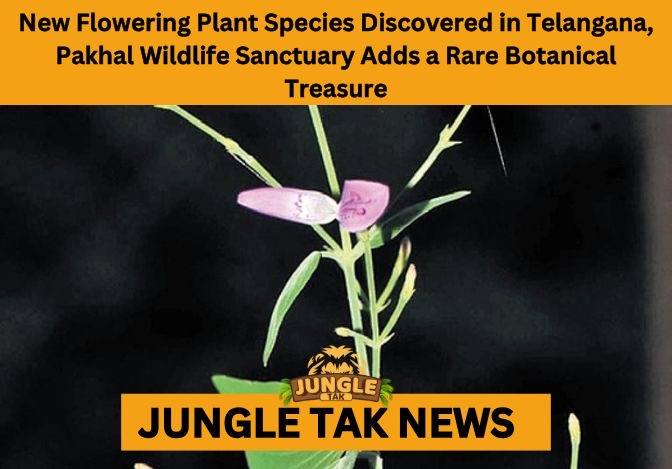

Scientists from the Botanical Survey of India (BSI) have discovered a new flowering plant species, Dicliptera Pakhalaica, inside Pakhal Wildlife Sanctuary in Mahabubabad district, Telangana. The state of Telangana has emerged as a focal point for environmental research following the identification of a brand-new flowering plant species within its borders. Located in the heart of the Warangal district, the sanctuary has long been a haven for diverse flora and fauna, but this recent Pakhal Wildlife Sanctuary botanical discovery has sent ripples of excitement through the scientific community.
The Pakhal Wildlife Sanctuary botanical discovery confirms that the dry deciduous forests of the Deccan Plateau still harbor undocumented biological treasures that are vital to our understanding of regional evolution. The species belong to the Acanthaceae family and was formally documented in the internationally reputed botanical journal Brittonia on January 29 following detailed scientific study and verification
Unveiling a New Treasure in the Eastern Ghats
The identification of this rare flowering species is the result of extensive field surveys conducted by a dedicated team of taxonomists and researchers. This Pakhal Wildlife Sanctuary botanical discovery highlights a unique herb that has evolved to thrive in the specific micro-climate of the region. Initial reports suggest that the plant possesses distinct morphological features, particularly in its floral structure and pollination mechanism, which distinguish it from its closest relatives in the botanical world. Such findings are increasingly rare in modern botany, making this a high-priority entry for the Botanical Survey of India.
The Ecological Significance of the Pakhal Region
Pakhal Wildlife Sanctuary, established around the historic man-made Pakhal Lake, is an ecological goldmine. The success of the Pakhal Wildlife Sanctuary botanical discovery underscores the importance of the sanctuary’s varied topography, which includes hills, valleys, and wetlands. These diverse niches provide a refuge for species that have perhaps been lost in other parts of the state due to urban expansion. By documenting this new plant, scientists are able to piece together a more comprehensive map of the plant life that defines the Eastern Ghats and the central Indian landscape.
Methodology and the Scientific Breakthrough
The process leading up to this Pakhal Wildlife Sanctuary botanical discovery involved months of rigorous documentation and genetic analysis. Researchers from local universities, working in collaboration with state forest departments, spent seasons observing the plant’s life cycle to ensure it was indeed a new species and not a variation of an existing one. The samples were meticulously compared with herbarium specimens from across the country. This level of scientific scrutiny ensures that the discovery stands up to international standards, further cementing Telangana’s reputation as a hub for biological research.
Why This Discovery Matters for Global Biodiversity
Every time a new species is identified, it provides critical data regarding the health of its ecosystem. The Pakhal Wildlife Sanctuary botanical discovery is a positive indicator that the sanctuary’s habitat remains resilient enough to support specialized life forms. However, it also serves as a reminder of how much we have yet to learn about our natural world. In an era of rapid climate change and habitat loss, finding a new flowering plant gives conservationists a renewed sense of purpose and a fresh “umbrella species” to protect within the floral kingdom.
Implications for Conservation and Policy
Following the Pakhal Wildlife Sanctuary botanical discovery, there is a growing call for increased protection of the specific zones where the plant was found. Forest officials are currently reviewing management plans to ensure that human interference and cattle grazing do not threaten the survival of this newly identified resident. Protecting the habitat of this single plant often results in the protection of dozens of other insect and bird species that may rely on it for food or nesting, creating a ripple effect of conservation benefits throughout the entire sanctuary.
Boosting Eco-Tourism and Local Awareness
Beyond the laboratory, the Pakhal Wildlife Sanctuary botanical discovery has the potential to boost eco-tourism in Telangana. Nature enthusiasts, photographers, and students are expected to visit the sanctuary in hopes of catching a glimpse of the rare bloom. This interest provides a perfect opportunity for the forest department to educate the public on the importance of “hidden” biodiversity. By involving local communities in the protection of this botanical treasure, the state can foster a sense of pride and stewardship among the people who live closest to these wild spaces.
CONTINUE READING WITH JUNGLETAK – TURTLE TRAILS OR ECOLOGICAL DISASTER
A New Chapter for Telangana’s Natural Heritage
The journey of documenting India’s floral diversity is far from over, as evidenced by this remarkable achievement. The Pakhal Wildlife Sanctuary botanical discovery stands as a testament to the fact that with enough patience and scientific curiosity, we can still find wonders in the wild. As this new species is officially named and cataloged, it will forever link the Pakhal Wildlife Sanctuary to the global archives of science. It is now our collective responsibility to ensure that the environment that nurtured this plant remains pristine for generations to come.