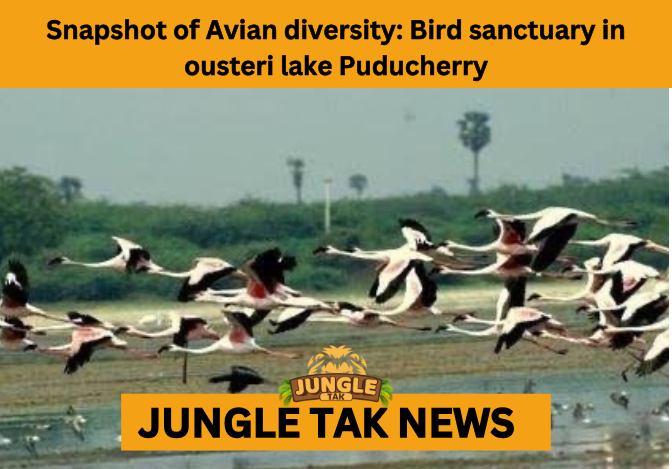

PUDUCHERRY – As the golden hues of dawn break over the glistening waters of Ousteri Lake, the air is thick not just with mist, but with the cacophony of thousands of winged visitors. The 2024-2025 migratory season has brought a renewed spotlight to this vital wetland, shared between the Union Territory of Puducherry and the state of Tamil Nadu. Recent synchronized bird census efforts have underscored Ousteri’s enduring status as a biodiversity hotspot, even as conservationists sound the alarm on poaching and habitat degradation.
The Ousteri Lake wetland census serves as more than just a headcount; it is a health check for one of South India’s most significant freshwater ecosystems. Recognized as an Important Bird Area (IBA) by the International Union for Conservation of Nature (IUCN), the lake’s stewardship is now at a crossroads, demanding urgent and unified action from government bodies and local communities alike.
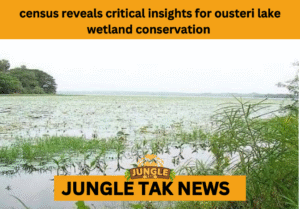
The 2025 Census: A Snapshot of Avian Diversity
The annual synchronized bird census, a collaborative effort involving the Forest Departments of Puducherry and Tamil Nadu alongside volunteer naturalists, has provided crucial data for the current season. While the Ousteri Lake wetland census is part of a broader statewide initiative recording lakhs of birds across the region, Ousteri remains a jewel in the crown.
Preliminary observations from the 2024-2025 wintering season indicate a robust arrival of flagship migratory species. Birdwatchers and census teams have documented the presence of the Greater Flamingo, Painted Stork, and the Spot-billed Pelican. The lake, which historically hosts over 20,000 birds annually, continues to be a winter refuge for trans-continental migrants steering clear of the harsh northern winters.
“The diversity we are seeing this year is promising,” notes a local naturalist volunteer. “We have spotted significant numbers of Eurasian Wigeons and Northern Shovelers. However, the Ousteri Lake wetland census also reveals shifting patterns in roosting behavior, likely due to human disturbances on the embankments.”
Biodiversity Beyond the Birds
While the Ousteri Lake wetland census primarily targets avian life, the ecological narrative of Ousteri extends underwater and onto the banks. The wetland supports a complex food web that sustains these bird populations. Native fish species, freshwater mussels, and crabs provide the essential protein required for breeding and migratory endurance.
The flora of Ousteri is equally critical. The floating vegetation and reed beds offer nesting grounds for resident birds like the Pheasant-tailed Jacana and the Purple Moorhen. Conservationists emphasize that any decline in this aquatic vegetation, often cleared for illegal fishing access, directly impacts the census numbers. The integrity of the Ousteri Lake ecosystem relies on maintaining this delicate balance between open water and vegetative cover.
Conservation Challenges: The Poaching Threat
Despite its protected status as a bird sanctuary, Ousteri Lake is besieged by anthropogenic threats. The most jarring revelation from recent monitoring efforts has been the persistence of poaching. During the census operations in recent years, forest officials have intercepted poachers and seized bird carcasses, including those of protected species.
“The Ousteri Lake wetland census is not just about counting birds; it is often when we discover the illegal traps,” explains a forest official. “Poaching remains a lucrative local trade, and the vast, porous borders of the lake between two states make enforcement challenging.”
The use of poisoned bait and nets is a recurring issue. These illegal activities not only reduce the bird population but also introduce toxins into the food chain, threatening the long-term viability of the sanctuary. Strengthening the anti-poaching network has become the primary recommendation of every recent conservation report.
The Interstate Management Conundrum
A unique challenge for Ousteri Lake is its dual jurisdiction. Approximately half the water body lies in Puducherry, while the other half falls under the Villupuram district of Tamil Nadu. This administrative split often leads to fragmented conservation strategies.
While Puducherry declared its portion a sanctuary in 2008, followed by Tamil Nadu in 2015, harmonizing the management plans has been slow. The “Comprehensive Management Action Plan,” proposed to treat the lake as a single ecological unit, is vital. Experts argue that the Ousteri Lake wetland census data should serve as the baseline for a unified “Ousteri Authority” that can bypass bureaucratic hurdles and implement direct protection measures, such as synchronized patrolling and uniform water level management.
Pollution and Encroachment: Silent Killers
Beyond poaching, the Ousteri Lake wetland census teams have documented increasing encroachment and pollution. The lake’s catchment area is being slowly suffocated by unauthorized construction and agricultural expansion. Plastic waste, discarded by tourists and washed in from nearby settlements, clogs the wetland’s edges, posing a choking hazard to foraging birds.
“We are finding more plastic in the nesting areas,” says a volunteer from the Indigenous Biodiversity Foundation. “For conservation to be effective, we need to stop treating Ousteri as a dumping ground. The water quality is deteriorating, and that will eventually drive the birds away.”
Proposed “facelift” projects, including fencing and an interpretation center, aim to regulate tourism and secure the perimeter. However, without strict enforcement of eco-sensitive zone regulations, infrastructure alone cannot save the wetland.
Community Involvement and Future Outlook
The path forward for Ousteri Lake lies in community stewardship. The 2025 census saw increased participation from college students and local NGOs, signaling a growing public awareness. Educational programs that highlight the economic potential of eco-tourism—over illegal fishing or poaching—are slowly changing local mindsets.
The government’s plan to upgrade visitor facilities, including watchtowers and a nature interpretation center, is a positive step. If managed sustainably, responsible birdwatching tourism can generate revenue that funds conservation patrols and habitat restoration.
CONTINUE READING WITH JUNGLETAK – LEOPARD REHABILITION CENTRE
A Call to Protect Our Wetlands
The Ousteri Lake wetland census is a yearly reminder of nature’s resilience and fragility. As the data is compiled and analyzed, the message to policymakers is clear: Ousteri cannot survive as a “paper park.” It requires active protection, unified interstate governance, and a community that values its ecological wealth.
Preserving Ousteri is not just about saving birds; it is about securing a critical water source and a climate buffer for the region. The wings flapping over Ousteri today are a testament to nature’s endurance—it is our duty to ensure they return tomorrow.