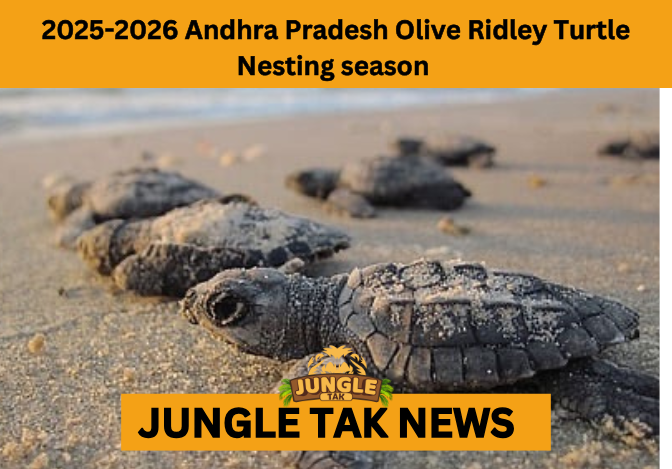

KAKINADA/VISAKHAPATNAM – The crisp sea breeze of December along the Bay of Bengal signals more than just the arrival of winter; it heralds an ancient maritime ritual. Under the cover of darkness, the first wave of marine visitors has begun to grace the sandy shores, marking the commencement of the 2025-2026 Andhra Pradesh Olive Ridley turtle nesting season. From the bustling beaches of Visakhapatnam to the serene, protected sandspits of Hope Island in the Godavari estuary, a massive mobilization of forest officials, conservationists, and local fisherfolk is underway to ensure the survival of this vulnerable species.
The state’s coastline, stretching over 970 kilometers, serves as a critical rookery for these turtles, yet the challenges facing them have never been more complex. As the first clutch of eggs is laid this week, the spotlight is firmly on the efficacy of the Andhra Pradesh Olive Ridley turtle nesting conservation strategies. The stakes are high; with global populations under stress, the success rate of hatchlings on these specific shores contributes significantly to the health of the Indian Ocean turtle population.
The 2026 Arrival: A Promising Start to the Season
Early monitoring reports from the Coringa Wildlife Sanctuary indicate a robust start to the season. Forest range officers have reported sightings of mating pairs in the shallow off-shore waters, a precursor to the mass beaching events known as ‘Arribada’, though in Andhra, the nesting is often more sporadic and spread out. The Andhra Pradesh Olive Ridley turtle nesting patterns are being monitored by drone technology this year, allowing authorities to identify new nesting sites that may have shifted due to coastal erosion or changing sandbars.
This year, the Forest Department has set an ambitious target to release record numbers of hatchlings back into the sea. The focus is not just on numbers, but on the protection of the “insitu” nests—those left in their natural spot—and the management of “exsitu” hatcheries, where eggs are relocated for safety. The integrity of these zones is paramount for a successful Andhra Pradesh Olive Ridley turtle nesting period, as natural predators like jackals, feral dogs, and even wild boars pose a constant threat to the unguarded eggs.
Community Guardians: The Backbone of Conservation
One of the most heartening aspects of the current conservation drive is the deep involvement of coastal communities. In districts like Srikakulam and East Godavari, the Yanadi tribe and local fishing communities have been recruited as “Turtle Trackers.” Their indigenous knowledge of the tides and beach topography is proving invaluable for the Andhra Pradesh Olive Ridley turtle nesting census. These trackers patrol the beaches from dusk till dawn, ensuring that fresh tracks are identified and eggs are moved to fencing enclosures before predators can pick up the scent.
NGOs such as the Tree Foundation and Green Mercy are working in tandem with the government to sustain this community model. They argue that Andhra Pradesh Olive Ridley turtle nesting protection cannot succeed as a top-down enforcement exercise alone. By incentivizing the protection of nests—often paying trackers per nest protected—the narrative has shifted from conflict to coexistence. Fishermen who once viewed turtles as a nuisance that tore their nets are now the first to report arrivals.
The Trawling Trouble: Mitigating Offshore Mortality
However, the journey to the beach is fraught with peril. The biggest threat to the Andhra Pradesh Olive Ridley turtle nesting population remains mechanized trawling. Turtles often get entangled in trawl nets and drown before they can reach the shore to lay eggs. Despite the mandatory requirement for Turtle Excluder Devices (TEDs) on trawlers, compliance has historically been spotty. This season, the Fisheries Department, in coordination with the Coast Guard, has announced stricter patrolling of the “no-fishing zones” near known rookeries.
The connection between offshore fishing practices and onshore nesting numbers is direct. Biologists note that a single season of heavy, unregulated trawling can decimate the breeding adults, causing a collapse in the Andhra Pradesh Olive Ridley turtle nesting figures for years to come. To combat this, awareness camps are being held at major fishing harbors in Vizag and Kakinada, educating boat owners on how to safely release turtles caught in nets and the legal repercussions of harming Schedule-I species.
Combating Pollution: The Plastic and Light Menace
On the urban beaches of Visakhapatnam, the challenge shifts from nets to pollution. The Andhra Pradesh Olive Ridley turtle nesting sites near cities are plagued by plastic waste and light pollution. Plastic debris on the beach acts as a physical barrier for nesting mothers, while bright city lights can disorient hatchlings, causing them to crawl toward the highway instead of the ocean.
In response, “Beach Clean-up blitzes” have been organized throughout December 2025. Volunteers from colleges and IT firms are scouring the sands to remove microplastics and ghost nets. Furthermore, the civic administration is experimenting with red-light filters on beach promenades, as red light is less likely to disturb the Andhra Pradesh Olive Ridley turtle nesting process. These urban interventions are critical, as they represent the interface where human development and wildlife conservation crash into each other.
Hatcheries: The Artificial Womb of the Coast
To maximize survival rates, the Forest Department has established over 50 base camp hatcheries across the state’s coastline. These fenced areas are guarded 24/7 and temperature-monitored to ensure the gender balance of the hatchlings—since the sex of turtles is determined by sand temperature. This scientific management of the Andhra Pradesh Olive Ridley turtle nesting cycle is vital in an era of global warming, where rising temperatures could theoretically skew the population to be entirely female, leading to a reproductive dead end.
The hatcheries also serve as educational hubs. This season, eco-tourism initiatives are allowing small, regulated groups of tourists to witness the release of hatchlings. This “conservation tourism” aims to generate revenue that can be plowed back into the Andhra Pradesh Olive Ridley turtle nesting protection funds, ensuring that the project remains financially sustainable even if government grants fluctuate.
Climate Change and Coastal Erosion
Long-term, the physical disappearance of beaches due to rising sea levels is a looming specter. The Andhra Pradesh Olive Ridley turtle nesting grounds are shrinking in areas like Uppada, where rapid erosion is eating away the coast. Conservationists are now forced to consider relocating eggs to safer, albeit further, locations. This adaptation strategy is currently being debated among experts, as turtles are imprinted to return to the exact beach where they were born.
Understanding these geological changes is part of the broader study on Andhra Pradesh Olive Ridley turtle nesting resilience. If the beaches vanish, the turtles have nowhere to go. Consequently, coastal zone regulations are being tightened to prevent permanent concrete structures near the high-tide line, preserving the dynamic sand dunes required for nesting.
CONTINUE READING WITH JUNGLETAK – OUSTERI LAKE
A Collective Responsibility
As the moon rises over the Bay of Bengal tonight, hundreds of female turtles will emerge from the surf, driven by an instinct millions of years old. The success of the 2025-2026 Andhra Pradesh Olive Ridley turtle nesting season lies not just in the hands of the forest guards, but in the collective conscience of the society. From the fisherman checking his net to the tourist picking up a plastic bottle, every action counts.
The return of the Olive Ridley is a testament to nature’s tenacity. Ensuring that the Andhra Pradesh Olive Ridley turtle nesting phenomenon continues for future generations is a litmus test for the state’s environmental stewardship. The world is watching, and more importantly, the turtles are waiting.