

ODISHA ELEPHANT DEATHS IN BHUBANESWAR: The verdant forests of Odisha, once a safe haven for the majestic Asian Elephant, are fast turning into a graveyard. In a grim disclosure that has sent shockwaves through the conservation community, the state government has admitted that a staggering 136 elephants have died within a span of just 18 months. The statistics, presented in the Odisha Legislative Assembly, paint a harrowing picture of the survival challenges facing the state’s heritage animal. While natural causes claim many, a significant and alarming number of these fatalities are driven by anthropogenic factors, with electrocution emerging as a primary executioner in the escalating crisis of ODISHA ELEPHANT DEATHS.
Systemic Negligence and Habitat Loss Fuel the Unprecedented Surge in ODISHA ELEPHANT DEATHS Across Critical Corridors
The data, covering the period from 2023 through the mid-months of 2024, was laid out by the Forest and Environment Minister in response to a query regarding the safety of wildlife in the state. According to the official breakdown, the causes of mortality are varied, but the high incidence of preventable deaths has drawn severe criticism. Of the 136 casualties, a significant portion is attributed to “accidental electrocution,” a term that often masks the negligence of power distribution companies and the malicious intent of poachers using live wires.
The rising trend of ODISHA ELEPHANT DEATHS is not merely a statistical anomaly but a reflection of a collapsing ecosystem management strategy. The Minister detailed that while 52 elephants succumbed to various illnesses, highlighting a potential lack of veterinary monitoring in deep forest pockets, barely a week goes by without a report of an elephant coming into fatal contact with high-voltage electricity. The interplay between sagging 11kV lines and the movement of elephant herds has created death traps across the districts of Dhenkanal, Angul, and Keonjhar.
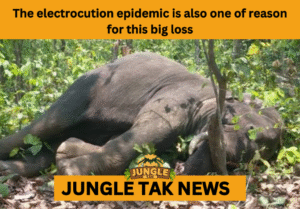
The Electrocution Epidemic: A Man-Made Disaster
Conservationists argue that the term “accident” is a misnomer. The primary driver behind the unnatural ODISHA ELEPHANT DEATHS is the blatant disregard for safety guidelines by energy infrastructure bodies. Despite repeated directives from the High Court and the National Green Tribunal (NGT) to raise the height of power lines and install circuit breakers, compliance remains low. In many documented cases, elephants have been killed by sagging wires that hang dangerously low within the reach of their trunks.
Furthermore, the data points to a sinister underbelly of deliberate electrocution. Poachers and farmers, intent on protecting crops or harvesting ivory, set illegal electric fences powered by hooking directly into the main grid. These “live wire traps” are indiscriminate killers. When a herd moves through these fragmented corridors, the result is often a catastrophic loss of life, contributing heavily to the soaring numbers of ODISHA ELEPHANT DEATHS that have marred the state’s reputation as a wildlife sanctuary. The government has stated that vigilance squads are being deployed, but the sheer vastness of the forest fringe areas makes policing these electric traps a logistical nightmare.
Illness and the Silent Killers the cause of ODISHA ELEPHANT DEATHS
While electrocution provides a violent and visible end, the report indicates that disease is a silent predator claiming lives at an equally alarming rate. The death of 52 elephants due to illness raises questions about the health monitoring systems in place within the reserves. Wildlife veterinarians point to Anthrax and Elephant Endotheliotropic Herpesviruses (EEHV) as recurring threats after ODISHA ELEPHANT DEATHS.
However, experts believe that the susceptibility to these diseases is exacerbated by stress caused by habitat fragmentation. As mining and industrialization eat into the elephant corridors, herds are forced into smaller, resource-poor areas. This malnutrition and stress compromise their immune systems, making them vulnerable to pathogens that they might otherwise survive. Thus, even the “natural” causes contributing to the ODISHA ELEPHANT DEATHS are indirectly linked to human encroachment. The lack of adequate water bodies during blistering summers further weakens the herds, leading to dehydration and heatstroke, which are often categorized under general illness in official records.
The Human-Elephant Conflict
The tragedy is compounded by the escalating Human-Elephant Conflict (HEC). As elephants venture out of degrading forests in search of food, they enter paddy fields and villages. The Assembly report noted that alongside the elephant casualties like ODISHA ELEPHANT DEATHS, there has been significant human loss as well. However, the retaliation from affected communities is swift and often lethal.
Retaliatory killings, though harder to prove than electrocution, are a suspected factor in the unclassified deaths. Poisoning of water holes and pumpkin baits laced with pesticides are methods used to eliminate “nuisance” animals. This animosity between the locals and the wildlife is a direct result of the failure to secure elephant corridors, leading to a vicious cycle of conflict that drives up the statistics of ODISHA ELEPHANT DEATHS year after year. The Forest Department’s initiatives, such as the Gaja Sathi scheme (Elephant Friends), which involves local community members in tracking herds, have had limited success in curbing the violence due to delayed compensation payments for crop damage.
A Call for Accountability and Action
The Wildlife Society of Odisha (WSO) and other environmental pressure groups have termed the government’s response as “inadequate.” They point out that while the government is quick to release statistics, the conviction rate for wildlife crimes, particularly those involving electrocution, is abysmal. Without legal accountability for the officials responsible for maintaining power lines and the poachers setting traps, the numbers will continue to rise.
The revelation of 136 deaths in 18 months serves as a grim wake-up call. It highlights that the current conservation model is broken. To reverse the tide of ODISHA ELEPHANT DEATHS the state requires a complete overhaul of its strategy. This includes strict enforcement of power line safety, the securing of designated elephant corridors against mining activities, and a robust veterinary surveillance network.
CONTINUE READING WITH JUNGLE TAK – AGED TIGER
As the Assembly session concluded, the question remained: Will these statistics spur the government into concrete action, or will the count simply reset for the next report? For the elephants of Odisha, caught between the high-tension wires and the shrinking forests, time is rapidly running out. The loss of 136 lives or ODISHA ELEPHANT DEATHS is not just a number; it is a warning that one of India’s most significant elephant populations is teetering on the brink of a man-made collapse.