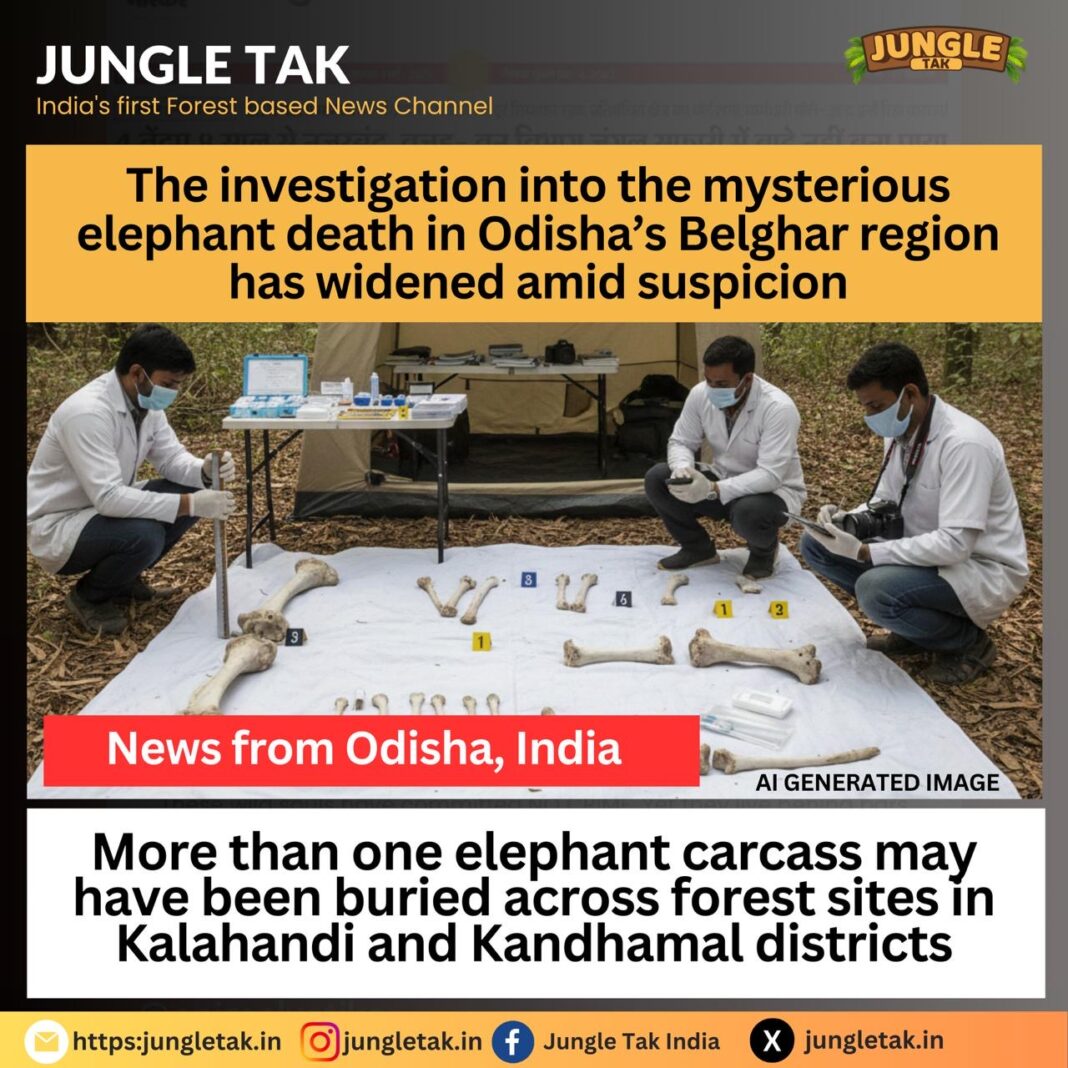

The ongoing Odisha Elephant Bones Probe has entered a critical new phase as state authorities expand their investigation across multiple districts to determine the exact number of pachyderms lost to poaching and administrative cover-ups. What initially began as an inquiry into a single suspicious death in the Belghar forest range has now spiraled into a larger forensic operation. Investigators are currently working with specialized wildlife health centers to analyze skeletal remains recovered from hidden burial sites, suspecting that the scale of the tragedy may be far greater than previously reported.
As the Odisha Elephant Bones Probe widens, the focus has shifted to the Kalahandi and Kandhamal districts, where forest officials recently exhumed several fragmented remains. The discovery of these bones in locations like Tahansir and Jhiripani has raised alarms among conservationists and the Special Task Force (STF) alike. Authorities are now grappling with the possibility that these sites contain the remains of more than one animal, suggesting a systematic pattern of concealing elephant deaths to avoid departmental accountability or legal repercussions.
The Belghar Dismemberment Case: A Catalyst for Action
The current momentum of the Odisha Elephant Bones Probe was largely triggered by the shocking revelations in the Belghar elephant death case. In a desperate attempt to hide the evidence of an elephant electrocution, a senior forest official reportedly ordered the carcass to be cut into 32 pieces before burying them in separate locations. This gruesome act of evidence tampering has not only led to the suspension of a deputy ranger but has also forced the state government to scrutinize the integrity of local forest administration through a high-level Odisha Elephant Bones Probe.
Evidence gathered during the Odisha Elephant Bones Probe suggests that the use of heavy machinery, such as earthmovers, was employed to facilitate these secret burials. The arrest of a forest ranger’s driver has provided further leads into how departmental resources were misused to bury the truth alongside the remains. By expanding the Odisha Elephant Bones Probe, the Crime Branch and the Forest Department aim to dismantle the “culture of concealment” that has plagued wildlife management in the state for years.
Forensic Analysis to Ascertain Elephant Numbers
To provide scientific clarity to the Odisha Elephant Bones Probe, the Forest Department has sought the expertise of the Centre for Wildlife Health (CWH) at the Orissa University of Agriculture and Technology (OUAT). Experts are currently examining the recovered bone fragments to establish whether they belong to a single tusker or multiple individuals. This forensic component of the Odisha Elephant Bones Probe is essential for accurately updating the state’s elephant mortality records and ensuring that no crime goes unpunished due to a lack of physical evidence.
The complexity of the Odisha Elephant Bones Probe is heightened by the fact that many of the remains are in advanced stages of decomposition or have been intentionally mutilated. However, modern DNA profiling and osteological examinations are expected to yield definitive results. As the Odisha Elephant Bones Probe continues, the forensic findings will play a pivotal role in framing criminal charges against the accused officials and poachers involved in these illicit activities.
Hotspots and Historical Cover-ups
This is not the first time that an Odisha Elephant Bones Probe has uncovered such grim realities. Regions like Athagarh in Cuttack district have historically been hotspots for illegal burials, with previous investigations exhuming skeletons from the Chandragiri reserve forest. The current Odisha Elephant Bones Probe is drawing parallels to those earlier cases, where tuskers were found with gunshot wounds or signs of poisoning, only to be buried in haste by staff members who feared the consequences of reported poaching on their watch.
By connecting the dots between various forest divisions, the Odisha Elephant Bones Probe is highlighting a systemic failure in protecting the state’s wildlife. From Similipal to Satkosia, the recovery of skeletal remains has consistently challenged the official death tolls provided by the Forest Department. The expansion of the Odisha Elephant Bones Probe serves as a stern warning that buried secrets will eventually surface, and those responsible for failing the state’s “heritage animal” will be held to account.
Conservationists Decry “Graveyard” Status
Wildlife activists have lauded the expansion of the Odisha Elephant Bones Probe, noting that the state has recently acquired a reputation as an “elephant graveyard.” With an average of over 80 elephant deaths reported annually—many due to unnatural causes—the Odisha Elephant Bones Probe is seen as a necessary step toward transparency. Conservationists argue that without such rigorous investigations, the true impact of poaching and electrocution on the elephant population would remain obscured by bureaucratic smoke and mirrors.
The data surfacing from the Odisha Elephant Bones Probe corroborates long-standing claims by NGOs like the Wildlife Society of Orissa. They have often pointed out that the mismatch between observed carcasses and official records indicates a widespread practice of “burial without post-mortem.” The Odisha Elephant Bones Probe is finally addressing these discrepancies, providing a platform for a more honest dialogue about the challenges facing elephant conservation in the region.
Technological Interventions and Future Safeguards
As part of the broader strategy following the Odisha Elephant Bones Probe, the government is now looking into more robust monitoring technologies to prevent future cover-ups. The integration of satellite tracking, thermal drones, and real-time reporting apps is being discussed to ensure that every elephant death is recorded and investigated immediately. The lessons learned from the Odisha Elephant Bones Probe are expected to inform a new SOP (Standard Operating Procedure) for handling elephant carcasses, making it nearly impossible for local staff to hide evidence.
Furthermore, the Odisha Elephant Bones Probe has emphasized the need for better protection against electrocution, which remains a leading cause of unnatural deaths. By identifying the exact locations where elephants have perished, the Odisha Elephant Bones Probe helps authorities pinpoint “danger zones” where power lines need to be insulated or raised. This proactive approach, born out of the current crisis, aims to shift the focus from exhuming bones to preserving live herds.
CONTINUE READING WITH JUNGLETAK – KOPRA RESERVOIR WATER THEFT
Restoring Faith in Wildlife Protection
Ultimately, the successful conclusion of the Odisha Elephant Bones Probe will be measured by the transparency it brings to the Forest Department and the justice it secures for the slaughtered giants. The state’s commitment to expanding the Odisha Elephant Bones Probe demonstrates a shift toward more rigorous environmental governance. While the discovery of more remains may be painful, the Odisha Elephant Bones Probe is the only way to ensure a safer future for the remaining 2,100 elephants that call the forests of Odisha their home.
As the world watches the developments of the Odisha Elephant Bones Probe, the pressure remains on the state to transform its wildlife protection policies. The “Jumbo Bones Probe” is more than just a criminal investigation; it is a search for the truth in a landscape where silence has often been the status quo. By completing the Odisha Elephant Bones Probe with total integrity, Odisha can begin the long process of shedding its “graveyard” label and reclaiming its position as a true sanctuary for the Indian elephant.