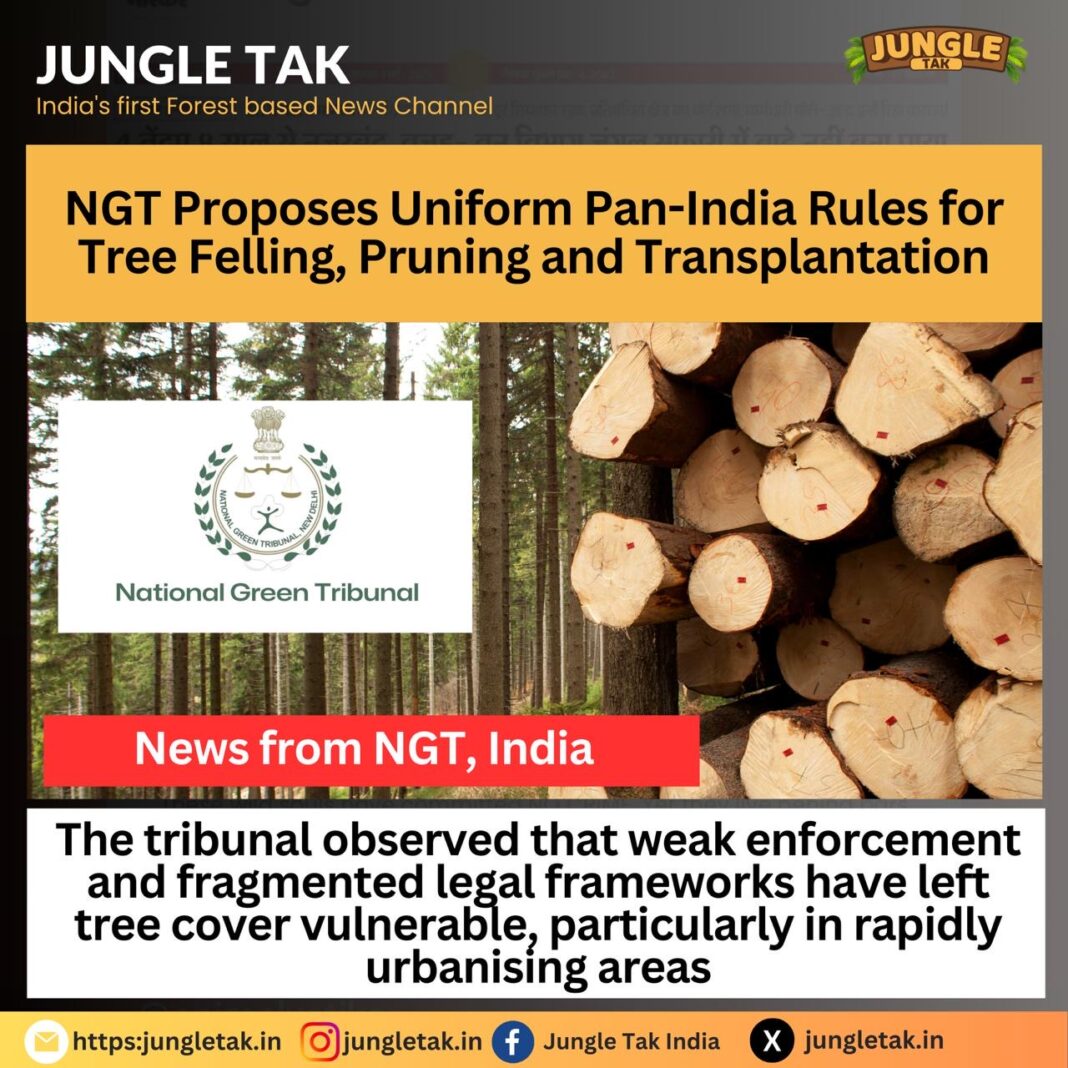

In a landmark move aimed at harmonizing environmental conservation efforts across the country, the National Green Tribunal (NGT) has proposed the implementation of Uniform Pan-India Tree Rules. The tribunal’s directive comes in response to the fragmented and often contradictory state-level regulations that currently govern the management of green cover. By advocating for a centralized framework, the NGT seeks to ensure that the ecological health of the nation is not compromised by the varying administrative standards of different regions.
The necessity for Uniform Pan-India Tree Rules has become increasingly evident as urban expansion continues to collide with forestry preservation. Currently, some states have stringent Tree Protection Acts, while others operate with minimal oversight, leading to a “regulatory vacuum” that developers and local authorities often exploit. The NGT’s proposal suggests that the Ministry of Environment, Forest and Climate Change (MoEF&CC) should take the lead in drafting these Uniform Pan-India Tree Rules to provide a consistent legal roadmap for every district in India.
Addressing the Legal Loopholes in Tree Management
One of the primary drivers behind the push for Uniform Pan-India Tree Rules is the systemic misuse of the term “pruning.” In several high-profile cases, particularly in metropolitan areas like Delhi and Mumbai, local authorities have allowed the heavy hacking of trees under the guise of maintenance. Without Uniform Pan-India Tree Rules, there is no scientific definition of what constitutes “essential pruning” versus “damaging felling,” allowing for the slow death of urban canopies through legalized mutilation.
Furthermore, the existing disparity in compensatory afforestation policies has led to a net loss of biodiversity, a problem the Uniform Pan-India Tree Rules aim to rectify. While some states require ten saplings to be planted for every one tree cut, the survival rate of these saplings is rarely monitored. The proposed Uniform Pan-India Tree Rules would mandate a standardized survival audit and species-specific planting guidelines, ensuring that environmental compensation is more than just a bureaucratic checkbox.
Scientific Standards for Tree Transplantation
Transplantation has often been touted as a “green” alternative to felling, yet without Uniform Pan-India Tree Rules, the success rate of these operations remains abysmally low. Many trees moved for infrastructure projects die within months because the contractors lack the technical expertise required for root-ball preservation and soil matching. By integrating scientific protocols into the Uniform Pan-India Tree Rules, the NGT hopes to transform transplantation from a cosmetic PR exercise into a viable conservation tool.
The NGT has noted that the lack of technical accountability is a major hurdle that the Uniform Pan-India Tree Rules must overcome. In many instances, trees are transplanted during peak summer or in unsuitable terrain simply because the local laws do not specify seasonal or geological constraints. Under the Uniform Pan-India Tree Rules, experts suggest that a “Transplantation Certificate of Success” should be required before developers are granted completion certificates for their projects.
The Role of the Tree Authority and Public Participation
A core component of the proposed Uniform Pan-India Tree Rules involves the empowerment and standardization of “Tree Authorities” at the municipal level. Currently, many cities do not even have a functioning Tree Authority, and where they do exist, their meetings are often opaque and closed to the public. The Uniform Pan-India Tree Rules would mandate the inclusion of independent environmentalists and local citizens in the decision-making process for any major felling activity.
Transparency is a recurring theme in the discussions surrounding the Uniform Pan-India Tree Rules. The NGT has emphasized that the public has a right to know why a specific tree is being removed and what the alternatives are. By digitizing the permit process and making it accessible to all, the Uniform Pan-India Tree Rules would prevent the “midnight felling” incidents that have sparked widespread protests in places like Aarey Colony or the residential zones of South Delhi.
Balancing Infrastructure Development and Green Cover
India’s ambitious infrastructure goals, including highways and smart cities, often put a strain on existing forest lands, making Uniform Pan-India Tree Rules an economic necessity as much as an environmental one. Investors and developers often face delays because of confusing, overlapping state laws; a single set of Uniform Pan-India Tree Rules would provide the “ease of doing business” while maintaining ecological integrity. It allows for a predictable regulatory environment where environmental costs are factored in from the project’s inception.
However, the NGT is clear that development cannot be a blank check for deforestation, and the Uniform Pan-India Tree Rules must prioritize the “Avoid-Minimize-Mitigate” hierarchy. This means that under the Rules, a project proponent must first prove that the project cannot be redesigned to save the existing trees. Only after all alternatives are exhausted can the permissions for felling or transplantation be granted under the strict scrutiny of the Rules.
Climate Change and the Importance of Mature Trees
The move toward Uniform Pan-India Tree Rules is also a response to the escalating climate crisis. Mature trees are significantly more efficient at carbon sequestration and heat island mitigation than the young saplings planted during compensatory afforestation. The NGT recognizes that losing a 50-year-old banyan tree cannot be compensated by planting ten small shrubs, which is why the Uniform Pan-India Tree Rules are expected to include a “Heritage Value” assessment for older trees.
By establishing a national valuation system for trees, the Uniform Pan-India Tree Rules will assign a monetary and ecological cost to the destruction of old-growth timber. This would discourage the casual removal of large trees for minor conveniences, such as billboard visibility or parking extensions. The Uniform Pan-India Tree Rules essentially aim to treat every mature tree as a national asset, regardless of which state it happens to be rooted in.
CONTINUE READING WITH JUNGLETAK – A BIRTHDAY TO REMEMBER
A Unified Vision for a Greener India
The transition toward Uniform Pan-India Tree Rules will undoubtedly require significant coordination between the Center and the States, as land and forests are often subjects of overlapping jurisdiction. However, the NGT’s firm stance indicates that the current piecemeal approach to tree protection is no longer sustainable. The Uniform Pan-India Tree Rules represent a shift toward a more mature, scientific, and honest relationship with our natural resources.
As the MoEF&CC begins the process of evaluating these recommendations, the environmental community remains hopeful that the Uniform Pan-India Tree Rules will soon become a reality. If implemented effectively, these Uniform Pan-India Tree Rules will not only protect our dwindling urban forests but also set a global precedent for how a rapidly developing nation can safeguard its green heritage. The journey toward Uniform Pan-India Tree Rules is a journey toward a more resilient and ecologically conscious India.