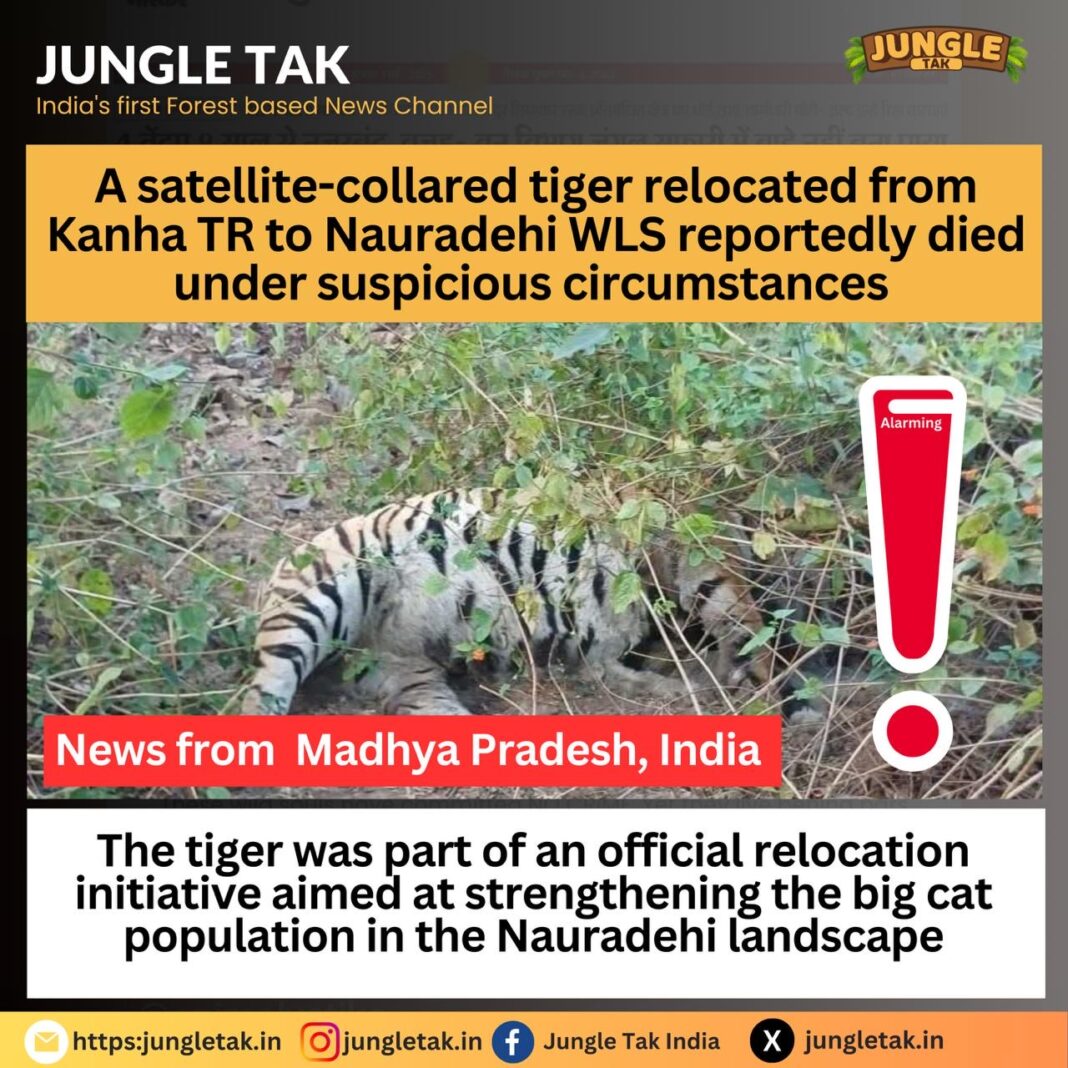

Nauradehi relocated tiger death questions the safety
The conservation community in Madhya Pradesh is reeling following the news that a satellite-collared tiger, recently moved to facilitate the revival of a local ecosystem, has been found dead. The Nauradehi relocated tiger death has raised serious questions about the safety protocols surrounding interstate and intrastate translocation projects. Found in a remote corner of the sanctuary, the carcass of the majestic male tiger has prompted a high-level inquiry by the National Tiger Conservation Authority (NTCA) to determine if foul play was involved.
The incident is particularly disheartening because the tiger had been carefully selected from the high-density Kanha Tiger Reserve to help populate the Nauradehi Wildlife Sanctuary. The Nauradehi relocated tiger death represents a significant blow to the long-term vision of turning this sanctuary into a thriving tiger habitat. Experts had hoped that this specific individual would establish a territory and contribute to the genetic diversity of the region, making its sudden passing a major ecological setback.
Initial reports from the field suggest that the carcass was discovered by a patrolling team after the satellite collar emitted a “mortality signal,” which is triggered when the animal remains immobile for an extended period. The Nauradehi relocated tiger death is being treated as highly suspicious because there were no immediate signs of a violent territorial struggle with another predator. Furthermore, the presence of the collar should have allowed for 24/7 monitoring, leading many to ask why the intervention didn’t happen sooner.
Forest officials have not ruled out the possibility of poaching or poisoning, two of the most common threats to tigers in newly settled territories. The Nauradehi relocated tiger death has led to the deployment of dog squads and forensic experts to the site to scan for snares, traps, or chemical traces in nearby water bodies. Because the tiger was a “stranger” to the local landscape, it may have been more vulnerable to local retaliatory killing if it had strayed near human settlements on the sanctuary’s fringes.
The role of technology in this tragedy is also under intense scrutiny by wildlife activists. While the satellite collar was intended to be a lifeline, the Nauradehi relocated tiger death highlights the limitations of remote monitoring if it is not backed by vigorous on-ground foot patrolling. If the data from the collar showed the tiger was stationary or moving erratically in the days leading up to its death, questions will be asked regarding the response time of the monitoring team stationed at the sanctuary headquarters.
This loss comes at a time when India is celebrating its success in increasing tiger numbers, yet the Nauradehi relocated tiger death serves as a grim reminder of the challenges of “rewilding” vacant forests. Moving a tiger is not merely a logistical task; it requires ensuring that the destination habitat is free from anthropogenic pressures and has a sufficient prey base. Critics argue that if the sanctuary was not fully prepared to protect a collared individual, the translocation should have been delayed.
The post-mortem report, which is currently being conducted by a team of specialized veterinarians, will be the final word on the cause of the Nauradehi relocated tiger death. Whether it was a snake bite, an infection, or a more sinister human intervention, the findings will have national implications for how tigers are relocated in the future. In the meantime, the forest department has increased the security of other relocated tigers in the area to prevent a repeat of this unfortunate event.
Beyond the immediate loss of a single animal, the Nauradehi relocated tiger death threatens to derail the morale of the ground staff and the trust of the local communities involved in the project. Conservation is as much about people as it is about animals, and a suspicious death creates an atmosphere of suspicion and blame. Restoring confidence will require a transparent investigation and a commitment to addressing the security lapses that allowed such a high-profile animal to perish unnoticed.
As the investigation into the Nauradehi relocated tiger death continues, the incident has sparked a wider debate among environmentalists about the ethics of translocation. While moving tigers is essential to prevent overpopulation in reserves like Kanha, it must be matched by a “zero-leakage” security model in the recipient sanctuaries. The death of this collared male is a stark warning that without absolute protection, relocation can become a death sentence for the country’s national animal.
CONTINUE READING WITH JUNGLETAK – GLOBAL CLIMATE RESPONSIBILITY
In the coming weeks, the forest department is expected to release a detailed report addressing the Nauradehi relocated tiger death and the steps being taken to fortify the sanctuary. For now, the tall grasses of Nauradehi remain a little quieter, and the dream of a new tiger stronghold remains under a cloud of uncertainty. The world of wildlife conservation waits for answers, hoping that this tragedy leads to a safer future for all relocated big cats in India.