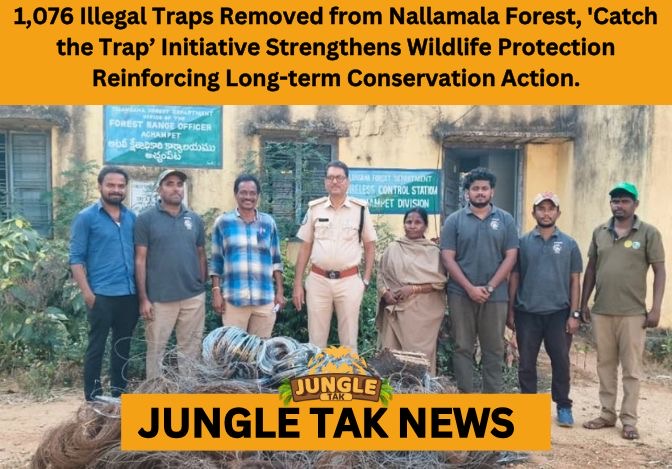

In a major breakthrough for wildlife safety, forest authorities have successfully removed 1,076 illegal traps from the dense landscapes of the Nallamala hills. This massive recovery operation, conducted under the innovative ‘Catch the Trap’ initiative, marks a turning point for Nallamala forest conservation efforts. By proactively sanitizing the habitat of snares and wire traps, officials are addressing one of the most silent yet deadly threats to the region’s diverse fauna, including leopards, sloth bears, and various ungulates.
The ‘Catch the Trap’ campaign was launched as a strategic response to the rising concerns of poaching and accidental wildlife injuries. This initiative has become a cornerstone of Nallamala forest conservation, as it moves beyond traditional patrolling to focus specifically on the removal of man-made hazards. The sheer volume of traps recovered—over a thousand—highlights the persistent pressure that illegal hunting places on the ecosystem and the urgent need for continuous vigilance by the forest department.
The Scale and Scope of the Operation
The recovery of these traps was the result of a coordinated effort involving hundreds of forest guards and local trackers who combed through difficult terrain. This operation is a vital component of Nallamala forest conservation, ensuring that the corridors used by wildlife remain safe for movement. The traps, often made of clutch wires or heavy-duty iron, are designed to kill or maim, making their removal a top priority for those dedicated to preserving the biological integrity of the Eastern Ghats.
Geographically, the Nallamala range serves as a critical bridge between various tiger reserves and protected areas. Therefore, any threat within this region has a cascading effect on the tiger population and the broader food chain. Effective Nallamala forest conservation requires this level of ground-level intensity, where every square kilometer is inspected to prevent the tragic loss of animal life that often goes unnoticed in such vast, rugged landscapes.
Combatting Poaching Threats
Poaching remains a significant hurdle in the path of environmental recovery, with traps being the primary tool for illegal hunters targeting small game or even big cats. The success of the ‘Catch the Trap’ drive sends a clear message that Nallamala forest conservation is not just a policy on paper but an active, aggressive pursuit of safety for wild inhabitants. By dismantling these snares, the authorities are effectively neutralizing the “silent killers” that have historically plagued these woods.
Beyond the immediate removal of hardware, the initiative also serves as a data-gathering mission to identify poaching hotspots. This intelligence-led approach to Nallamala forest conservation allows officials to deploy resources more effectively in the future. By mapping where these 1,076 traps were found, the forest department can now increase patrolling frequency in high-risk zones, creating a much-needed deterrent for local poachers and organized wildlife crime syndicates.
Technological and Grassroots Synergy
Modern technology has played a pivotal role in the recent success of these protection drives. Handheld GPS devices and mobile monitoring apps were used to track the progress of the teams, ensuring that Nallamala forest conservation efforts are scientifically documented and verifiable. This blend of traditional woodcraft and modern mapping technology has allowed for a more thorough sweep of the forest floor than was ever possible in previous decades.
Furthermore, the involvement of local indigenous communities has been instrumental in the ‘Catch the Trap’ project. These communities possess an intimate knowledge of the land, and their participation in Nallamala forest conservation ensures that the initiative has the social backing of those living on the forest fringes. By turning former hunters or wood-gatherers into guardians of the forest, the department is building a sustainable model for wildlife protection that benefits both people and nature.
The Path Toward Long-Term Preservation
The removal of 1,076 traps is a milestone, but officials acknowledge that the work is far from over. Long-term Nallamala forest conservation depends on consistent enforcement and the continuous education of surrounding villages regarding the legal and ecological consequences of trapping. The goal is to reach a stage where the forest is entirely “trap-free,” allowing wildlife to flourish without the constant threat of human interference.
As the ‘Catch the Trap’ initiative gains momentum, it is expected to serve as a blueprint for other forest divisions across India. The integration of community outreach, rigorous foot patrolling, and legislative support is the only way to ensure the success of Nallamala forest conservation in the face of modern industrial and poaching pressures. Protecting this green lung is essential for maintaining the regional climate and the water security of the surrounding plains.
CONTINUE READING WITH JUNGLETAK – THE KORAPUT RED MUD SCANDAL
A Legacy of Protection
The success of this operation underscores a renewed commitment to the wild heart of the Eastern Ghats. Every trap removed represents a life saved and a step closer to a balanced ecosystem. Through dedicated Nallamala forest conservation, the “Catch the Trap” initiative has proven that targeted, high-intensity operations can yield immediate and tangible results for biodiversity.
Moving forward, the focus will remain on sustaining this pressure and ensuring that the Nallamala hills remain a sanctuary for the species that call it home. The legacy of Nallamala forest conservation will be defined by these very actions—the tireless work of those who walk the forest floor to remove the dangers hidden in the undergrowth. With continued support and vigilance, the roar of the leopard and the call of the wild will remain a permanent feature of this ancient landscape.