
Odisha illegal wildlife trade incident
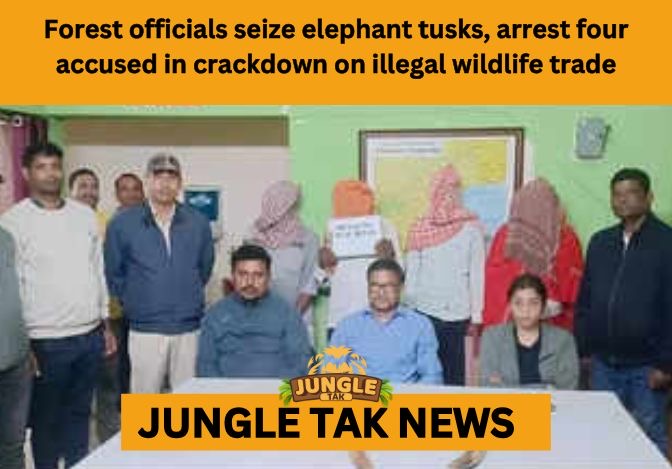
In a significant breakthrough against poaching syndicates, forest department officials in Odisha have successfully intercepted a group of smugglers involved in the Odisha illegal wildlife trade. The operation, which took place following a high-stakes chase in the state’s forested interior, led to the recovery of two massive elephant tusks and the arrest of four individuals. This latest enforcement action underscores the persistent challenges state authorities face as they attempt to safeguard the Asian elephant population from organized criminal elements seeking to profit from animal parts.
The specialized raid was the result of weeks of surveillance and intelligence gathering aimed at dismantling the Odisha illegal wildlife trade. Acting on a precise tip-off regarding a potential ivory deal, a joint team of forest guards and police personnel set up a strategic blockade. The four suspects were caught red-handed while attempting to transport the contraband to a pre-arranged meeting point. This successful seizure has prevented a valuable piece of natural heritage from entering the global black market, where ivory remains a highly sought-after commodity.
Preliminary investigations into the backgrounds of the four accused have revealed deep-seated links to the Odisha illegal wildlife trade. Officials believe the group was not acting alone but was part of a larger, well-funded network that facilitates the killing of tuskers and the subsequent smuggling of ivory across state lines. By interrogating the suspects, investigators hope to uncover the identities of the middlemen and international buyers who sustain this criminal economy, potentially leading to further arrests in the coming weeks.
Elephant poaching has long been a thorn in the side of conservationists monitoring the Odisha illegal wildlife trade. Despite the implementation of various protection laws and the deployment of advanced monitoring technology, poachers continue to exploit the vast and often difficult-to-patrol terrain of Odisha’s wildlife sanctuaries. The demand for ivory in Southeast Asian markets continues to incentivize these dangerous activities, making it a constant battle for the under-resourced forest staff to stay one step ahead of the poachers.
To combat this trend, the state government has recently increased funding for anti-poaching squads specifically designed to target the Odisha illegal wildlife trade. These squads are now equipped with better communication tools, drones for aerial surveillance, and improved mobility to respond to threats in real-time. This proactive stance is part of a broader strategy to create a “zero-tolerance” environment for wildlife crimes, ensuring that the state’s forests remain a safe haven for its iconic megafauna.
Legal experts have noted that the individuals arrested in this operation will face the full force of the law as the state seeks to deter others from entering the Odisha illegal wildlife trade. Under the Wildlife Protection Act of 1972, ivory smuggling is a non-bailable offense that carries heavy penalties, including lengthy prison sentences. The Forest Department is working closely with legal teams to ensure a foolproof case is presented in court, emphasizing the ecological damage caused by such illicit activities.
Beyond law enforcement, there is a growing emphasis on community-led initiatives to stifle the Odisha illegal wildlife trade. Forest officials are engaging with indigenous communities living on the fringes of elephant habitats, encouraging them to act as the “eyes and ears” of the department. By providing incentives for information and raising awareness about the importance of elephant conservation, the government aims to dry up the local support systems that poachers often rely on for logistics and scouting.
The ecological impact of the Odisha illegal wildlife trade cannot be overstated, as elephants play a crucial role as “ecosystem engineers.” Their movement through the forest helps in seed dispersal and the creation of clearings that allow smaller plant species to thrive. When a tusker is killed for its ivory, it not only removes a majestic animal from the wild but also disrupts the delicate balance of the forest’s biodiversity, leading to long-term environmental degradation that affects other species and human communities alike.
As the investigation into this recent seizure continues, the focus remains on closing the loopholes that allow the Odisha illegal wildlife trade to persist. Authorities are looking into digital footprints and mobile records of the arrested men to see how they communicated with their handlers. Strengthening cyber-forensics in wildlife crime investigation is becoming a priority, as modern smugglers increasingly use encrypted platforms to coordinate their illegal transactions and evade traditional surveillance methods.
CONTINUE READING WITH JUNGLETAK – THE GREAT NICOBAR LAND ROW
In conclusion, while the arrest of four individuals and the seizure of elephant tusks represent a tactical victory, the war against the Odisha illegal wildlife trade is far from over. Continuous vigilance, international cooperation, and a robust legal framework are essential to ensure that Odisha’s elephants are protected for future generations. The dedication shown by the forest officials in this operation serves as a stark reminder that the fight for wildlife conservation requires constant effort, bravery, and a collective will to protect the planet’s most vulnerable creatures.