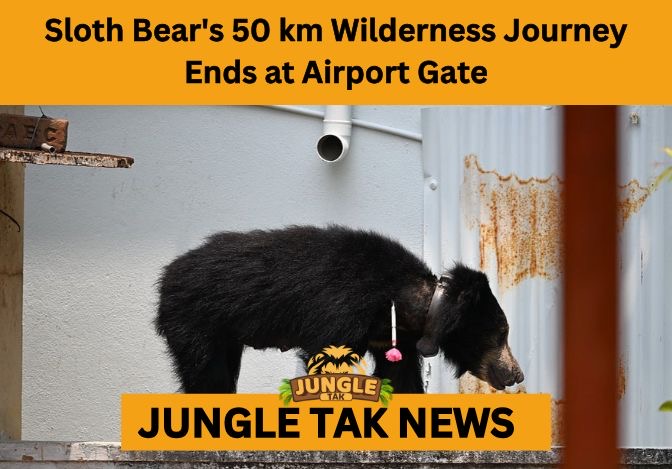

In a rare and startling incident that has gripped the state, a Karnataka Sloth Bear successfully completed an arduous 50-kilometer journey from the deep wilderness only to find itself at the gates of the Hubballi Airport. The unexpected guest caused a temporary stir among airport security and ground staff, highlighting the increasing proximity between wild habitats and urban infrastructure. This marathon trek by the animal has once again brought the spotlight on wildlife migration patterns in the region.
A Surprise Arrival at Hubballi Airport
The sighting of the Karnataka Sloth Bear occurred in the early hours of the morning when security personnel patrolling the perimeter fence noticed a large, dark figure moving near the taxiway and the main airport gate. Initially mistaken for a stray dog in the dim light, the silhouette was soon identified as an adult bear. The presence of the Karnataka Sloth Bear led to an immediate high-alert status, ensuring that no passengers or staff were in the direct path of the animal while authorities were notified.
Tracing the 50km Path from the Wilderness
Wildlife experts and forest officials believe the Karnataka Sloth Bear traveled nearly 50 kilometers from the forest patches of Kalghatgi or the fringes of the Western Ghats. This journey is particularly remarkable given the fragmented nature of modern landscapes, suggesting the Karnataka Sloth Bear moved through agricultural fields and narrow corridors under the cover of darkness. Such a long-distance trek indicates either a search for new territory or a desperate hunt for food and water sources that may have dried up in its native habitat.
The Forest Department’s Strategic Rescue Operation
Upon receiving the distress call, a specialized team from the Karnataka Forest Department arrived at the scene to manage the Karnataka Sloth Bear. The rescue operation was delicate, as the airport environment contains numerous hazards for both the animal and the rescuers. Using tranquilizer darts and specialized nets, the officials managed to safely sedate the Sloth Bear, ensuring the animal remained unharmed during the capture. The precision of the team ensured that the airport’s flight schedule remained largely unaffected by the intruder.
Why Wildlife is Entering Urban Hubs
The incident involving the Karnataka Sloth Bear is not an isolated case of wildlife wandering into human settlements in North Karnataka. Environmentalists point out that as forest boundaries shrink, animals like the Karnataka Sloth Bear are forced to venture out in search of sustenance. The Hubballi-Dharwad region, which sits close to rich biodiversity zones, is increasingly seeing the Sloth Bear and other species entering peripheral urban zones, necessitating better corridor management and wildlife monitoring.
Ensuring Safety and Successful Relocation
Following its capture, the Karnataka Sloth Bear underwent a thorough medical examination by veterinary experts to check for any injuries sustained during its 50km trek. Once declared fit and healthy, the Bear was transported in a specialized cage to a protected forest reserve far from human habitation. This relocation strategy aims to prevent the animal from returning to the airport or nearby villages, providing the Karnataka Sloth Bear with a safer environment where it can thrive without the risk of human-wildlife conflict.
The Future of Human-Wildlife Coexistence
This 50km journey serves as a poignant reminder of the resilience and desperation of forest creatures. As the Karnataka Sloth Bear returns to the wild, the incident leaves behind a lesson for urban planners and foresters alike. Protecting the natural corridors used by the Bear is essential to prevent such risky encounters in the future. By respecting these ancient paths, we can ensure that a Karnataka Sloth Bear never has to end its wilderness journey at an airport gate again.
CONTINUE READING WITH JUNGLETAK – DEATH OF LEOPARD CUB
While the story of the Karnataka Sloth Bear at the Hubballi Airport ended safely, it underscores the need for constant vigilance. The state continues to be a primary habitat for these unique creatures, and the survival of the Sloth Bear depends on our ability to balance industrial growth with environmental conservation. For now, the people of Hubballi can breathe a sigh of relief, knowing the Karnataka Sloth Bear is back where it belongs—in the heart of the forest.