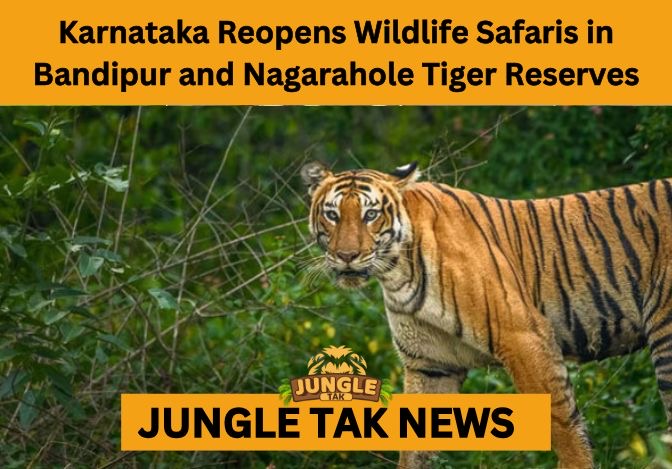

Nature enthusiasts, photographers, and adventure seekers have a reason to celebrate as the state government officially confirms that Karnataka reopens wildlife safaris in Bandipur and Nagarhole tiger reserves. After a brief hiatus caused by the heavy monsoon season and necessary forest rejuvenation periods, these two iconic biodiversity hotspots are once again accessible to the public. The decision to resume operations aims to balance the surge in ecotourism demand with the conservation goals of the Nilgiri Biosphere Reserve.
For months, the forest tracks within these protected areas were restricted to ensure the safety of both visitors and wildlife during the torrential rains. Now that the weather has stabilized, the news that Karnataka reopens wildlife safaris in Bandipur and Nagarhole tiger reserves has sparked a massive spike in hotel and resort bookings in the surrounding areas of Chamarajanagar and Mysore districts. Travelers are eager to catch a glimpse of the majestic Bengal tiger, the elusive Indian leopard, and the massive herds of Asiatic elephants that frequent these regions.
Restoring the Rhythm of the Wild
The seasonal closure of these parks is a standard conservation practice, but the official announcement that Karnataka reopens wildlife safaris in Bandipur and Nagarhole tiger reserves signals the start of the peak sighting season. During the monsoon, the dense undergrowth and slippery forest paths make navigation difficult and disrupt the natural behavior of the animals. With the forest department clearing the safari routes and ensuring all safety protocols are in place, the reopening ensures that tourists can experience the jungle in its most pristine, post-rain lushness.
Bandipur, once the private hunting ground of the Maharajas of Mysore, remains one of the most successful tiger conservation stories in India. As Karnataka reopens wildlife safaris in Bandipur and Nagarhole tiger reserves, the focus remains on responsible tourism to ensure that the influx of people does not disturb the habitat. Wildlife experts suggest that the post-monsoon period is one of the best times for bird watching and observing the rejuvenated flora, making the reopening a timely event for nature lovers across the country.
Technological Integration and Booking Procedures
In an effort to streamline the visitor experience, the Forest Department has updated its digital infrastructure as Karnataka reopens wildlife safaris in Bandipur and Nagarhole tiger reserves. Tourists are encouraged to use the official online portal to book their safari slots in advance to avoid disappointment at the ticket counters. By digitizing the process, the department can better manage the number of vehicles entering the core zones, ensuring that the ecological carrying capacity of the parks is not exceeded.
Nagarhole, also known as Rajiv Gandhi National Park, is particularly famous for its high density of tigers and the rare Black Panther. Because Karnataka reopens wildlife safaris in Bandipur and Nagarhole tiger reserves, the chance to spot ‘Saaya’—the world-famous melanistic leopard—has once again become a reality for professional photographers. Both Jeep and bus safaris have been resumed, with strict guidelines regarding silence, waste management, and the absolute prohibition of plastic within the forest boundaries.
Economic Impact on Local Communities
The local economy, which relies heavily on the influx of tourists, has seen a positive shift now that Karnataka reopens wildlife safaris in Bandipur and Nagarhole tiger reserves. From local guides and drivers to homestay owners and souvenir vendors, thousands of livelihoods are directly linked to these wildlife sanctuaries. The reopening acts as a catalyst for economic recovery in the rural belts surrounding the reserves, providing much-needed income for those who serve as the first line of defense in forest protection.
Conservationists argue that well-regulated tourism is essential for wildlife protection, as it generates the revenue needed for anti-poaching camps and habitat management. When Karnataka reopens wildlife safaris in Bandipur and Nagarhole tiger reserves, it also creates an opportunity for educational awareness among the youth. Seeing a tiger in the wild often transforms a casual tourist into a lifelong advocate for conservation, proving that tourism and ecology can coexist when managed with precision and care.
Looking Ahead: The Winter Season
As we head into the cooler months, the timing of the announcement that Karnataka reopens wildlife safaris in Bandipur and Nagarhole tiger reserves is perfect for the winter holiday season. The misty mornings and pleasant afternoons of the Karnataka wilderness provide the ideal backdrop for a family vacation or a professional photography expedition. The forest department has also increased patrolling to ensure that the sudden rise in visitors does not lead to any human-wildlife conflict or illegal activities within the park boundaries.
CONTINUE READING WITH JUNGLETAK – MEGA LEOPARD RESCUE CENTRES
In conclusion, the fact that Karnataka reopens wildlife safaris in Bandipur and Nagarhole tiger reserves is a testament to the state’s commitment to promoting ecotourism while maintaining strict environmental standards. Whether you are a seasoned trekker or a first-time visitor, the opportunity to witness the raw beauty of South India’s forests is an experience like no other. As the gates swing open, the wild calls out to those ready to respect its rules and admire its unparalleled grandeur.