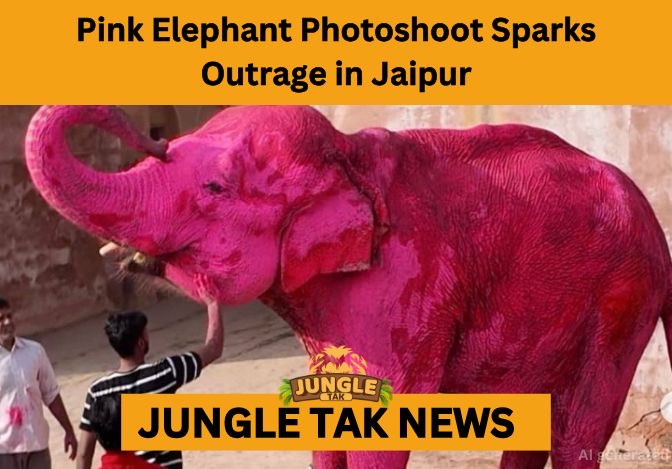

The Jaipur pink elephant controversy began when vibrant images of a tusker, completely covered in what appeared to be thick pink pigment, began circulating on social media. The photoshoot, reportedly organized for a luxury event or a creative campaign, quickly caught the attention of wildlife enthusiasts and conservationists. While the “Pink City” is known for its colorful heritage, the use of a live animal as a canvas has triggered a massive wave of criticism across digital platforms.
The incident has highlighted the growing tension between traditional tourism practices and modern animal rights standards. In the heart of Rajasthan, the Jaipur pink elephant controversy serves as a stark reminder of the ethical lines that are often crossed for the sake of visual aesthetics. Experts argue that using synthetic dyes on an elephant’s skin is not merely a cosmetic issue but a direct threat to the animal’s biological health.
The Viral Photoshoot and Public Backlash
The images that fueled the Jaipur pink elephant controversy showed the majestic creature standing against a desert backdrop, its skin unrecognizable beneath layers of neon-pink color. Social media users were quick to condemn the act, with many calling it a form of “aesthetic abuse.” The backlash was instantaneous, as thousands of people shared the images to demand accountability from the organizers who conceptualized the shoot.
Animal rights organizations were among the first to respond to the Jaipur pink elephant controversy, filing formal complaints with the local forest department. They pointed out that elephants are highly intelligent and sensitive beings, not inanimate props for photography. The public outcry has forced several stakeholders to reconsider the morality of using captive animals for commercial or promotional entertainment in the region.
PETA India and Legal Concerns
PETA India has taken a firm stand regarding the Jaipur pink elephant controversy, urging the government to take strict legal action against those responsible. According to the organization, painting an elephant can lead to severe skin irritation and even chemical poisoning if the dyes are ingested or absorbed through the skin. They have cited this incident as a clear violation of animal cruelty laws that protect captive wildlife from unnecessary suffering.
Beyond the physical harm, the Jaipur pink elephant controversy raises questions about the psychological stress inflicted on the animal. The process of applying thick paint and the subsequent washing required to remove it can be a traumatic experience for an elephant. Legal experts are now examining whether the organizers of the photoshoot had obtained the mandatory permissions required under the Wildlife Protection Act for such a display.
Health Risks to the Animal
In the heat of the Jaipur pink elephant controversy, veterinarians have explained that an elephant’s skin, while thick, is incredibly sensitive to external chemicals. The dyes used in such photoshoots often contain lead, mercury, or other toxins that can cause long-term dermatological issues. Furthermore, elephants regulate their body temperature through their skin, and a thick layer of paint can interfere with this vital biological process.
The Jaipur pink elephant controversy also highlights the risk of respiratory distress. If the pigments used are in powder form, the elephant can easily inhale them, leading to lung infections. Activists argue that no amount of “artistic expression” justifies putting a sentient creature through such health risks, especially in a climate as harsh as Rajasthan’s.
The Future of Elephant Tourism in Rajasthan
As a result of the Jaipur pink elephant controversy, there are renewed calls for stricter regulations governing elephant handling in Jaipur’s famous Amer Fort area. While elephant rides have been a staple of Jaipur tourism for decades, this specific incident has pushed the conversation toward a total ban on the use of animals for commercial photoshoots. Tourism boards are being pressured to promote “cruelty-free” experiences that do not involve physical contact or modification of the animals.
The Jaipur pink elephant controversy has also influenced local tour operators, many of whom are now distancing themselves from such extreme practices. There is a growing consensus that the future of Rajasthan’s tourism must be rooted in conservation rather than exploitation. Travelers are being encouraged to support sanctuaries and ethical viewing experiences instead of events that treat animals as decorative objects.
CONTINUE READING WITH JUNGLETAK – RARE FOUR HORNED ANTELOPE SAVED
A Wake-Up Call for Ethical Standards
Ultimately, the Jaipur pink elephant controversy is a wake-up call for the global photography and tourism industries. It demonstrates that in the age of social media, the public is no longer willing to overlook animal mistreatment for a “perfect shot.” The incident has paved the way for a much-needed dialogue on how to balance cultural traditions with the evolving standards of animal welfare.
As authorities continue to investigate the Jaipur pink elephant controversy, the hope is that it will lead to more stringent enforcement of wildlife protection laws. Protecting the dignity of these magnificent creatures is essential for maintaining the integrity of Jaipur’s rich cultural heritage. Moving forward, the lesson is clear: true beauty in photography should never come at the cost of an animal’s well-being.