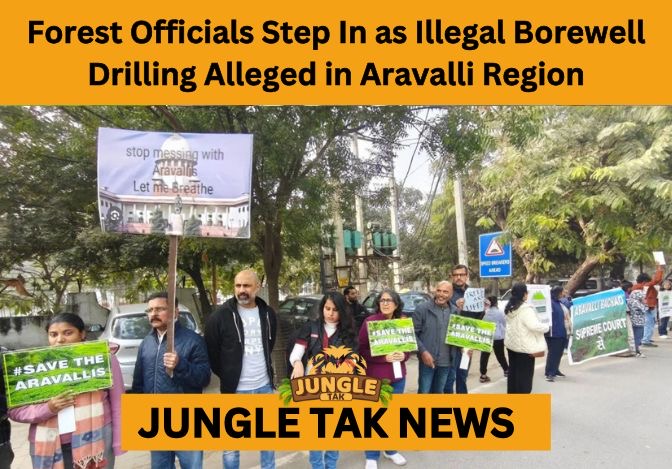

The ecological integrity of the Aravalli Range is facing a fresh challenge as reports of unauthorized activity surface in the sensitive hill zones. In a swift response to complaints from local environmental activists, forest officials have intervened in cases where illegal Aravalli borewell drilling was reported, signaling a zero-tolerance policy toward the exploitation of natural resources. This intervention comes at a critical time when the ancient mountain range, which acts as a green lung for the National Capital Region (NCR), is already battling the pressures of rapid urbanization and land encroachment.
The promptness of the department has been welcomed by conservationists who have long advocated for stricter surveillance of the protected forest areas. Following a tip-off regarding heavy machinery being moved into the forested tracts under the cover of darkness, teams were dispatched to halt the illegal Aravalli borewell drilling and seize equipment before more damage could be done to the terrain. These unauthorized operations are often conducted to support illegal farmhouses or commercial construction projects that bypass environmental regulations, posing a direct threat to the local ecosystem and the stability of the hills.
Protecting Vital Water Resources
Environmentalists note that the Aravallis serve as a vital groundwater recharge zone for the parched districts of Haryana and Rajasthan. When authorities act to stop illegal Aravalli borewell drilling, they are not just halting a single violation but are protecting a water table that millions of people depend on for their daily needs. The unregulated extraction of groundwater in these high-altitude zones can lead to the rapid drying up of natural springs and seasonal streams, which are essential for maintaining the local microclimate and supporting native plant life.
The legal framework surrounding the protection of this mountain range is robust, yet enforcement remains a constant battle for the state administration. Recent crackdowns on illegal Aravalli borewell drilling are being carried out in accordance with various Supreme Court mandates that prohibit any non-forest activity in areas notified under the Punjab Land Preservation Act (PLPA). Violation of these laws carries heavy penalties, and the department is currently in the process of identifying the land owners and contractors behind these operations to ensure they face the full force of the law.
Threats to Biodiversity and Corridors
The Aravalli region is home to a diverse array of wildlife, including leopards, striped hyenas, and several species of endangered migratory birds. Every instance of illegal Aravalli borewell drilling disrupts critical wildlife corridors that allow these animals to move safely between different forest patches in search of food and water. The noise pollution and human presence associated with heavy drilling rigs drive shy species away from their natural habitats, often leading to an increase in human-wildlife conflict in nearby residential areas.
Furthermore, the destruction of the rocky topsoil during these drilling operations can lead to severe soil erosion during the monsoon season. By curbing illegal Aravalli borewell drilling, forest officials are preventing the loss of essential nutrients in the soil that support the growth of native vegetation like the Kikar and Dhau trees. Maintaining this plant life is essential for carbon sequestration and for preventing the further desertification of the plains surrounding the mountain range, which acts as a barrier against the Thar Desert.
Future Surveillance and Technology
Looking ahead, the forest department plans to bolster its presence in the region by setting up more watchtowers and increasing the frequency of foot patrols. Now that several sites of illegal Aravalli borewell drilling have been identified, there is a renewed push to integrate drone technology for real-time monitoring of inaccessible peaks and valleys. Drones equipped with thermal cameras can detect the heat signatures of drilling rigs operating in remote areas, providing the authorities with the digital evidence needed for quick arrests and vehicle impoundments.
Community involvement will also play a pivotal role in the long-term protection of these ancient hills. As officials continue their fight against illegal Aravalli borewell drilling, they are encouraging local residents and trekkers to report any suspicious machinery or loud noises via a dedicated wildlife helpline. Awareness campaigns are being launched to educate the public on the importance of the Aravallis, emphasizing that the preservation of this mountain range is a shared responsibility that transcends administrative and political boundaries.
CONTINUE READING WITH JUNGLETAK – 12 PEACOCKS FOUND DEAD
In conclusion, the recent crackdown is a significant milestone in the ongoing effort to preserve India’s natural heritage and geological history. The news that the department is actively targeting illegal Aravalli borewell drilling serves as a stern warning to those who seek to profit at the expense of the environment. With continued vigilance, technological upgrades, and strict legal action, there is hope that the Aravalli Range will remain a sanctuary for nature and a vital resource for future generations to come.