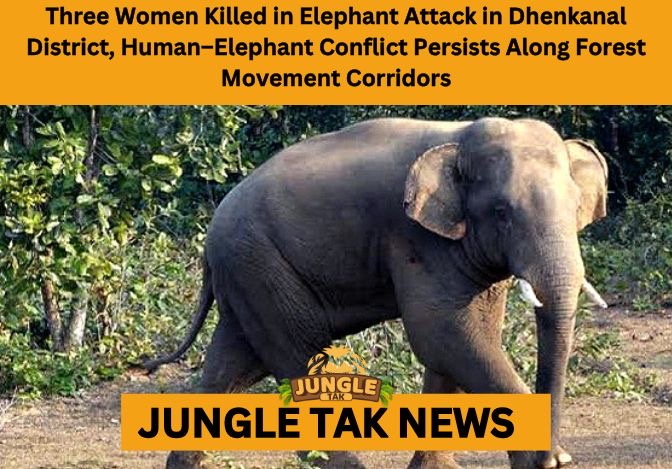

The serene landscapes of Odisha have once again been marred by tragedy as three women lost their lives in a brutal wildlife encounter, bringing the recurring issue of human-elephant conflict in Dhenkanal back into the national spotlight. The incident, which occurred early in the morning near a forested area, underscores the thinning boundaries between human settlements and wildlife habitats. As local authorities rush to manage the aftermath, the grieving community demands more than just compensation; they seek a permanent solution to the intensifying human-elephant conflict in Dhenkanal.
According to local reports, the victims were identified as residents of a village situated on the periphery of a known elephant movement path. The women had reportedly ventured toward the edge of the forest for routine activities when they were intercepted by a tusker that had strayed from its herd. This fatal encounter is not an isolated event but a symptomatic manifestation of the deep-rooted human-elephant conflict in Dhenkanal, a district that has historically served as a vital ecological bridge for pachyderms.
A Fatal Encounter in the Forest Corridors
The specific geography of the region plays a significant role in the frequency of these attacks, as the district sits directly on traditional migratory routes. Forest officials noted that the women were caught off guard, highlighting the unpredictable nature of the human-elephant conflict in Dhenkanal. Despite the presence of tracking teams, the dense foliage and the early morning mist often make it difficult for villagers to spot a lone tusker until it is too late, leading to such devastating instances of human-elephant conflict in Dhenkanal.
Eyewitnesses and family members of the deceased have expressed a sense of helplessness and anger toward the persistent threat. For many villagers, the forest is a source of livelihood, yet it has become a zone of peril due to the human-elephant conflict in Dhenkanal. The loss of three lives in a single day has sent shockwaves through the local community, emphasizing that the current preventative measures are insufficient to handle the scale of the human-elephant conflict in Dhenkanal.
Why the Conflict Persists Along Movement Corridors
Experts suggest that the primary driver behind these incidents is the fragmentation of natural corridors. As industrialization and infrastructure projects expand, the natural pathways used by elephants are being blocked, forcing them into closer proximity with human dwellings and intensifying the human-elephant conflict in Dhenkanal. When these majestic animals find their paths obstructed, they often deviate into agricultural fields and villages, resulting in the high-stakes human-elephant conflict in Dhenkanal that we see today.
Moreover, the search for food and water often leads herds away from the core forest areas during specific seasons. This seasonal migration is a natural biological instinct, yet it becomes a death trap for both humans and animals due to the human-elephant conflict in Dhenkanal. Without dedicated, unobstructed corridors that allow elephants to move without entering human settlements, the cycle of the human-elephant conflict in Dhenkanal will likely continue to claim innocent lives.
Government Response and Local Outcry
In response to the tragedy, the Odisha Forest Department has dispatched teams to monitor the movement of the rogue elephant and prevent further casualties. While the government usually offers ex-gratia payments to the families of victims, critics argue that financial aid is a reactive measure rather than a proactive strategy to solve the human-elephant conflict in Dhenkanal. The local population is increasingly vocal about the need for better early warning systems to mitigate the human-elephant conflict in Dhenkanal.
Local activists are calling for the installation of solar fencing and the deployment of more “Gaja Sathis” (Friends of Elephants) to patrol the areas most prone to encounters. There is a growing consensus that technology, such as drone surveillance and SMS alerts, must be integrated into the district’s safety protocols to reduce the human-elephant conflict in Dhenkanal. Without a technological edge, the forest guards remain outmatched by the sheer scale of the human-elephant conflict in Dhenkanal.
Sustainable Solutions for Coexistence
The long-term resolution of this crisis lies in the restoration of forest corridors and the implementation of community-led conservation programs. By involving the local population in the management of wildlife, it is possible to foster an environment of coexistence and reduce the friction caused by the human-elephant conflict in Dhenkanal. Education programs that teach villagers how to behave during an encounter are also vital components of a holistic strategy to address the human-elephant conflict in Dhenkanal.
Furthermore, the state must prioritize “Right of Passage” for elephants by declaring certain zones as protected corridors where human activity is strictly limited. This land-use planning is essential to separate the habitats and effectively lower the instances of human-elephant conflict in Dhenkanal. Only by respecting the biological needs of the elephants can the district hope to see a decline in the tragic human-elephant conflict in Dhenkanal.
CONTINUE READING WITH JUNGLETAK – TADOBA TIGER CORRIDOR
Ultimately, the survival of the Asian Elephant and the safety of the rural population depend on a balanced ecological approach. Protecting the forest movement corridors is not just an environmental goal; it is a humanitarian necessity to stop the human-elephant conflict in Dhenkanal. Until a harmony between development and conservation is achieved, the shadow of the human-elephant conflict in Dhenkanal will continue to loom over the forest fringes of Odisha.