
Forest ecology: The Regression of Green Laws
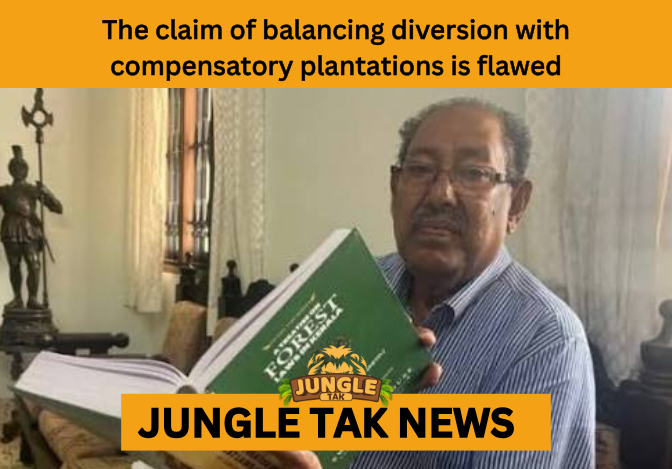
KOCHI: As India grapples with the dual crises of climate change and biodiversity loss, a new wave of legislative amendments in Kerala has sparked intense debate among conservationists. In December 2025, the conversation reached a fever pitch following a revealing interview with M.I. Varghese, a retired Indian Forest Service (IFS) officer and legal scholar. Varghese, known for his authoritative work A Treatise on Forest Laws in Kerala, did not mince words when addressing the state’s recent policy shifts. His central argument is a stinging rebuke of modern bureaucratic methods: the intricate and life-sustaining web of forest ecology cannot be reduced to simple arithmetic.

The Fallacy of Compensatory Arithmetic
At the heart of Varghese’s critique is the government’s approach to “compensatory afforestation”—the idea that cutting down a natural forest can be offset by planting trees elsewhere. According to Varghese, this is a dangerous oversimplification that ignores the fundamental tenets of forest ecology. He argues that a natural forest is not merely a collection of timber but a complex, evolved system of soil interactions, hydrological cycles, and biodiversity that has taken centuries to establish. By treating forests as interchangeable numbers in a ledger, the state is engaging in “regression presented as reform,” effectively dismantling the integrity of forest ecology.
Plantations Are Not Forests
Varghese specifically pointed out the flaw in equating monoculture plantations with natural habitats. The amendments to the Kerala Forest Act, 1961, and the Kerala Private Forests (Vesting and Assignment) Act, 1971, have been pitched as measures to help farmers and curb encroachment. However, Varghese warns that these legal shifts primarily benefit powerful landholding interests and resort groups looking to legitimize their occupation of forest lands. When a diverse Shola forest in Idukki is replaced by a timber plantation, the arithmetic might balance, but the forest ecology is irretrievably lost. The specialized species that depend on the unique microclimates of natural forests cannot survive in the sterile environment of a commercial plantation.
Bureaucracy Over Science
A significant portion of the interview focused on the controversial Kerala Wildlife (Protection) Amendment Bill, 2025. This legislation proposes devolving powers to District Collectors and junior forest officers to authorize lethal action during human-wildlife conflicts. Varghese views this as a catastrophic shift from scientific management to administrative convenience. He notes that decisions involving wildlife populations and habitat management require deep scientific expertise in forest ecology, not the reactionary impulses of local administration. By shifting this authority, the state risks normalizing the killing of wildlife and undermining the scientific foundations of conservation.
The Erosion of Constitutional Ethics
Varghese also reflected on the philosophical shift in India’s approach to nature. He reminded readers that environmental protection was once considered a moral and constitutional duty under Articles 48-A and 51-A (g) of the Constitution. In the past, the judiciary treated forests as a public trust held for future generations. Today, however, he laments that conservation is interpreted merely as “management”—a euphemism for controlled exploitation. The profound language of forest ecology has been systematically replaced by the cold, transactional language of economics, viewing nature primarily as an impediment to infrastructure and development rather than a life-support system.
The Danger of Setting a Precedent
The implications of Kerala’s legislative changes extend far beyond the state’s borders. Varghese expressed a deep fear that if Kerala—a state often seen as a leader in environmental awareness—succeeds in diluting these protections, it will set a disastrous precedent for the rest of India. Other states dealing with rising human-wildlife conflict or demands for industrial land will cite Kerala’s example to demand similar powers. Since wildlife corridors and river systems do not recognize political boundaries, the fragmentation of legal authority will inevitably lead to the fragmentation of forest ecology across the Western Ghats and beyond.
The Silence of the Forests
One of the most poignant moments in the interview was Varghese’s reflection on the “voice” of the wild. He emphasized that forests cannot speak for themselves in legislative assemblies or courtrooms; the law is supposed to be their voice. When legal safeguards are eroded by amendments that prioritize short-term human gain, that voice grows faint. Varghese warned that if we continue to ignore the dictates of forest ecology, the silence that follows the extinction of species and the drying of rivers will echo across generations. It is a silence that no amount of economic development can fill.
Reclaiming the Moral Centre
In his concluding remarks, Varghese called for a return to the “moral centre” of conservation. He urged that institutional strength, independent wildlife boards, and transparent public consultation are essential to strengthen, rather than weaken, protection laws. Real solutions to issues like human-wildlife conflict lie in restoring corridors and protecting habitats, not in reactive culling or legal loopholes. He stressed that we must stop viewing the protection of forest ecology as a barrier to development and start recognizing it as the very foundation of human survival.
CONTINUE READING WITH JUNGLETAK – BAHRAICH WOLF ATTACK
A Call to Action
The interview with M.I. Varghese serves as a critical wake-up call for policymakers, environmentalists, and citizens alike. As 2025 draws to a close, the choices made today regarding the Kerala Wildlife (Protection) Amendment Bill and other forest laws will determine the fate of India’s natural heritage. Varghese’s message is clear: we cannot calculate our way out of an ecological crisis. To save our future, we must respect the complex, unquantifiable value of forest ecology and ensure that the laws of the land reflect the laws of nature.