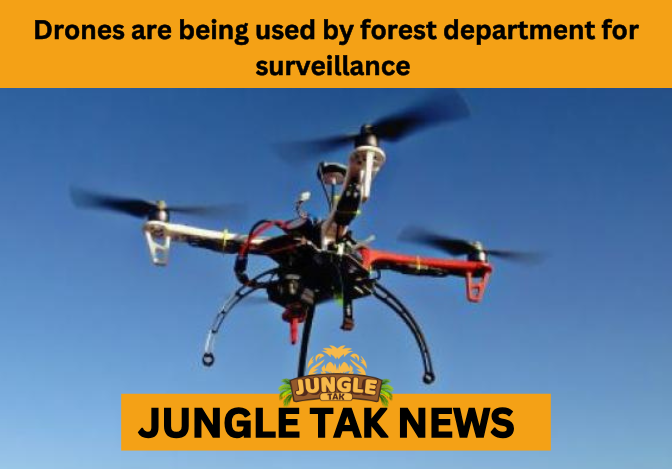

AMARAVATI – The silence of the deep woods in the Eastern Ghats is no longer just broken by the sounds of wildlife or the rustle of wind; it is now punctuated by the faint, reassuring hum of propellers. As of December 2025, the state government has officially operationalized a comprehensive aerial monitoring grid, marking a paradigm shift in conservation strategy. The initiative, aimed at modernizing the protection of over 37,000 square kilometers of forest cover, relies heavily on the newly expanded Andhra Pradesh forest drone surveillance network to penetrate terrains that were previously inaccessible to foot patrols.
For decades, the dense canopies of the Seshachalam ranges and the rugged terrain of the Nallamala hills provided cover for varied illegal activities. From the high-stakes smuggling of Red Sanders to the silent laying of snares for leopards and tigers, forest offenders often had the advantage of geography. However, Principal Chief Conservator of Forests (PCCF) officials announced this week that the forest drone surveillance initiative is swiftly tipping the scales, turning the state’s forests into a “smart” protected zone where every movement is tracked and analyzed.
The Tech Upgrade
The core of this initiative is not just about flying cameras; it is about the sophistication of the payload. The department has procured a fleet of customized drones equipped with high-resolution optical zoom cameras and, crucially, military-grade thermal sensors. These sensors allow the forest drone surveillance teams to operate effectively under the cover of darkness—the preferred time for smugglers and poachers to strike.
Senior forest officials explained that previous attempts at aerial monitoring were limited by battery life and daylight dependence. The new generation of drones, deployed across sensitive divisions like Chittoor, Kadapa, and Kurnool, can fly autonomously on pre-mapped routes. By detecting heat signatures in the dead of night, the forest drone surveillance system can distinguish between a grazing deer and a crouching poacher, transmitting live coordinates to Quick Response Teams (QRTs) stationed on the ground.
Cracking Down on the Red Sanders Mafia
The most immediate priority for this technological intervention is the protection of “Red Gold.” The endemic Red Sanders trees found in the Seshachalam biosphere have long been the target of international smuggling syndicates. Despite trench digging and armed patrolling, the porous borders remained a challenge. The implementation of forest drone surveillance has added a vertical layer of security that smugglers find difficult to evade.
In a recent operation near Tirupati, the drone feeds successfully identified a group of woodcutters attempting to create a new pathway through the scrub forest. The real-time imagery provided by the forest drone surveillance unit allowed the task force to encircle the offenders before a single tree was felled. This preventive capability is viewed as a game-changer, moving the department from a reactive “chase and catch” mode to a proactive prevention strategy.
Protecting the Big Cats: Anti-Poaching Measures
Beyond timber, the rich biodiversity of the Nagarjunsagar-Srisailam Tiger Reserve (NSTR)—India’s largest tiger reserve—stands to gain significantly. Poaching, often carried out using crude wire snares, poses a lethal threat to tigers and leopards. The forest drone surveillance strategy includes low-altitude flights designed to spot these snares and detect illegal campsites deep within the core areas.
Wildlife biologists working with the department note that human foot patrols often disturb the wildlife they are meant to protect. Drones, flying at strategic altitudes, minimize this disturbance while covering vast areas in minutes that would take trekkers days to inspect. Consequently, the Andhra Pradesh forest drone surveillance program is proving to be a non-invasive guardian for the state’s growing tiger population, ensuring that the corridors between Telangana and Andhra Pradesh remain safe for animal migration.
Mitigating Man-Animal Conflict
A rising concern in districts like Chittoor, Parvathipuram Manyam, and Vizianagaram is the conflict between wandering elephant herds and farmers. Here, the forest drone surveillance units are playing a humanitarian role. By tracking the movement of elephant herds in real-time, the forest department can issue early warnings to villages that lie in the pachyderms’ path.
This “Early Warning System” allows villagers to secure their crops and stay indoors, significantly reducing the potential for violent encounters. In the past month alone, the forest drone surveillance data has helped divert herds back into the forest using non-lethal methods, preventing crop damage and saving lives on both sides of the species divide.
Fire Management and Disaster Response
As the winter transitions into the dry season, the threat of forest fires looms large. In previous years, ground crews would often spot a fire only after it had engulfed a significant hectare of canopy. The forest drone surveillance network is now integrated with satellite alerts to provide visual verification of heat anomalies.
Drones can fly directly to the source of the smoke to assess the direction of the wind and the intensity of the fire, allowing district fire officers to deploy resources more efficiently. This rapid assessment capability of the Andhra Pradesh forest drone surveillance system is expected to reduce the “reaction time” by nearly 60%, potentially saving thousands of hectares of flora from being reduced to ash in the coming summer months.
Combating Ganja Cultivation and Encroachment
The dense, inaccessible valleys of the Eastern Ghats, particularly along the Andhra-Odisha border (AOB), have historically been hotspots for illegal marijuana (ganja) cultivation. The forest drone surveillance has made it nearly impossible to hide these plantations. High-definition aerial mapping can identify the distinct texture and color of cannabis plants amidst the natural vegetation.
Furthermore, the technology is being used to digitize forest boundaries. Encroachment for agriculture or illegal construction is often a creeping process, hard to notice from the ground until it is too late. Regular aerial audits conducted through the Andhra Pradesh forest drone surveillance program create a time-lapse record of the forest borders, providing irrefutable legal evidence against land grabbers and ensuring the integrity of the reserve forest land.
Building a Tech-Savvy Forest Force
The shift to high-tech surveillance has necessitated a transformation in the workforce. The department has established Command Control Centers (CCC) in district headquarters, where trained analysts monitor the feeds 24/7. The success of the forest drone surveillance depends heavily on the synergy between the pilot in the sky and the ranger on the ground.
Training academies in the state are now including drone piloting and data interpretation in their curriculum for new recruits. This modernization drive ensures that the forest drone surveillance is not just a temporary project but a permanent institutional capability.
CONTINUE READING WITH JUNGLETAK – OLIVE RIDLEY TURTLE
The Future of Forestry is Digital
The operationalization of this drone fleet sends a strong message: the days of operating in the shadows are over for forest offenders. By leveraging technology, the state is maximizing its resources, ensuring that the limited number of forest guards can protect vast expanses of wilderness effectively. The Andhra Pradesh forest drone surveillance project is a model that other states are likely to emulate as the pressure on India’s natural resources continues to mount.
As the sun sets over the Eastern Ghats, the forest is no longer unobserved. The electronic eyes in the sky are awake, ensuring that the natural heritage of Andhra Pradesh remains secure for the generations to come.