
ECO-TOURISM FRAMEWORK : A Blueprint for Green Growth
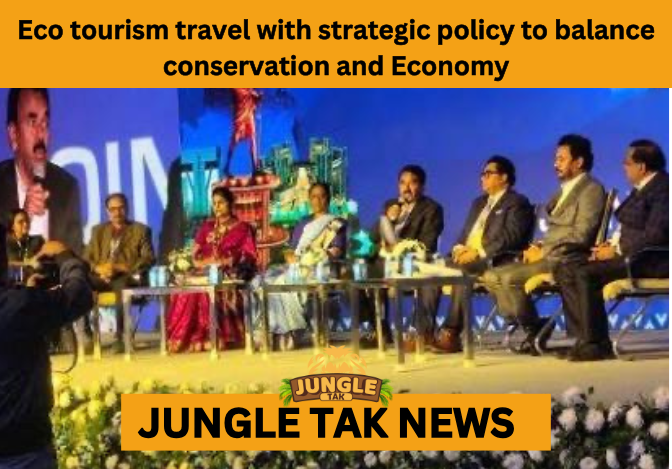
Hyderabad: In a landmark move designed to position the state as a premier destination for nature lovers while strictly safeguarding its biodiversity, the Telangana government has officially unveiled its comprehensive new ECO TOURISM FRAMEWORK. The policy, announced on Wednesday, marks a significant departure from ad-hoc tourism initiatives of the past, aiming instead to institutionalize a structured, sustainable approach to exploring the state’s rich wilderness. By bridging the gap between conservation needs and economic aspirations, the state aims to unlock the potential of its forests, which cover nearly 24% of its geographical area, without compromising the ecological sanctity of these fragile zones.
The release of the ECO TOURISM FRAMEWORK comes at a crucial time when the demand for experiential and nature-based travel is surging among the urban workforce of Hyderabad and neighboring states. Officials from the Forest Department and the Telangana State Tourism Development Corporation (TSTDC) emphasized that the core philosophy of this new policy is “low impact, high value.” Unlike mass tourism, which often degrades natural resources, this policy establishes rigid protocols to ensure that visitor footprints are minimized. The government has made it clear that while they welcome the world to see Telangana’s tigers and waterfalls, the protection of wildlife habitats remains the non-negotiable priority under this new mandate.
Public-Private Partnership (PPP) Model
A central pillar of the newly introduced ECO TOURISM FRAMEWORK is the strategic integration of Public-Private Partnerships (PPP). The government acknowledges that developing world-class infrastructure requires capital and expertise that the state exchequer alone may not efficiently provide. However, the framework lays down stringent “red lines” for private investors. Private players will be invited to develop hospitality and safari infrastructure, but they must adhere to green building codes. The policy explicitly bans permanent concrete structures in core forest areas, mandating instead the use of semi-permanent, eco-friendly materials like bamboo and wood that blend seamlessly with the natural landscape.
According to the guidelines embedded in the ECO TOURISM FRAMEWORK, the revenue model is designed to be cyclical and restorative. A significant portion of the revenue generated from entry fees, safari bookings, and luxury tented accommodations will be plowed back into the conservation fund. This creates a financial ecosystem where tourism directly funds the protection of the very resources it relies on. Investors will be granted operational rights for fixed tenures, but their contracts will be subject to rigorous annual environmental audits to ensure they are compliant with the conservation ethos defined by the state.
Focus on Tiger Reserves and Circuits
The operational strategy of the ECO TOURISM FRAMEWORK identifies specific high-potential circuits, with a spotlight on the Amrabad and Kawal Tiger Reserves. These areas, often referred to as the lungs of Telangana, hold immense potential to rival famous wildlife destinations in Madhya Pradesh and Karnataka. Under the new guidelines, the state plans to upgrade safari tracks, introduce professional naturalist training programs, and improve last-mile connectivity to these reserves. The goal is to transform these locations from mere “spots” on a map into immersive educational experiences where tourists can learn about the Deccan plateau’s unique flora and fauna.
Furthermore, the ECO TOURISM FRAMEWORK envisions a “Hub and Spoke” model. Major transit hubs will be developed outside the sensitive forest zones, serving as base camps from where tourists can take electric vehicles or guided treks into the wild. This approach ensures that vehicular pollution and noise are kept at the periphery. Destinations like the Kuntala and Bogatha waterfalls, along with the scenic Laknavaram Lake, are also slated for upgrades under this policy, ensuring that the diverse landscapes of the state—from dense teak forests to cascading water bodies—are accessible yet protected.
Community-Based Eco-Tourism (CBET)
Perhaps the most human-centric aspect of the ECO TOURISM FRAMEWORK is its unwavering focus on the local tribal communities. The government has stated that the primary beneficiaries of this tourism boom must be the “sons of the soil”—the Chenchus, Gonds, and other tribes who have lived in harmony with these forests for centuries. The policy mandates that a majority of the jobs generated—ranging from safari guides and hospitality staff to anti-poaching watchers—must be reserved for local youth. This shift aims to turn local communities from passive observers into active stakeholders and guardians of the forest.
By integrating Community-Based Eco-Tourism (CBET) principles, the ECO TOURISM FRAMEWORK seeks to reduce the dependency of forest-dwelling communities on timber and other forest produce. Instead, their livelihoods will be tethered to the health of the ecosystem. Village Eco-Development Committees (EDCs) will be strengthened and given a share of the tourism revenue. This financial incentive is expected to reduce human-wildlife conflict and curbing poaching, as the community realizes that a live tiger or a standing tree brings in sustainable income for years to come.
Strict Regulatory Oversight
To prevent the “Disneyfication” of the wild, the ECO TOURISM FRAMEWORK introduces a multi-tiered oversight mechanism. A high-level steering committee, headed by the Forest Minister and comprising conservationists and environmental experts, will approve all projects. The framework categorically prohibits loud music, night camping in core areas (except in designated secure zones), and plastic usage within the eco-tourism zones. Violations of these norms by either tourists or operators will attract heavy penalties, reinforcing the message that the forest rules apply to everyone.
The introduction of this ECO TOURISM FRAMEWORK brings Telangana in line with global best practices. It moves away from the archaic concept of tourism as merely “picnicking” and elevates it to “responsible travel.” The policy also outlines the creation of interpretation centers and museums at key entry points to sensitize visitors before they enter the forest. Education is treated as a crucial component, ensuring that every tourist leaves with a deeper appreciation for conservation.
Future Implications and Economy
Economically, the state anticipates that the successful implementation of the ECO TOURISM FRAMEWORK will contribute significantly to the Gross State Domestic Product (GSDP). By attracting high-value tourists who are willing to pay a premium for exclusive, sustainable experiences, the state hopes to generate revenue that can subsidize forest protection efforts. The policy also encourages the marketing of local handicrafts and organic produce to tourists, creating a secondary market for tribal artisans and farmers under the eco-tourism brand.
CONTINUE READING WITH JUNGLETAK – Wild tuskers breach
As the state prepares to roll out the first set of tenders and projects under this new regime, all eyes are on the execution. The ECO TOURISM FRAMEWORK is undoubtedly a robust document on paper, promising a harmonious balance between man and nature. If implemented with the rigor it promises, it could transform Telangana into the next big eco-tourism capital of India, proving that economic development and ecological preservation are not mutually exclusive, but are, in fact, two sides of the same coin.