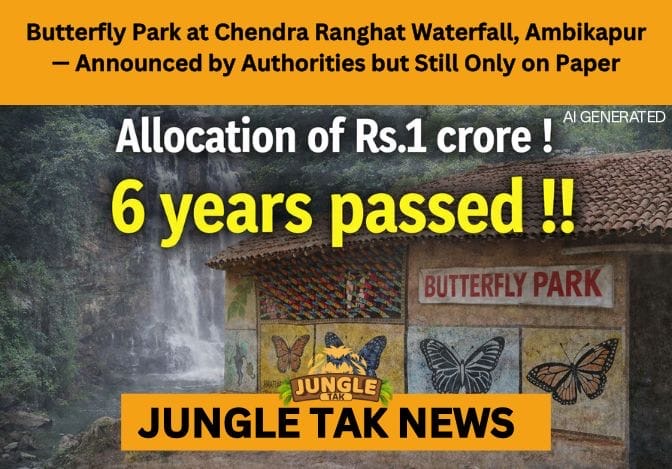

In the heart of Chhattisgarh’s Surguja district, the promise of a vibrant Chendra Ranghat butterfly park once sparked immense excitement among locals and nature enthusiasts alike. The scenic Chendra Ranghat waterfall is already a popular weekend getaway, and the addition of a specialized habitat for winged insects was envisioned as a major ecological boost for the region. However, despite the grand promises made by the forest department, the butterfly park remains a distant dream, existing solely within official files and administrative blueprints.
The Vision Behind the Eco-Tourism Project
The concept of the Chendra Ranghat butterfly park was originally conceived to capitalize on the rich biodiversity found in the Ambikapur forest division. Authorities aimed to create a state-of-the-art eco-tourism hub where visitors could witness rare and indigenous species of butterflies in a controlled yet natural environment. By integrating the Chendra Ranghat butterfly park with the existing natural beauty of the waterfall, the government hoped to put Ambikapur on the national map for sustainable wildlife tourism and environmental education.
Environmentalists have long noted that the humid and lush surroundings of the waterfall provide the perfect microclimate for a Chendra Ranghat butterfly park. The area is naturally home to various host plants and nectar-rich flora that could easily support a thriving population of diverse butterfly species. Unfortunately, the lack of physical infrastructure for the Chendra Ranghat butterfly park means that this immense natural potential continues to be underutilized, leaving the local ecosystem without a formal conservation framework.
Current Status: A Project Stalled at the Planning Stage
Despite the initial fanfare and public announcements, a visit to the site today reveals that not a single brick has been laid for the Chendra Ranghat butterfly park. Local residents express growing frustration, noting that while other districts in Chhattisgarh are modernizing their tourist spots, their own butterfly park has become a victim of bureaucratic apathy. The complete absence of a boundary wall, a research center, or even basic landscaped gardens proves that the butterfly park is currently trapped in a cycle of administrative neglect.
The delay in the construction of the Chendra Ranghat butterfly park is costing the local economy dearly in terms of missed revenue and employment opportunities. Small vendors, local guides, and transport operators had hoped that the butterfly park would provide a steady stream of visitors throughout the year, especially during the peak tourism months. Instead, the lack of progress on the Chendra Ranghat butterfly park has left the existing tourism infrastructure around the waterfall in a state of relative stagnation.
Administrative Hurdles and Budgetary Constraints
When questioned about the status of the Chendra Ranghat butterfly park, forest department officials often cite a combination of budget constraints and the need for revised technical clearances. While the initial feasibility survey for the Chendra Ranghat butterfly park was completed several years ago, the actual fund allocation seems to have been redirected or caught in a web of red tape. This persistent administrative deadlock is the primary reason why the Chendra Ranghat butterfly park has failed to move from the drawing board to the actual terrain.
Furthermore, the lack of a dedicated committee to oversee the Chendra Ranghat butterfly park has resulted in a loss of momentum. Without a clear leader to push for the release of funds and the commencement of work, the butterfly park has fallen down the list of government priorities. Public interest groups argue that if the authorities do not act soon, the initial research conducted for the Chendra Ranghat butterfly park will become obsolete, requiring further expenses for new surveys and planning.
The Importance of Conservation and Education
Beyond its potential as a tourist attraction, the butterfly park was supposed to serve as a vital center for biodiversity conservation. Students from Ambikapur and surrounding educational hubs were expected to visit the Chendra Ranghat butterfly park to learn about the intricate process of pollination and the ecological importance of insects. Without the physical completion of the butterfly park, a significant opportunity for hands-on environmental awareness and scientific study is being lost every single day.
Social activists in the Surguja region are now planning to submit a formal memorandum to the state government, demanding immediate action on the butterfly park. They argue that the Chendra Ranghat butterfly park is essential for preserving the local butterfly population, which is currently threatened by habitat loss and climate change. The growing public pressure and media attention might be the only way to revive the dormant plans for the butterfly park and ensure it receives the funding it deserves.
Turning a Vision into Reality
As another tourism season approaches, the wait for the butterfly park continues with no clear timeline for its eventual inauguration. The people of Ambikapur remain hopeful that the state authorities will finally prioritize the Chendra Ranghat butterfly park and turn the “on-paper” project into a living, breathing reality. Until the first butterfly is officially housed in the park, the butterfly park will remain a symbol of unfulfilled potential in Chhattisgarh’s otherwise burgeoning eco-tourism sector.
CONTINUE READING WITH JUNGLETAK – SIMILIPAL AI CAMERA TECHNOLOGY
In the final analysis, the successful establishment of the butterfly park requires political will and a commitment to the region’s natural heritage. Transforming the butterfly park from a file in an office to a destination for nature lovers would be a fitting tribute to the beauty of the Chendra Ranghat waterfall. For the sake of the environment and the local community, the work on the Chendra Ranghat butterfly park must begin without further delay.