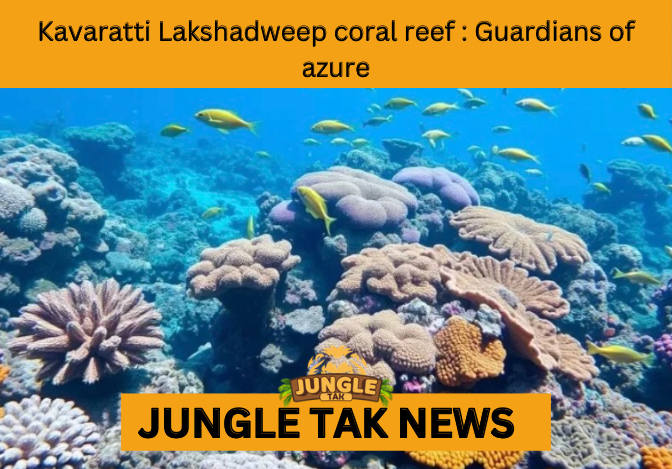

KAVARATTI – In the heart of the Arabian Sea, the tiny emerald islands of Lakshadweep are currently at the center of a monumental ecological struggle. The archipelago, which consists of 36 islands and thousands of square kilometers of surrounding lagoon, is India’s only coral atoll ecosystem. As the 2025-2026 tourism season peaks, a renewed and aggressive focus on coral reef protection has been launched to safeguard these “rainforests of the sea.” From the pristine shores of Bangaram to the southern tip of Minicoy, the mission is clear: protect the reefs or lose the islands.
The archipelago’s economy and physical existence depend entirely on its coral health. These reefs act as natural breakwaters, protecting the low-lying islands from storm surges and rising sea levels. However, rising sea temperatures have made the reefs vulnerable. The current year has seen the implementation of the most comprehensive plan to date for coral reef protection , combining high-tech monitoring with traditional islander knowledge.
The 2026 Bleaching Alert: A Proactive Response
Marine biologists monitoring the atolls have noted a worrying rise in sea surface temperatures (SST) in the Arabian Sea. To preempt a mass bleaching event similar to those seen in 1998 and 2016, the Department of Science and Technology has intensified coral reef protection efforts. This involves the deployment of underwater sensors that provide real-time data on water acidity and temperature, allowing scientists to identify “stress zones” before the coral tissues begin to expel their symbiotic algae.
The focus this year has shifted toward “resilience-based management.” Instead of merely observing the damage, teams are actively shading certain high-value reef patches and increasing the circulation of cooler water in lagoon nurseries. This proactive stance is a hallmark of the new era of coral reef protection, ensuring that the foundational species of the islands are given a fighting chance against global warming.
Coral Grafting: The “Biorock” Revolution
One of the most exciting developments in 2025 has been the large-scale expansion of coral restoration projects. Using “Biorock” technology—where a low-voltage electrical current is passed through steel structures—scientists are accelerating the growth of calcium carbonate. This technique is a cornerstone of current coral reef protection initiatives. These electrified reefs grow up to five times faster than natural reefs and show a significantly higher survival rate during heatwaves.
Local divers and island youth are being trained as “Coral Gardeners.” These volunteers help in “out-planting” nursery-grown coral fragments back onto damaged reef slopes. By involving the local community in the technical aspects of coral reef protection, the administration is fostering a sense of ownership over the lagoons. The sight of young islanders tending to underwater nurseries is now a common feature of the Lakshadweep landscape.
Sustainable Tourism: Balancing Growth and Ecology
With the recent surge in domestic tourism interest, the challenge of waste management and physical damage to reefs has magnified. To counter this, the administration has introduced a “Green Fin” certification for all scuba diving and snorkeling operators. This is a critical regulatory pillar of coral reef protection. Operators must now follow strict protocols to ensure that tourists do not touch, step on, or collect coral samples.
Furthermore, the introduction of the “Polluter Pays” principle ensures that a portion of the entry permit fees is directly funneled into reef restoration funds. Sustainable tourism is no longer a choice but a mandatory framework for coral reef protection. Large-scale infrastructure projects are now subject to rigorous “Blue Audits” to ensure that sediment runoff from construction does not smother the nearby polyps.
Protecting the Giants: Megafauna and Reef Health
A reef is only as healthy as the predators and herbivores that inhabit it. The Lakshadweep – coral reef protection and marine conservation strategy includes the strict protection of Parrotfish, which are essential for cleaning algae off the coral, and the endangered Green Sea Turtles that graze on the seagrass beds. The declaration of the Dr. KK Mohammed Koya Sea Cucumber Conservation Reserve has already shown positive results in maintaining the nutrient balance of the lagoons.
By protecting these “keystone species,” the islands ensure a self-sustaining ecosystem. Illegal fishing of sea cucumbers and sharks—often driven by international demand—is being met with a zero-tolerance policy. The Indian Coast Guard and the local Marine Police have increased their night patrols as part of the integrated coral reef protection and marine conservation framework, significantly reducing poaching incidents in the 2025-2026 cycle.
The Plastic Battle: Mission Zero-Waste
Plastic pollution remains a silent killer of coral reefs. Microplastics can be ingested by coral polyps, leading to disease and death. In Kavaratti and Agatti, the administration has launched a “Clean Lagoon” initiative, where fishermen are incentivized to bring back plastic waste caught in their nets. This circular economy model is an essential component of coral reef protection, preventing thousands of tons of debris from settling on the delicate reef floor.
Waste-to-energy plants and plastic recycling units are being set up on the larger islands to process local and tourist-generated waste. By treating the islands as a closed-loop system, the coral reef protection mission aims to make the archipelago India’s first “Zero Plastic” territory. The success of this move is already visible in the increased clarity of the lagoon waters.
Climate Resilience and the Future of the Atolls
Looking ahead, the long-term survival of the islands depends on international climate action, but local resilience is the first line of defense. The coral reef protection efforts of 2026 are focused on building a “buffer” for the islands. This includes the restoration of mangroves in islands like Minicoy, which act as a secondary barrier and provide a nursery for reef fish.
Education remains the most potent tool. Schools across the Union Territory have integrated marine biology into their curriculum, ensuring that the next generation of administrators and fishermen are well-versed in the nuances of coral reef protection. When a child understands that the reef is the only thing standing between their home and the rising sea, conservation becomes a matter of survival, not just sentiment.
CONTINUE READING WITH JUNGLETAK – SHADOWS IN PERIL
A Model for Small Island Developing States
The work being done in the Arabian Sea is a microcosm of the global fight for our oceans. The coral reef protection initiatives serve as a blueprint for other atoll nations like the Maldives and Kiribati. Through a combination of cutting-edge science, community participation, and strict regulation, Lakshadweep is proving that it is possible to balance human aspiration with ecological integrity.
As the sun sets over the turquoise lagoons of Kavaratti, the silent work of the coral polyps continues beneath the waves. Supported by a nation’s commitment to coral reef protection, these tiny architects of the ocean remain the true guardians of the azure.