
Corridors Come Alive
Coimbatore/Palakkad: A significant biological phenomenon has gripped the forested frontiers of the Western Ghats this week, forcing authorities in two states to enter a mode of high operational readiness. The annual winter migration is in full swing, leading to a dramatic intensification of BORDER ELEPHANT MOVEMENT across the sensitive ecological divide separating Tamil Nadu and Kerala. From the mist-covered slopes of the Nilgiris to the dense thickets of the Anamalai Tiger Reserve, large herds of wild tuskers have begun their seasonal trek, navigating ancient corridors that are increasingly intersected by human infrastructure. The surge in BORDER ELEPHANT MOVEMENT activity has prompted District Collectors and Forest Officers on both sides to issue red alerts to border villages.
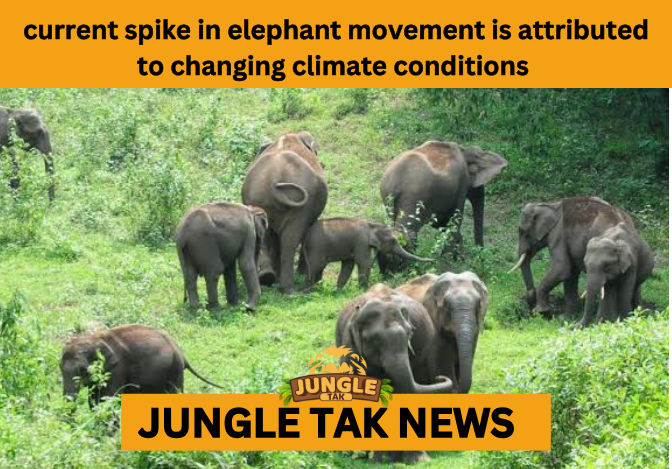
The current spike in BORDER ELEPHANT MOVEMENT is attributed to the changing climatic conditions marking the transition from the North East Monsoon to the drier winter months. As water holes in the upper reaches of the forest begin to recede and forage becomes scarce in the deep core areas, matriarch-led herds are descending toward the perennial river basins and the verdant valleys along the state boundaries. This natural oscillation, essential for the genetic dispersal and survival of the species, has resulted in frequent sightings of herds—ranging from five to fifteen individuals—crossing the Walayar gap and the Kumily sectors, bringing them dangerously close to human habitations.
Farming Communities on Edge
For the agricultural communities residing in the shadow of the Ghats, the intensified BORDER ELEPHANT MOVEMENT spells sleepless nights and economic anxiety. Farmers in the Coimbatore and Theni districts of Tamil Nadu, as well as those in the Palakkad and Idukki districts of Kerala, have reported multiple incidents of crop raiding over the last 72 hours. Extensive plantations of banana, areca nut, and coconut have been targeted by the famished giants. In the Walayar region, a herd was seen lingering near the railway tracks—a notorious death trap for wildlife—forcing railway authorities to impose speed restrictions on trains to prevent tragic collisions often associated with this heightened migration.
The unpredictability of the BORDER ELEPHANT MOVEMENT this year has been exacerbated by fragmentation. With traditional corridors blocked by resort walls, electric fences, and expanding townships, the animals are forced to deviate into new territories. This deviation was evident on Thursday when a lone tusker, separated from its herd during the migration, strayed into a marketplace near the Cumbum mettu road, causing panic among traders and tourists. While no injuries were reported, the incident served as a stark reminder that the boundaries between the wild and the urban are becoming dangerously porous during this peak migration season.
Joint Task Force and Technology
Recognizing that wildlife respects no political boundaries, the Forest Departments of Tamil Nadu and Kerala have activated a synchronized strategy to manage the BORDER ELEPHANT MOVEMENT. In a high-level coordination meeting held via video conferencing, officials decided to share real-time intelligence regarding herd locations. If a herd is driven out of the Kerala side, Tamil Nadu officials are immediately alerted to receive the animals and guide them back to the reserve forest, preventing them from entering villages. This “relay” tactic is crucial to avoid the “ping-pong” effect, where elephants are stressed by being chased back and forth between the two states without a safe passage.
To effectively monitor the BORDER ELEPHANT MOVEMENT, technology is being deployed on an unprecedented scale. Thermal imaging drones are buzzing over the canopy at night, tracking the heat signatures of the moving herds. These aerial eyes allow ground teams to anticipate the animals’ trajectory hours in advance. Furthermore, specialized “Kumki” elephants (trained captive elephants) have been stationed at strategic choke points. These Kumkis serve as a deterrent, physically blocking the wild herds from entering human settlements and gently nudging them toward the forest interior, ensuring the migration continues without human conflict.
The Ecological Imperative
Biologists warn that blocking or aggressively deterring this BORDER ELEPHANT MOVEMENT could have catastrophic long-term effects on the elephant population. The migration is not merely a search for food; it is a quest for mates. The exchange of genes between the elephant populations of the Silent Valley in Kerala and the Mudumalai-Bandipur landscape in Tamil Nadu/Karnataka is vital to prevent inbreeding. Therefore, the forest department’s primary goal is not to stop the movement but to facilitate it safely. They are working to create “silent zones” along key corridors, temporarily restricting traffic and shutting down power lines to allow the herds to pass undisturbed.
However, the challenge remains immense. The BORDER ELEPHANT MOVEMENT is currently peaking near the Segur Plateau, where traffic on the Ooty-Mysore road creates a significant barrier. Tourists stopping to take photographs of the crossing herds have been identified as a major stressor for the animals. Authorities have now deployed highway patrol teams to fine anyone stopping their vehicles in the forest stretch, emphasizing that a stressed elephant is a dangerous elephant. The agitation caused by flashlights and noise often triggers the herds to charge, escalating what should be a peaceful natural event into a conflict scenario.
Public Safety Advisories
In light of the volatile situation, specific advisories regarding BORDER ELEPHANT MOVEMENT have been issued to estate workers and tribal settlements. Residents have been asked to avoid stepping out of their homes between 6:00 PM and 6:00 AM. In areas like Valparai and Munnar, where tea estates form a contiguous landscape with the forest, estate managements have been instructed to ensure proper lighting in labor lines and to clear bushes around residential quarters to remove hiding spots for the animals. The sound of crackers and drums—traditional methods of scaring elephants—is being regulated to prevent the herds from scattering in panic.
CONTINUE READING WITH JUNGLETAK – CAPTURED TORTOISE
As the winter deepens, the BORDER ELEPHANT MOVEMENT is expected to continue for another few weeks until the herds find suitable fodder and water availability stabilizes. Until then, the border regions remain a shared space of tension and wonder. It is a test of coexistence, demanding patience from the humans and offering safe passage to the giants. The Forest Departments remain on high alert, committed to ensuring that this ancient rhythmic journey of the elephants concludes safely, preserving the ecological integrity of the majestic Western Ghats.