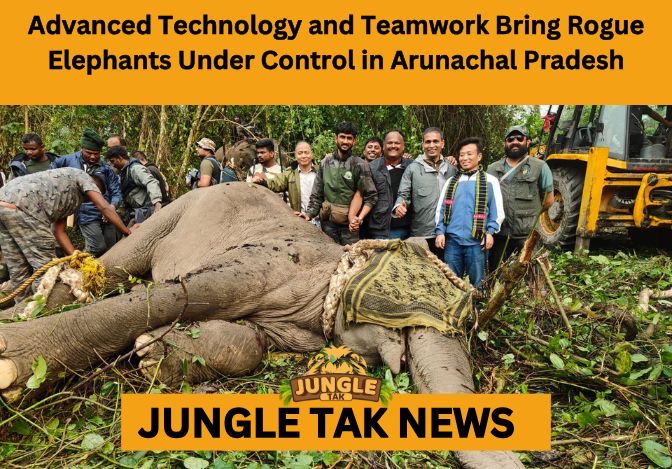

In the dense, mist-shrouded forests of Arunachal Pradesh, a new era of wildlife management is emerging to address the escalating challenges of human-elephant conflict. Recent operations to safely steer straying pachyderms away from human settlements have highlighted how advanced technology and teamwork can prevent casualties and protect the livelihoods of local farmers. By blending high-tech surveillance with traditional tracking methods, the state is creating a sustainable blueprint for wildlife conservation.
For years, residents in districts such as Namsai, Lohit, and Papum Pare have lived in constant fear as wild bulls, often separated from their herds, damaged crops and destroyed homes. The recent success in stabilizing these volatile situations and calming “rogue” behavior is largely attributed to a new strategy of advanced technology and teamwork, which allows for a more controlled and scientific response than traditional firecracker-based scaring methods.
High-Tech Surveillance: The Eyes in the Sky
The introduction of Unmanned Aerial Vehicles (UAVs) equipped with thermal imaging sensors has revolutionized how foresters track animal movement through the thick undergrowth of the Eastern Himalayas. By utilizing these drones, officials can pinpoint the exact location of a distressed elephant at night or in heavy fog, proving that advanced technology and teamwork are essential components for modernizing wildlife protection in rugged terrains.
While drones provide the necessary data from above, the physical work on the ground is carried out by “Kunkis”—trained captive elephants—and their highly experienced mahouts. This seamless coordination between digital tracking and the intuitive skills of traditional elephant handlers showcases the power of advanced technology and teamwork in navigating the complex landscape of Arunachal’s riverine plains.
The Role of Community Anti-Depredation Squads
Beyond the official forest department, local villages have begun forming specialized Anti-Depredation Squads (ADS) that work in direct contact with state responders. This grassroots approach ensures that critical information regarding elephant sightings flows quickly through SMS alerts and dedicated mobile apps, further solidifying the impact of advanced technology and teamwork on the front lines of the conflict.
When a specific elephant becomes a persistent threat to public safety, specialized veterinary teams are mobilized to perform precision darting for translocation or radio-collaring. Every high-stakes darting operation requires a synchronized level of advanced technology and teamwork to ensure the animal is immobilized safely and transported without sustaining injuries or causing further panic in the community.
Creating Long-Term Coexistence Corridors
The ultimate goal of these recent initiatives is not merely to capture or relocate animals, but to foster a landscape where humans and nature can coexist without violence. By implementing sensor-based early warning systems and mapping biological corridors, the state government demonstrates its long-term commitment to advanced technology and teamwork as the primary pillars of its environmental policy.
CONTINUE READING WITH JUNGLETAK – LEOPARD SKIN SEIZURES
As the sun sets over the Brahmaputra plains, the quiet return of a formerly rogue bull to the deep forest serves as a powerful testament to the effectiveness of these modern interventions. The journey toward resolving complex wildlife issues is ongoing, but with the continued application of advanced technology and teamwork, Arunachal Pradesh is setting a remarkable benchmark for conservation across India.