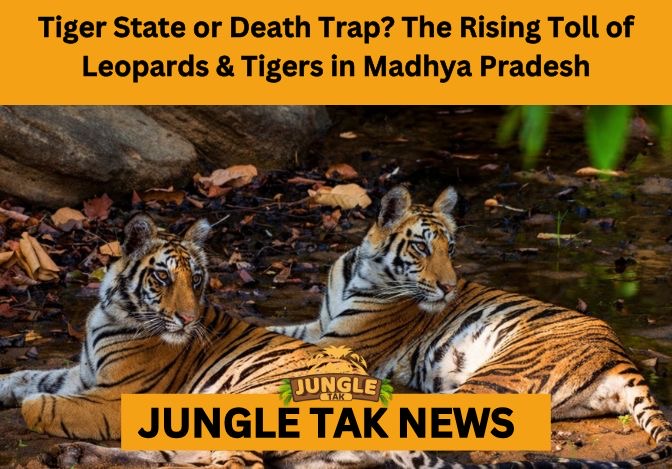

The Rising Frequency of Madhya Pradesh Wildlife Mortalities
Madhya Pradesh has long been celebrated as India’s premier feline sanctuary, a landscape where the roar of the tiger symbolizes ecological success. However, a dark cloud now hangs over this reputation as a surge in big cat deaths raises uncomfortable questions. While the state officially boasts the highest tiger population in the country, the rising frequency of Madhya Pradesh wildlife mortalities suggests a systemic crisis in protection protocols. From the dense thickets of Bandhavgarh to the corridors of Kanha, the transformation of a sanctuary into what some call a “death trap” is a narrative that the forest department is struggling to rewrite.
The statistics tell a sobering story of loss that extends beyond just the iconic Bengal tiger. Recent data highlights a worrying trend where leopards—the silent sentinels of the forest—are suffering at an even higher rate. The sheer volume of Madhya Pradesh wildlife mortalities recorded over the last two years indicates that being the “Tiger State” comes with immense pressure on habitat and resources. Conservationists argue that unless the rate of deaths is curbed through radical intervention, the title will become a hollow accolade overshadowed by a mounting graveyard of apex predators.
One of the most significant contributors to this crisis is the persistent threat of illegal human activities and modern infrastructure hazards. Poaching, fueled by the international black market, and deliberate electrocution by local farmers remain primary drivers behind the spike in Madhya Pradesh wildlife mortalities. Despite the deployment of Special Tiger Protection Forces, the vast and often porous borders of protected areas make it difficult to shield these animals from snares and high-voltage wires. These preventable human-induced fatalities are a stain on the state’s conservation record.
Beyond human interference, the biological limits of the national parks are being tested to their breaking point. High predator density in specific reserves often leads to fatal territorial fights, adding a “natural” but frequent layer to the overall count of Madhya Pradesh wildlife mortalities. When too many apex predators are confined to shrinking forest patches with limited corridors for movement, even the healthiest individuals fall victim to the violent struggle for space and prey. This overcrowding suggests that while tiger numbers have grown, their available habitat has not expanded at a matching pace.
The state forest department has faced mounting criticism from activists regarding its response time and the transparency of its investigations. To effectively address the root causes of Madhya Pradesh wildlife mortalities, there must be a paradigm shift from reactive patrolling to proactive, technology-driven surveillance. Implementing AI-driven thermal monitoring and real-time GPS tracking for vulnerable prides could prevent many of the incidents that currently lead to the discovery of decomposed carcasses weeks after the animal has died.
Human-wildlife conflict remains a volatile factor that exacerbates the mortality rate on the fringes of the jungle. As human settlements and agricultural lands expand into traditional forest corridors, the resulting encounters often end in tragedy for the animals, further increasing the tally of Madhya Pradesh wildlife mortalities. While compensation schemes for livestock loss exist, they are often delayed by bureaucracy, leading to retaliatory killings by frustrated villagers who perceive the big cats as a direct threat to their livelihoods and safety.
At a national level, the loss of these big cats impacts India’s global standing in the field of conservation biology. Every reported instance of Madhya Pradesh wildlife mortalities resonates in international forums, casting doubt on the long-term sustainability of India’s “Project Tiger” success story. If the state with the most resources and the highest feline population cannot protect its residents, it risks discouraging the eco-tourism that sustains the local economy and provides the very funds needed for conservation efforts.
CONTINUE READING WITH JUNGLETAK – PUNE LEOPARD CUB CRISIS
The transition from a “Tiger State” to a perceived “death trap” is a trajectory that must be reversed with political will and scientific precision. Solving the crisis of Madhya Pradesh wildlife mortalities requires a multi-pronged approach involving local community engagement, stringent law enforcement, and better land-use planning. Only through a dedicated and transparent strategy can Madhya Pradesh ensure that its forests remain a true haven for biodiversity rather than a landscape of loss. The world is watching, and the clock is ticking for the kings of the Indian wilderness.