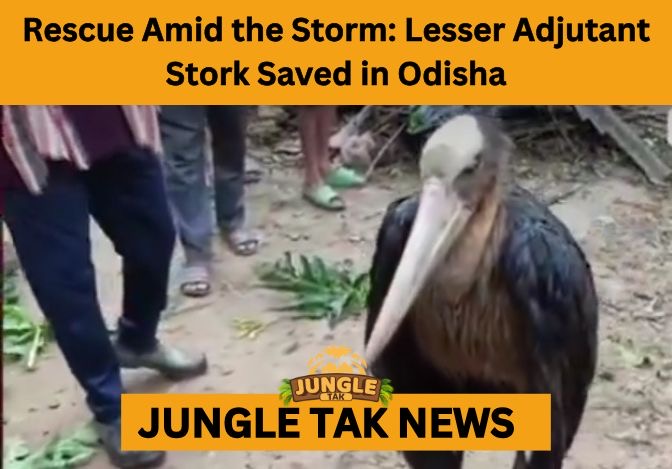

The coastal regions of Odisha are no strangers to the fury of nature, but amidst the howling winds and torrential rains of a recent seasonal storm, a story of compassion has emerged. In a heartwarming display of environmental stewardship, a rare and vulnerable bird was pulled from the brink of disaster. This successful Lesser Adjutant Stork rescue operation highlights the growing synergy between local communities and wildlife authorities in protecting the state’s rich biodiversity during extreme weather events.
The incident occurred in a remote village near the Bhitarkanika National Park, an area renowned for its diverse avian population. As the storm intensified, the massive bird, struggling against the high-velocity winds, was forced to make an emergency landing in a waterlogged paddy field. Disoriented and unable to take flight due to exhaustion and sodden feathers, the bird’s plight was immediately noticed by villagers. Recognizing the rarity of the creature, they initiated the first steps of the Lesser Adjutant Stork rescue by shielding it from stray dogs and alerting the local forest department.
The Critical Intervention by Forest Authorities
Upon receiving the distress call, a specialized team of forest officials and veterinary experts rushed to the spot. The bird, identified as Leptoptilos javanicus, appeared physically drained and was showing signs of hypothermia. The Lesser Adjutant Stork rescue required delicate handling, as these birds can be defensive when stressed. Using specialized nets and blankets, the team safely transported the stork to a nearby rehabilitation center where it could receive immediate medical attention and warmth.
Veterinary surgeons at the facility conducted a thorough examination to ensure no wings were broken during its tumble in the storm. Initial reports suggested that the bird was suffering from extreme fatigue rather than permanent injury. During this phase of the Lesser Adjutant Stork rescue, the focus remained on rehydration and providing high-protein nourishment to help the bird regain the strength necessary for its eventual return to the wild.
Understanding the Vulnerable Lesser Adjutant Stork
The Lesser Adjutant Stork is categorized as “Vulnerable” on the IUCN Red List, making every successful Lesser Adjutant Stork rescue a significant victory for global conservation efforts. These birds are characterized by their large size, hair-like feathers on their heads, and a distinct lack of a throat pouch, which differentiates them from their cousins, the Greater Adjutants. They play a vital role in the ecosystem as scavengers and predators of small reptiles and fish, helping maintain the ecological balance of Odisha’s wetlands.
The loss of habitat and the increasing frequency of climate-induced storms pose a severe threat to their dwindling population. Experts suggest that without community-led initiatives and rapid-response teams, the chances of survival for such large birds during cyclones are slim. This recent Lesser Adjutant Stork rescue serves as a case study in how proactive human intervention can mitigate the impact of natural disasters on endangered wildlife.
Odisha’s Commitment to Wildlife Conservation
Odisha has long been a frontrunner in disaster management, but this event underscores the state’s evolving focus on “animal-inclusive” rescue operations. The forest department has been training local “Vana Suraksha Samitis” (Forest Protection Committees) to handle such situations effectively. By involving the public in the Lesser Adjutant Stork rescue, the government is fostering a sense of ownership among the people toward their natural heritage, which is essential for long-term conservation.
As climate change continues to alter the weather patterns of the Bay of Bengal, the frequency of such avian emergencies is expected to rise. Wildlife enthusiasts and environmentalists are now calling for more specialized shelters along the coast to facilitate the Lesser Adjutant Stork rescue process in the future. Better equipment, such as thermal scanners and specialized transport vehicles, could further improve the success rates of these missions.
A Flight Back to Freedom
Following forty-eight hours of intensive care and observation, the stork showed remarkable signs of recovery. Once the weather cleared and the bird demonstrated its ability to flap its wings with vigor, the authorities prepared for its release. The final stage of the Lesser Adjutant Stork rescue took place near a secluded wetland, far from human habitation, where the bird was seen taking a strong, steady flight back into its natural habitat.