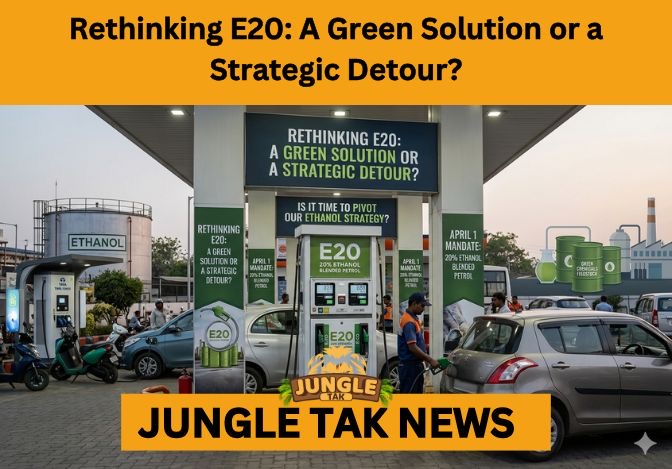

India is currently at a pivotal crossroads in its energy journey as the government accelerates its target to achieve a 20% ethanol-to-gasoline blend by 2025-26. While the initiative promises to reduce carbon footprints and slash the massive oil import bill, experts and stakeholders are increasingly rethinking E20 fuel in India to determine if the country is prepared for such a rapid transition. The shift from E10 to E20 is not merely a technical adjustment but a massive overhaul of the nation’s agricultural and automotive ecosystems.
The primary driver behind this movement is the urgent need for energy security. India currently imports nearly 85% of its crude oil requirements, making the economy vulnerable to global price fluctuations. By rethinking E20 fuel in India, policymakers hope to replace a significant portion of fossil fuels with domestically produced ethanol, thereby strengthening the rupee and fostering a self-reliant energy sector. However, the scale of this ambition requires a level of infrastructure and feedstock consistency that is currently under intense scrutiny.
The Environmental Promise vs. Life-Cycle Reality
On the surface, ethanol blending is a clear win for the environment, as it reduces tailpipe emissions of carbon monoxide and hydrocarbons. However, when rethinking E20 fuel in India, environmentalists point toward the “water-food-energy” nexus. Most of India’s ethanol is derived from sugarcane, a crop that is notoriously water-intensive. In a water-stressed nation, diverting massive amounts of irrigation toward fuel production raises questions about the long-term ecological sustainability of the E20 mandate.
Furthermore, the carbon-neutral claim of ethanol is often debated when the entire supply chain is considered. From the diesel used in tractors to the energy consumed in distillation plants, the net carbon savings may be lower than initially projected. Rethinking E20 fuel in India involves a comprehensive life-cycle analysis to ensure that we are not simply shifting the carbon burden from the tailpipe to the farm and the factory, which would defeat the original purpose of the green transition.
The “Food vs. Fuel” Debate Re-ignited
One of the most contentious issues surrounding the program is the impact on food security. As the government encourages the use of surplus food grains like maize and damaged rice for ethanol production, critics are rethinking E20 fuel in India in the context of food inflation. If farmers find fuel production more lucrative than food production, it could lead to a shortage of essential grains, impacting the poorest sections of society. Balancing the needs of the fuel tank with the needs of the dinner plate remains a delicate tightrope walk for the administration.
The agricultural shift required for E20 also has global implications. India is a major exporter of sugar and rice, and a domestic diversion toward fuel could tighten global supplies. When rethinking E20 fuel in India, the global trade community looks at how India’s domestic energy policy might influence international commodity prices. Ensuring that ethanol production relies on “non-food” biomass or agricultural waste, rather than primary food sources, is a strategy that many believe should be prioritized.
Automotive Compatibility and Consumer Concerns
From the perspective of the average vehicle owner, the transition brings a host of technical anxieties. Older internal combustion engines are not designed to handle a 20% ethanol blend, which can be corrosive to certain rubber and plastic components. Rethinking E20 fuel in India is essential for the millions of people who own legacy vehicles, as they may face increased maintenance costs or reduced engine longevity. While newer “E20-compliant” vehicles are entering the market, the transition period for the existing fleet remains a significant hurdle.
Moreover, there is the undeniable issue of fuel efficiency. Ethanol has a lower energy density than pure gasoline, meaning that an E20 blend typically results in a 6% to 7% drop in fuel economy. When rethinking E20 fuel in India, consumers are concerned about paying the same price at the pump for a fuel that takes them a shorter distance. Without a clear pricing advantage or tax incentives for consumers, the public’s appetite for higher ethanol blends may remain lukewarm.
Is E20 a Bridge or a Distraction from EVs?
Finally, there is the strategic question of where ethanol fits in the era of Electric Vehicles (EVs). Some industry analysts suggest that rethinking E20 fuel in India reveals a potential “strategic detour” that might slow down the adoption of full electrification. While ethanol helps clean up the existing fleet of combustion engines, some argue that the massive investment in ethanol distilleries and supply chains might be better spent on charging infrastructure and battery manufacturing.
However, the government views ethanol as a necessary “bridge” technology. Given that the transition to 100% electric mobility will take decades, rethinking E20 fuel in India allows for an immediate reduction in emissions from the hundreds of millions of internal combustion engines already on the road. It provides a pragmatic middle ground that supports the massive sugar industry and provides an immediate solution while the nation builds its renewable energy grid for EVs.
The Way Forward: A Diversified Approach
In conclusion, the path toward E20 is paved with both immense potential and significant pitfalls. Rethinking E20 fuel in India does not mean abandoning the goal, but rather refining the approach to ensure it is truly sustainable. This includes diversifying feedstock to include agricultural waste, providing clear incentives for car manufacturers, and ensuring that food security is never compromised for the sake of energy independence.
CONTINUE READING WITH JUNGLETAK – ASSAM ADANI POWER DEAL
Ultimately, the success of this policy will depend on flexibility and technological innovation. By constantly rethinking E20 fuel in India and adjusting the roadmap based on real-world data, the government can turn what some call a “strategic detour” into a robust, green solution. If managed correctly, E20 can serve as a vital component of India’s broader strategy to achieve net-zero emissions while fueling the nation’s growing economic engine.