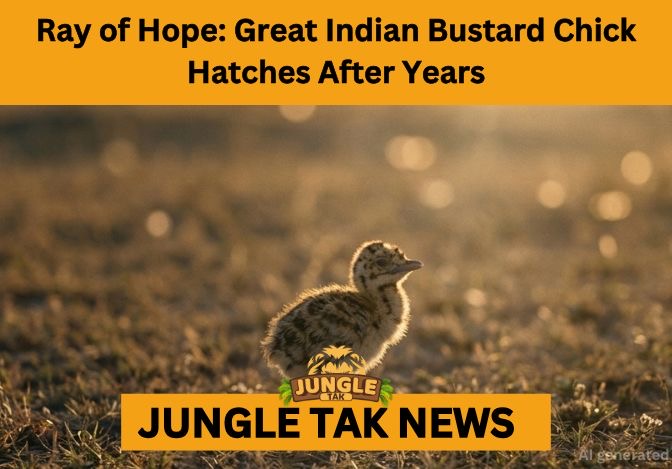

In a monumental victory for wildlife conservation, the birth of a new chick has provided a much-needed lifeline for the Gujarat Great Indian Bustard. This rare event has sparked celebrations among ornithologists and environmentalists who have been waiting for years to see a sign of natural revival in the wild. The arrival of the hatchling in the Kutch district signifies a potential turning point for the species, which has been teetering on the very edge of extinction.
A Milestone Hatching in the Kutch Grasslands
The hatching of the Gujarat Great Indian Bustard occurred within the protected confines of the Kutch Bustard Sanctuary, a region recognized as one of the last remaining natural habitats for these majestic birds. Forest officials confirmed that the egg was monitored discreetly from a distance to ensure that the mother was not disturbed during the incubation period. This successful breeding is the result of years of tireless habitat management and strict protection protocols aimed specifically at saving the Gujarat Great Indian Bustard from disappearing.
The Critical Status of the GIB Species
To understand the gravity of this news, one must consider that the Gujarat Great Indian Bustard is one of the heaviest flying birds in the world and is currently classified as “Critically Endangered” by the IUCN. With the global population estimated to be fewer than 150 individuals, the addition of even a single chick is a significant demographic boost for the species. The survival of the Gujarat Great Indian Bustard has become a primary focus for national conservation efforts, making this recent hatching a crucial milestone in the race against time.
Overcoming Modern Threats to Survival
Despite this success, the Gujarat Great Indian Bustard still faces a gauntlet of survival challenges, most notably the presence of high-voltage overhead power lines. Collision with these wires is the leading cause of mortality for the birds, which have limited frontal vision and find it difficult to maneuver quickly. Efforts are currently underway to move power cables underground within the flight paths of the Gujarat Great Indian Bustard, ensuring that the newly hatched chick and its peers have a safer environment to navigate as they grow.
Innovative Conservation and Breeding Strategies
The conservation strategy for the Gujarat Great Indian Bustard involves a sophisticated mix of natural monitoring and artificial intervention programs. While captive breeding centers have been established to create a “insurance population,” the birth of a chick in the wild is preferred as it maintains the natural instincts of the bird. Experts believe that the presence of this new Gujarat Great Indian Bustard hatchling proves that the local ecosystem, if managed correctly, can still support the growth of the population naturally.
The Vital Role of Local Communities
Local communities and “Bustard Guards” have also played a pivotal role in creating a secure environment for the Gujarat Great Indian Bustard. By reducing human interference and keeping a watchful eye for stray dogs—which are known to prey on the eggs—the villagers of Kutch have become the first line of defense for the Gujarat Great Indian Bustard. Their cooperation in adopting sustainable grazing practices has ensured that the grasslands remain a viable nesting ground for the Gujarat Great Indian Bustard and other grassland species.
Looking Toward a Sustainable Future
Looking ahead, the Gujarat Forest Department plans to expand the protected zones to provide more expansive roaming space for the Gujarat Great Indian Bustard. Scientists are also utilizing satellite tagging to better understand the movement patterns and seasonal migrations of the Gujarat Great Indian Bustard across the landscape. Every piece of data collected from the development of this new chick will contribute to a more robust and effective long-term recovery plan for the Gujarat Great Indian Bustard.
CONTINUE READING WITH JUNGLETAK – KUDREMUKH FIRE FOREST
A Symbol of Ecological Resilience
In conclusion, the hatching of the chick in Kutch is more than just a biological event; it is a symbol of hope for India’s natural heritage. The Gujarat Great Indian Bustard continues to be the pride of the state, and this success story reinforces the commitment of the government and conservationists to protect the species often referred to as the “Godawan.” If we can continue to safeguard the habitat of the Gujarat Great Indian Bustard, we may yet see these grand birds flourish in the vast grasslands of Gujarat for generations to come.