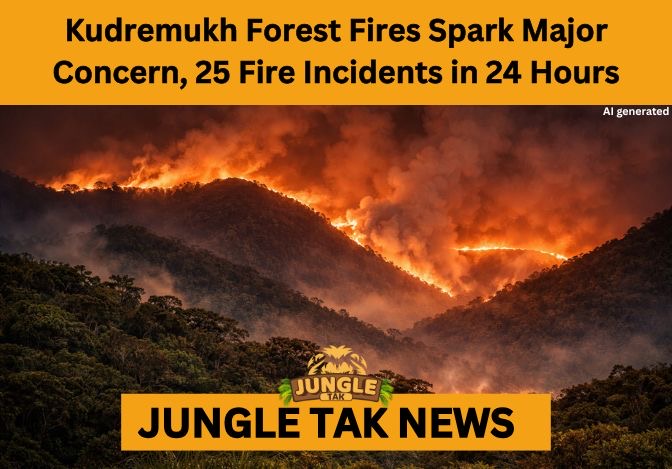

The pristine landscapes of the Western Ghats are currently under siege as a series of devastating Kudremukh forest fires have erupted across the national park. In a staggering 24-hour window, forest officials recorded over 25 separate fire incidents, sparking widespread concern among environmentalists and local authorities. This sudden surge in infernos has put the delicate ecosystem of the Kudremukh National Park at extreme risk, threatening one of the world’s most significant biodiversity hotspots.
Unprecedented Spike in Wildfire Activity
The intensity of the recent Kudremukh forest fires has caught many by surprise, despite the onset of the dry season. While minor fires are not uncommon during the transition to summer, the frequency of 25 incidents in a single day indicates a severe escalation. Local monitoring stations and satellite data have confirmed that the flames are spreading across various ranges of the park, fueled by dry deciduous vegetation and high wind speeds that make containment efforts incredibly difficult for ground teams.
Factors Driving the Ecological Crisis
Several factors are believed to be contributing to the rapid spread of these Kudremukh forest fires. The region has experienced a prolonged dry spell with minimal pre-monsoon showers, leaving the forest floor covered in highly flammable leaf litter. Additionally, authorities are investigating potential human elements, as many of these fires appear to have started near trekking trails and forest fringes. Whether caused by accidental negligence or deliberate clearing, the impact of these fires remains a primary concern for the Karnataka Forest Department.
Threat to Rare Flora and Fauna
The biological cost of the Kudremukh forest fires is immense, particularly for the endemic species that call this mountain range home. The park is a vital habitat for the endangered Lion-tailed Macaque and the Great Indian Hornbill, both of which rely on the thick canopy for survival. As the flames consume large patches of the Shola grasslands and evergreen forests, the loss of nesting sites and food sources could lead to a long-term decline in wildlife populations and a disruption of the local food chain.
Challenges in Firefighting Operations
Combating the Kudremukh forest fires presents a logistical nightmare due to the rugged and steep terrain of the region. Most of the fire points are located in inaccessible areas where heavy machinery and water tankers cannot reach. Forest guards and temporary fire-watchers are forced to use manual fire-beating methods and create “fire lines” to prevent the spread. The sheer number of simultaneous outbreaks has stretched the department’s resources to their absolute limit, requiring urgent reinforcements from neighboring districts.
The Vulnerability of Shola Grasslands
One of the most worrying aspects of the Kudremukh forest fires is the damage to the unique Shola-grassland complex. These high-altitude grasslands act as natural sponges, retaining rainwater and feeding major rivers like the Tunga and Bhadra. When these grasslands burn, the soil loses its moisture-retention capacity, which could lead to water shortages in the plains during the summer months. The destruction of this specialized ecosystem is perhaps the most lasting legacy of the current fire crisis.
Impact on Local Communities and Tourism
Beyond the environmental damage, the Kudremukh forest fires are having a direct impact on the local economy and public health. Thick smoke has blanketed nearby villages, leading to reports of respiratory issues among residents. Furthermore, trekking activities and tourism entries have been temporarily suspended in several zones to ensure visitor safety. The closure of these areas is necessary to prevent further human-induced ignition and to allow fire crews unhindered access to the affected zones.
Monitoring and Satellite Surveillance
To manage the escalating Kudremukh forest fires, the Forest Department is increasingly relying on the Forest Survey of India’s (FSI) satellite-based alert system. These real-time alerts provide the exact coordinates of “heat spots,” allowing officials to direct their limited manpower toward the most critical areas. However, the time lag between satellite detection and ground response remains a challenge, especially when 25 different fires are burning simultaneously across a vast landscape.
A Call for Stricter Prevention Measures
In light of the current Kudremukh forest fires, environmental activists are calling for stricter enforcement of forest laws and better community engagement. Experts suggest that creating a buffer zone and educating local cattle herders and tourists on fire safety is essential to preventing future disasters. Without a robust prevention strategy that includes both technological monitoring and community-led patrolling, the recurring threat of wildfires will continue to haunt this protected area every year.
Long-term Restoration and Recovery
As the authorities work tirelessly to douse the remaining embers, the conversation is already shifting toward the recovery from these Kudremukh forest fires. Restoring the burnt patches will require years of natural regeneration, provided the areas are protected from further disturbances and invasive species. The current crisis serves as a stark reminder of the vulnerability of our natural heritage and the urgent need for a comprehensive climate resilience plan to protect the Western Ghats from the increasing threat of fire.
CONTINUE READING WITH JUNGLETAK – THE WORLD SPARROW DAY
Protecting a Natural Treasure
The recent report of 25 Kudremukh forest fires in just 24 hours is a wake-up call for the state of Karnataka and the nation. Protecting this “lung of the Western Ghats” is not just about preserving scenery; it is about safeguarding our water security and biodiversity. Moving forward, a combination of rapid response teams, advanced technology, and public awareness will be the only way to ensure that the majestic hills of Kudremukh do not turn into a landscape of ash and soot.