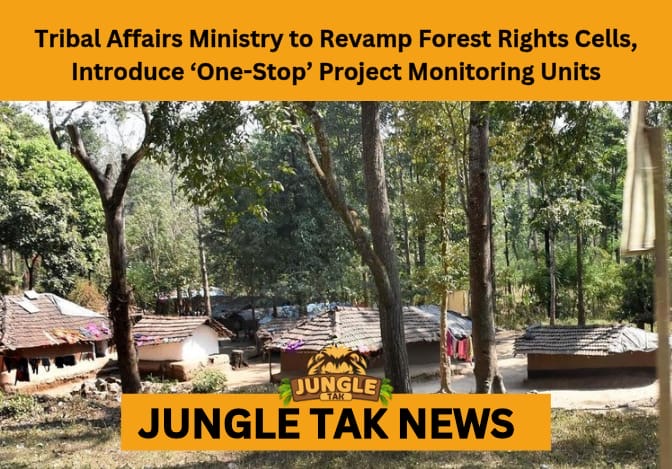

The initiative to modernize the Tribal Affairs Ministry forest rights cells
The Ministry of Tribal Affairs (MoTA) has announced a significant administrative overhaul to expedite the implementation of the Scheduled Tribes and Other Traditional Forest Dwellers (Recognition of Forest Rights) Act. By deciding to revamp the Tribal Affairs Ministry forest rights cells, the government aims to address long-standing delays in the processing of land titles across various states. This strategic move is expected to bridge the gap between policy formulation and ground-level execution, ensuring that tribal communities receive their due legal entitlements in a time-bound manner.
For years, the recognition of individual and community forest rights has faced hurdles due to bureaucratic bottlenecks, a lack of specialized staff, and inadequate data management. The initiative to modernize the Tribal Affairs Ministry forest rights cells comes at a critical time when several regions are struggling with a high rate of claim rejections and pending appeals. By strengthening these cells, the ministry intends to provide a more robust framework for verifying claims and providing technical assistance to District Level Committees (DLC) and Sub-Divisional Level Committees (SDLC).
A cornerstone of this reform is the introduction of “one-stop” Project Monitoring Units (PMUs) that will operate in tandem with the Tribal Affairs Ministry forest rights cells. These units are designed to act as centralized hubs for data collection, grievance redressal, and project tracking. By consolidating various administrative functions under one roof, the PMUs will eliminate the need for tribal applicants to navigate multiple departments, thereby streamlining the entire recognition process from the Gram Sabha level to the final title distribution.
Technology will play a pivotal role in the newly upgraded Tribal Affairs Ministry forest rights cells. The ministry plans to integrate Geographic Information System (GIS) mapping and satellite imagery to verify land boundaries and historical occupancy accurately. This digital shift within the cells will reduce human error and ensure that the demarcation of forest land is transparent, fair, and based on verifiable topographical data, which is essential for resolving disputes over forest boundaries.
Coordination with state governments is essential for the success of the Tribal Affairs Ministry forest rights cells revamp. Since the primary responsibility for implementing the Forest Rights Act lies with state administrations, the central ministry will provide financial and technical support to set up similar monitoring structures at the state and district levels. This vertical integration will ensure that policy directives from New Delhi are effectively translated into action in the most remote forest patches of the country.
Another critical aspect of the revamp is the capacity building of the personnel working within the Tribal Affairs Ministry forest rights cells. Specialized training programs will be conducted for Gram Sabha members, revenue officials, and forest guards to familiarize them with the legal nuances of the FRA. By empowering local stakeholders with knowledge and better tools, the ministry hopes to create a more informed ecosystem that can handle legal complexities without causing unnecessary delays for the tribal claimants.
Beyond just the recognition of land titles, the revamped Tribal Affairs Ministry forest rights cells will focus on the post-recognition socio-economic development of the right-holders. The new Project Monitoring Units will track the convergence of various government schemes, such as the Pradhan Mantri Adi Adarsh Gram Yojana (PMAAGY), to ensure that tribal families have access to basic amenities like water, electricity, and education once their forest rights are legally secured.
Transparency and accountability are the primary goals of restructuring the Tribal Affairs Ministry forest rights cells. A real-time digital dashboard will be launched to allow the public, civil society, and researchers to monitor the progress of claim settlements across different states. This open-data approach is intended to build trust among forest-dwelling communities and demonstrate the government’s commitment to the spirit of the Forest Rights Act, which seeks to undo “historical injustices.”
Despite the optimistic outlook, the Tribal Affairs Ministry forest rights cells will have to navigate complex challenges, including the reconciliation of forest conservation laws with tribal livelihood needs. Balancing the rights of indigenous people with national environmental protection goals requires a delicate, data-driven touch. The new monitoring units are specifically designed to provide the necessary legal and ecological expertise to resolve these conflicts in a way that prioritizes the welfare of the tribal population while maintaining forest integrity.
CONTINUE READING WITH JUNGLETAK – FIRE WARRIOR DRIVE
As the government moves forward with these reforms, the impact on millions of forest dwellers could be transformative. The decision to revamp the Tribal Affairs Ministry forest rights cells represents a proactive shift toward digital governance and social justice. By creating a more efficient, tech-savvy, and community-oriented monitoring system, the ministry is paving the way for a more equitable future where tribal rights are not just recognized on paper but protected in practice.