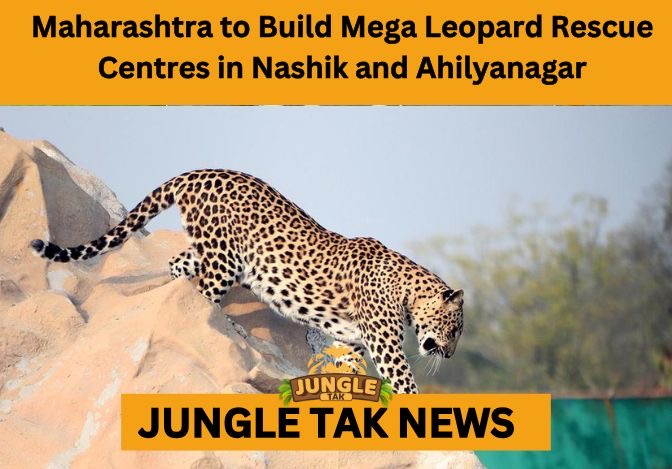

In a landmark decision aimed at mitigating the rising instances of human-wildlife conflict, the state government has announced the establishment of two state-of-the-art Leopard Rescue Centres in Maharashtra. These mega-facilities, set to be developed in Nashik and Aliyanagar (Chhatrapati Sambhajinagar), represent a significant shift in the state’s approach to wildlife conservation and predator management. As leopard populations expand into agricultural landscapes, these centers will provide much-needed infrastructure for the rescue, treatment, and long-term care of these big cats.
The decision to establish these Leopard Rescue Centres in Maharashtra comes at a time when the state is witnessing an unprecedented rise in leopard sightings in human-dominated areas. Nashik, often referred to as a leopard hotspot due to its vast sugarcane fields that serve as unintended nurseries for cubs, has long been in need of a dedicated facility. By creating a centralized hub for rescue operations, the Forest Department aims to reduce the response time during emergencies and provide a scientific environment for traumatized or injured animals.
Focus on Nashik: Addressing the “Leopard Capital” Challenges
The proposed facility in Nashik is expected to be one of the largest Leopard Rescue Centres in Maharashtra. For years, the Nashik Forest Circle has grappled with the complex task of managing leopards that stray into villages and urban outskirts. The new mega-centre will be equipped with modern enclosures that mimic the natural habitat of the felines, ensuring that rescued leopards are not just caged but rehabilitated in a stress-free environment. This move is expected to alleviate the pressure on existing, smaller transit centers that are currently operating beyond their capacity.
Similarly, the second major project in Aliyanagar, located in the Chhatrapati Sambhajinagar district, will serve the Marathwada region’s growing conservation needs. This addition to the network of Leopard Rescue Centres in Maharashtra is strategically vital because it addresses the geographical gap in wildlife medical facilities in central Maharashtra. The Aliyanagar center will focus on providing immediate medical intervention for leopards injured in road accidents or those caught in wire snares, which have become frequent occurrences in the region.
Advanced Infrastructure and Veterinary Excellence
The Maharashtra government has allocated substantial funding to ensure these Leopard Rescue Centres in Maharashtra meet international standards of wildlife care. Each center is planned to house advanced pathology labs, operation theaters, and quarantine wards. Specialized veterinary teams will be stationed on-site to conduct surgeries and monitor the health of elderly or “problem” leopards that cannot be released back into the wild. This focus on medical excellence ensures that the state remains a leader in wildlife rehabilitation.
Beyond medical care, these Leopard Rescue Centres in Maharashtra will play a crucial role in behavioral research. By studying the patterns of leopards held in these facilities, wildlife biologists can gain better insights into why certain individuals turn toward human settlements. This data is essential for developing long-term strategies to prevent conflict rather than just reacting to it. The centers will essentially act as knowledge hubs for forest officials and researchers across the country.
Mitigating Human-Wildlife Conflict
One of the primary objectives of the Leopard Rescue Centres in Maharashtra is to provide a safe haven for “conflict animals”—those that have been involved in attacks on livestock or humans. Previously, such animals were often relocated to distant forests, a practice that sometimes led to further conflict or the animal’s death. With these new mega-centres, the Forest Department can now house these specific individuals in large, secure enclosures, ensuring public safety while upholding animal welfare standards.
Public education will also be a core component of the new Leopard Rescue Centres in Maharashtra. A portion of these facilities will be designed to facilitate awareness programs for local villagers, farmers, and students. By teaching the community about leopard behavior and “co-existence protocols,” the state hopes to reduce the fear and hostility that often lead to retaliatory killings of leopards. Education is the first line of defense in the conservation battle.
A Sustainable Future for Wildlife in Maharashtra
The integration of technology, such as GPS tracking and drone monitoring for rescue operations, will be coordinated through these Leopard Rescue Centres in Maharashtra. This modernization of the Forest Department’s toolkit is essential for managing a species as adaptable as the leopard. As urban sprawl continues to encroach on traditional forest fringes, having a robust network of rescue and rehabilitation centers is no longer a luxury but a necessity for ecological balance.
CONTINUE READING WITH JUNGLETAK – KARNATAKA RAPTOR CONSERVATION DRIVE
In conclusion, the establishment of mega Leopard Rescue Centres in Maharashtra at Nashik and Aliyanagar marks a proactive chapter in the state’s environmental policy. By balancing the safety of its citizens with the biological needs of its wildlife, Maharashtra is setting a benchmark for other states in India. These centers will not only save lives—both human and animal—but will also ensure that the majestic Indian leopard continues to thrive in a rapidly changing world.