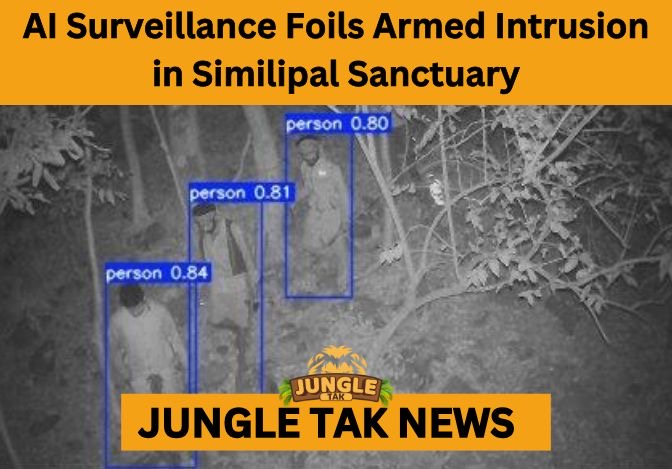

In a significant victory for wildlife protection, a sophisticated network of AI surveillance in Similipal has successfully thwarted an attempted armed intrusion. The incident occurred within the core area of the Similipal Tiger Reserve in Odisha, where high-tech camera traps identified a group of individuals carrying weapons under the cover of darkness. This immediate detection allowed forest officials to mobilize quickly, preventing a potential poaching disaster before a single shot could be fired or a single animal harmed.
The system, popularly known as “E-Braveheart,” represents a new frontier for AI surveillance in Similipal, using advanced algorithms to distinguish between natural animal movements and human threats. Unlike traditional camera traps that require manual card retrieval and days of delay, this real-time monitoring system transmits alerts instantly to a central command center. This technological leap has revolutionized how authorities manage the vast and often impenetrable terrain of the sanctuary, providing a digital shield that never sleeps.
Real-Time Detection and Rapid Response
During the recent foiled intrusion, the AI surveillance in Similipal triggered an alarm the moment the sensors picked up the thermal signatures of the armed men. Within seconds, the command center was flooded with live images of the suspects, confirming they were carrying traditional hunting gear and firearms. Forest rangers were able to pinpoint the exact GPS coordinates of the intruders, allowing the reserve’s Rapid Response Team (RRT) to intercept them before they reached the deep forest.
The intruders, caught off guard by the speed and precision of the authorities, fled the scene back toward the forest periphery. While the suspects managed to escape into the dense undergrowth, the AI surveillance in Similipal captured high-resolution images that are now being used for identification and forensic evidence. This incident proves that technology is no longer just a passive observer but a proactive deterrent that changes the risk-reward ratio for illegal hunters.
Protecting the World’s Only Melanistic Tigers
Similipal is a unique ecosystem, famous for being the world’s only habitat for melanistic (black) tigers. The role of AI surveillance in Similipal is therefore absolutely critical for the survival of these rare felines, which are a primary target for international poaching syndicates. By providing a 24/7 “eye in the sky,” the technology ensures that the most vulnerable areas of the biosphere remain under constant watch, protecting a genetic heritage that exists nowhere else on Earth.
Beyond tigers, the sanctuary also houses a significant population of Asian elephants and various endangered bird species. The integration of AI surveillance in Similipal has led to a noticeable decline in unauthorized human entry, as local communities and poachers alike become aware that the forest is being monitored digitally. This has created a “buffer of fear” for criminals, allowing the wildlife to reclaim areas that were previously disturbed by human encroachment.
A Force Multiplier for Forest Guards
While the hardware is impressive, the true power of AI surveillance in Similipal lies in its ability to augment the work of ground-level forest guards. Previously, patrolling thousands of square kilometers of rugged mountains and thick canopy on foot was an impossible task for the limited staff available. Now, the AI acts as a strategic force multiplier, directing human patrols to specific high-risk zones identified by the software’s predictive analytics and movement logs.
One of the primary advantages of implementing AI surveillance in Similipal is the reduction in human-wildlife conflict during patrol duties. By knowing exactly where human intruders are located, guards can avoid accidental, dangerous encounters with sloth bears or wild elephants while in pursuit of suspects. This layered security approach creates a safer environment for both the protectors and the protected within the reserve, streamlining the entire conservation workflow.
The Future of Smart Sanctuaries in India
The success of this operation highlights how Odisha is becoming a national leader in “smart” conservation through AI surveillance in Similipal. As wildlife crimes become more sophisticated, involving high-caliber weapons and night-vision gear, the forest department has had to stay one step ahead. The integration of artificial intelligence into the sanctuary’s security protocol is a clear signal that the state is committed to using 21st-century tools for environmental defense and biodiversity preservation.
Despite the challenging weather conditions and thick canopy of the Eastern Ghats, the hardware for AI surveillance in Similipal has proven remarkably resilient. The cameras are designed to operate in extreme humidity and low-light conditions, ensuring that coverage is never compromised during the heavy monsoon season. This durability is essential for maintaining a consistent deterrent against poachers who often use stormy weather as cover for their illegal activities.
CONTINUE READING WITH JUNGLETAK – IBCA AND PANAMA DISCUSSION
In conclusion, the recent foiling of the armed intrusion serves as a powerful testament to the efficacy of AI surveillance in Similipal. As technology continues to evolve, the gap between poachers and conservationists is widening in favor of the trees and the tigers. This digital shield is not just protecting a forest; it is safeguarding a global natural heritage for future generations, proving that AI is one of our greatest allies in the fight against extinction.