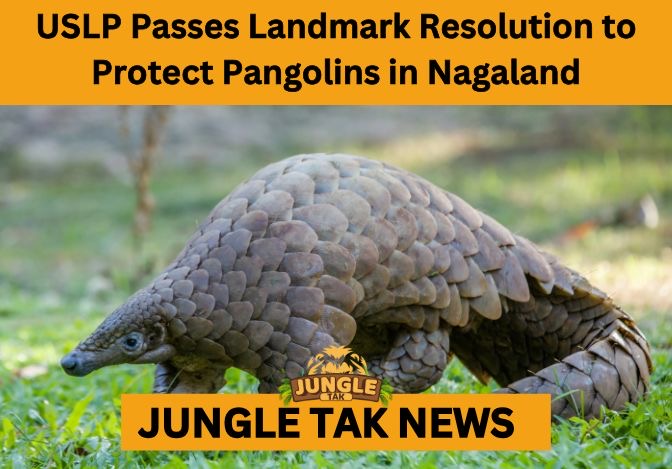

In a move hailed as a turning point for wildlife conservation in Northeast India, the United Sangtam Likhüm Pümji (USLP) has passed a comprehensive resolution to safeguard the future of the world’s most trafficked mammal. This landmark decision by the apex tribal body of the Sangtam community marks a significant shift toward formalized Pangolin Protection in Nagaland, ensuring that the elusive creature finds a sanctuary within the community’s ancestral lands.
The USLP, which holds significant social and administrative influence over the Sangtam-inhabited regions of Kiphire and Tuensang districts, officially prohibited the hunting, possession, and commercial trade of all pangolin species. By establishing these strict internal regulations, the tribal leadership is filling a critical gap in environmental enforcement, proving that grassroots initiatives are the most effective way to handle Pangolin Protection in Nagaland.
A Tribal Stand Against Global Trafficking
The pangolin, often referred to as the “scaly anteater,” is currently facing an existential threat due to the illegal international trade in its scales and meat. Recognizing the vulnerability of both the Chinese and Indian pangolin species found in the region, the USLP’s resolution serves as a local barricade against a global crisis. The resolution emphasizes that Pangolin Protection in Nagaland is no longer just a legal obligation under the Wildlife Protection Act, but a moral imperative for the Sangtam people.
To ensure the effectiveness of the ban, the USLP has mandated that every village council under its jurisdiction strictly monitor their respective forest areas. This decentralized approach ensures that the responsibility for Pangolin Protection in Nagaland is shared by every member of the community, from village elders to local hunters who are now being encouraged to become protectors.
Ecological Impact and the Role of the USLP
From an ecological perspective, pangolins are “ecosystem engineers” that provide essential services such as soil aeration and natural pest control. The USLP leadership highlighted that the survival of the forest’s health is intrinsically linked to the success of Pangolin Protection in Nagaland. By consuming millions of ants and termites annually, pangolins protect the timber and agricultural crops that local communities depend on for their livelihoods.
Under the new guidelines, individuals caught violating the resolution will face severe penalties, including heavy financial fines and the possibility of social excommunication. These stringent measures demonstrate the USLP’s zero-tolerance policy regarding illegal wildlife activities, reinforcing the community’s dedication to Pangolin Protection in Nagaland. The tribal body intends to work as a watchdog, ensuring that no pangolin is taken from the wild for traditional medicine or meat.
Shifting Traditions Toward Conservation
Historically, many tribes in the Northeast have relied on the forest for sustenance; however, the USLP is leading a cultural transformation that prioritizes biodiversity. This shift in mindset is a core component of the strategy for Pangolin Protection in Nagaland, as it replaces traditional hunting practices with a sense of pride in the region’s unique wildlife. The resolution serves as an educational tool, informing the younger generation about the rarity and importance of these mammals.
Furthermore, the USLP is seeking to collaborate with the Nagaland Forest Department and various conservation NGOs to provide alternative livelihood options for those who previously relied on the forest. By integrating socio-economic development with environmental goals, the tribal body is creating a sustainable model for Pangolin Protection in Nagaland that could be replicated by other ethnic groups across the state.
Challenges and the Path Forward
Enforcing such a resolution in the rugged, densely forested terrain of Nagaland is not without its challenges. Poachers often operate in remote areas that are difficult for government officials to reach, which is why the USLP’s involvement is so vital for Pangolin Protection in Nagaland. Local residents have the intimate geographical knowledge required to identify illegal traps and monitor animal burrows far more effectively than outside agencies.
The resolution also calls for a massive awareness campaign across all Sangtam-inhabited areas to explain the legal consequences of poaching. By simplifying complex environmental laws into community-led mandates, the USLP is making the concept of Pangolin Protection in Nagaland accessible and actionable for the common citizen. This ensures that conservation is not seen as an external imposition but as a community-driven necessity.
A Blueprint for the Indo-Burma Hotspot
The global conservation community has welcomed the USLP’s announcement, noting that Nagaland is a critical corridor in the Indo-Burma biodiversity hotspot. The success of Pangolin Protection in Nagaland will have a ripple effect, potentially reducing the supply of pangolin parts into the illegal trade routes that head toward international borders. This grassroots resistance is often the last line of defense for species on the brink of extinction.
CONTINUE READING WITH JUNGLETAK – CG PREPARES 7 LAKHS TEAK SAPLINGS
As the USLP begins the implementation phase of this landmark resolution, there is a renewed sense of hope for the “scaly anteaters” of the Northeast. The proactive stance taken by the Sangtam community proves that when traditional authority and modern conservation goals align, the result is a powerful force for nature. Through this resolution, Pangolin Protection in Nagaland has set a high standard for indigenous-led wildlife preservation across the globe.