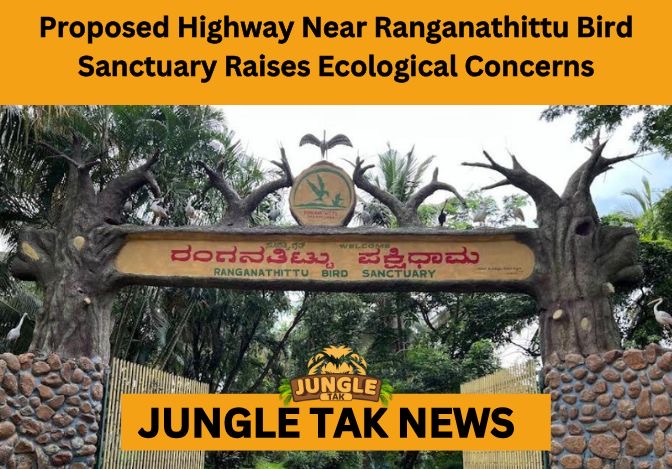

The Ranganathittu Bird Sanctuary, often referred to as the “Pakshi Kashi” of Karnataka, is facing a modern-day crisis that has conservationists and birdwatchers on high alert. A newly proposed infrastructure development, aimed at easing regional traffic congestion, has drawn intense scrutiny due to its proximity to this delicate ecosystem. The controversy surrounding the Ranganathittu sanctuary highway project highlights the growing tension between rapid urban expansion and the preservation of India’s most vital natural habitats.
Located on the banks of the Cauvery River, this sanctuary is a premier nesting ground for migratory birds from as far away as Siberia and Latin America. However, the alignment of the Ranganathittu sanctuary highway project suggests that heavy vehicular traffic will soon pass within a few hundred meters of the core nesting areas. Experts argue that the introduction of a high-speed corridor so close to an Eco-Sensitive Zone (ESZ) could fundamentally alter the micro-climate and biological rhythm of the region.
The Impact of Noise and Light Pollution on Avian Life
One of the primary concerns raised by ornithologists is the impact of acoustic disturbance on the resident and migratory bird populations. Birds rely heavily on vocalizations for mating, territory defense, and chick-rearing, all of which could be drowned out by the constant roar of engines from the Ranganathittu sanctuary highway project. If the ambient noise levels rise beyond a certain threshold, many sensitive species, such as the Painted Stork and the Asian Openbill, may abandon their traditional nesting sites permanently.
Furthermore, light pollution from the Ranganathittu sanctuary highway project poses a significant threat to the nocturnal behavior of the sanctuary’s inhabitants. High-intensity streetlights and vehicle headlights can disorient birds, leading to fatal collisions or disrupted feeding patterns. For a sanctuary that relies on the pristine, undisturbed nature of the riverine islands, the introduction of 24/7 artificial lighting represents a major ecological shift that the local fauna is not equipped to handle.
Threats to the Riverine Ecosystem and Mugger Crocodiles
The sanctuary is not just a haven for birds; it is also home to one of the largest populations of Mugger crocodiles in the state. The construction phase of the Ranganathittu sanctuary highway project involves heavy machinery and potential runoff into the Cauvery River, which could degrade the water quality. Increased turbidity and chemical pollutants from construction sites threaten the aquatic life that serves as the primary food source for both the crocodiles and the piscivorous birds.
Environmentalists are also worried about the physical vibrations caused by heavy transport vehicles once the Ranganathittu sanctuary highway project is operational. These constant tremors can destabilize the riverbanks and the fragile mud-flats where crocodiles bask and lay their eggs. The structural integrity of the small islets, which have been formed over centuries by silt deposits, could be compromised by the seismic impact of thousands of trucks passing nearby every day.
Legal Hurdles and the Call for Alternative Routes
Under the guidelines of the Ministry of Environment, Forest and Climate Change (MoEFCC), any major construction within an Eco-Sensitive Zone requires stringent clearances. Activists are currently petitioning the National Board for Wildlife (NBWL) to reject the current alignment of the Ranganathittu sanctuary highway project. They argue that the environmental impact assessment (EIA) conducted for the project has significantly undervalued the long-term ecological costs in favor of short-term economic gains.
The demand for an alternative route is gaining momentum among the local community and global conservation groups. By diverting the Ranganathittu sanctuary highway project just a few kilometers further away from the riverbank, the authorities could achieve their connectivity goals without jeopardizing a world-class biodiversity hotspot. Experts suggest that a bypass that honors the sanctuary’s boundaries would be a landmark example of sustainable development, though it may come with a higher initial construction price tag.
CONTINUE READNG WITH JUNGLETAK – WATERBIRDS IN SOUTH BIHAR WETLANDS
Choosing Heritage Over Haste
The fate of Ranganathittu hangs in the balance as the government weighs its developmental priorities against environmental ethics. The Ranganathittu sanctuary highway project serves as a litmus test for India’s commitment to its international conservation pledges. If this project proceeds without significant modifications, it could set a dangerous precedent for infrastructure projects near other protected areas across the country.
Ultimately, the goal of the Ranganathittu sanctuary highway project should not be at odds with nature. Development is essential for the region’s growth, but it must not come at the cost of an ecosystem that provides invaluable services and remains a source of national pride. As the debate continues, the hope remains that a middle ground can be found—one that ensures the “Pakshi Kashi” continues to echo with the sounds of birds rather than the sounds of traffic.