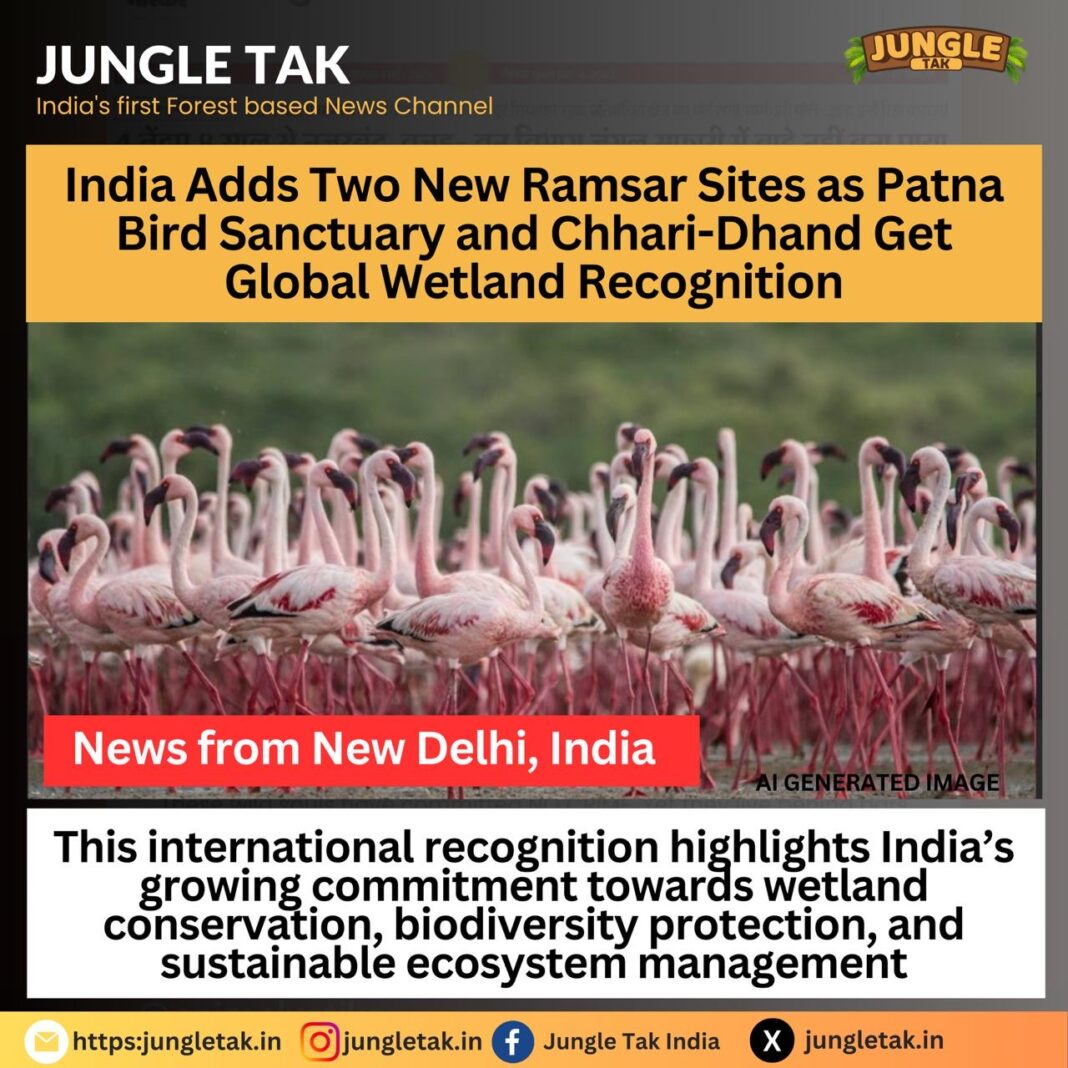

India has reached a significant milestone in its environmental conservation journey by securing global recognition for two more ecologically vital areas. The Ministry of Environment, Forest and Climate Change recently announced that the Patna Bird Sanctuary in Uttar Pradesh and the Chhari-Dhand Conservation Reserve in Gujarat have been officially designated as the new Ramsar sites in India. This prestigious international recognition under the Ramsar Convention highlights India’s unwavering commitment to preserving its “kidneys of the landscape” and protecting the diverse species that depend on these fragile ecosystems.
The New Ramsar Sites in India
The addition of these new Ramsar sites in India brings the total count of wetlands of international importance in the country to 87. This rapid expansion of protected areas reflects the government’s proactive approach toward the “Amrit Dharohar” initiative, which aims to promote the conservation and sustainable use of wetlands. By gaining Ramsar status, these sites will now receive enhanced international scrutiny, funding opportunities, and technical expertise to ensure their long-term ecological health and the protection of migratory bird corridors.
The Patna Bird Sanctuary, located in the Etah district of Uttar Pradesh, is a remarkable addition to the list of new Ramsar sites in India. Despite being one of the smallest bird sanctuaries in the country, its ecological footprint is immense. The sanctuary is centered around a typical “Jheel” or freshwater lake, which serves as a vital wintering ground for thousands of migratory birds. The recognition of this site ensures that its unique biodiversity, which includes several threatened species of waterfowl, will be preserved under international standards of management.
Spanning over a relatively compact area, the Patna Bird Sanctuary’s inclusion as one of the new Ramsar sites in India is a testament to the fact that size does not dictate ecological value. During the peak winter months, the sanctuary transforms into a vibrant hub for over 200 species of birds, including the Northern Pintail, Lesser Whistling Duck, and the Common Teal. The local communities in Etah are expected to benefit from increased eco-tourism, as the Ramsar label often attracts researchers and birdwatchers from across the globe to these protected habitats.
Moving toward the western part of the country, the Chhari-Dhand Conservation Reserve in the Kutch district of Gujarat has also been welcomed as one of the new Ramsar sites in India. Chhari-Dhand, which translates to “shallow wetland,” is situated in the Banni grasslands and is a seasonal wetland that fills up during the monsoon. It plays a critical role in the arid landscape of Kutch, acting as a life-sustaining water source for both wildlife and the livestock of the nomadic Maldhari communities. Its designation ensures that the delicate balance between human livelihood and nature is maintained.
The ecological significance of Chhari-Dhand as one of the new Ramsar sites in India cannot be overstated, as it hosts nearly 50,000 to 100,000 birds during a good monsoon year. It is a famous staging ground for the Common Crane and the Dalmatian Pelican, both of which travel thousands of miles to reach these waters. By protecting this area, India is securing a vital link in the Central Asian Flyway, an aerial highway used by migratory birds that spans from the Arctic to the Indian Ocean.
The process of designating these new Ramsar sites in India involves meeting specific criteria set by the Ramsar Convention, such as supporting vulnerable or endangered species or providing a refuge for animals at critical stages of their life cycles. Both Patna Bird Sanctuary and Chhari-Dhand met these rigorous standards, proving their indispensability to global biodiversity. These sites act as natural carbon sinks, helping mitigate the effects of climate change by sequestering carbon and regulating local temperatures.
Furthermore, the inclusion of these new Ramsar sites in India serves as a boost to the nation’s “Mission Sahbhagita” program. This program emphasizes the involvement of local communities in wetland management, ensuring that conservation efforts are inclusive and sustainable. By educating local populations about the benefits of a healthy wetland—such as groundwater recharge, flood control, and nutrient cycling—the government fosters a culture of environmental stewardship that goes beyond mere legal protection.
With the announcement of these new Ramsar sites in India, the country continues to lead the South Asian region in the number of designated wetlands. This leadership position is a result of years of dedicated research, field surveys, and policy changes aimed at stopping the encroachment and degradation of water bodies. The Ministry of Environment has emphasized that these designations are not just titles but a call to action for state governments to implement strict management plans to prevent pollution and habitat loss.
From a tourism perspective, the rise of new Ramsar sites in India offers a golden opportunity for the growth of responsible eco-tourism. Travelers are increasingly seeking “green destinations,” and the Ramsar status provides an assurance of high ecological quality. This shift can provide alternative livelihoods for local residents in Etah and Kutch, reducing their dependence on extractive activities and encouraging them to become guardians of the very ecosystems that sustain them.
As India moves toward its goal of sustainable development, the protection of new Ramsar sites in India like Patna Bird Sanctuary and Chhari-Dhand will be central to its strategy. These wetlands are not just patches of water and mud; they are complex biological engines that support life, purify water, and offer a sanctuary for the soul. The global community has recognized their worth, and it is now the collective responsibility of the nation to ensure they remain vibrant for generations to come.
CONTINUE READING WITH JUNGLETAK – ELEPHANT BONES PROBE
In conclusion, the recognition of Patna Bird Sanctuary and Chhari-Dhand as the new Ramsar sites in India is a moment of pride for environmentalists and citizens alike. It reaffirms the belief that development and conservation can go hand-in-hand. As the sun sets over the serene waters of Etah and the vast grasslands of Kutch, the new international status of these wetlands promises a brighter, more resilient future for the incredible biodiversity that calls India home.