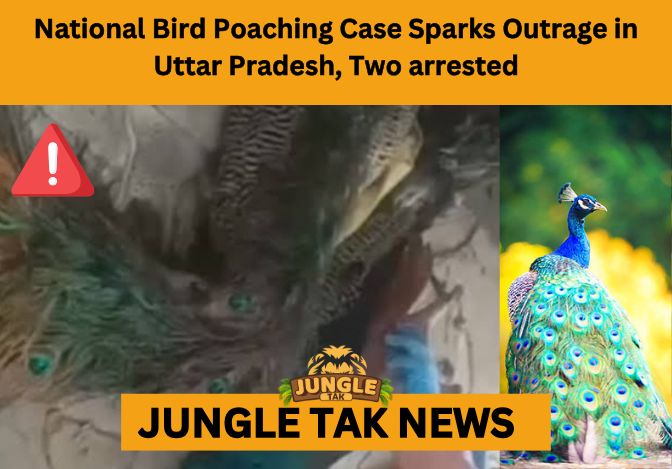

The serene landscapes of rural India have been shattered by a shocking criminal discovery that has sent ripples of anger through the environmental community. Recent reports of Peacock poaching in Uttar Pradesh have led to the arrest of two individuals, bringing to light the persistent threats faced by India’s national bird. The incident, which took place in a high-density peacock habitat, has highlighted the vulnerability of these majestic creatures to organized poaching networks that operate despite the stringent protections offered by national law.
The arrests were made following a coordinated raid by the state’s Forest Department, acting on a tip-off about suspicious activities near protected groves. This latest case of Peacock poaching in Uttar Pradesh involved the recovery of carcasses and hunting equipment, suggesting that the suspects were not mere opportunists but were part of a calculated effort to exploit the national bird for illegal gain. As the news spread, citizens and wildlife activists have taken to social media to demand the highest possible punishment for those involved in such a blatant violation of ecological sanctity.
The Incident: A Midnight Raid and Immediate Arrests
The specifics of the case reveal a harrowing narrative of how these birds are targeted under the cover of darkness. According to official statements, the perpetrators of Peacock poaching in Uttar Pradesh were caught red-handed while attempting to transport the remains of the birds. Initial investigations suggest that the poachers used poisoned grain—a common and cruel tactic—to incapacitate the birds before slaughtering them. This method not only kills the targeted peacocks but also poses a secondary poisoning risk to other scavengers and domestic animals in the area.
Local villagers, who often revere the peacock for its religious and cultural significance, were instrumental in alerting the authorities to the Peacock poaching in Uttar Pradesh. Their vigilance underscores the importance of community-led conservation; however, it also highlights the lack of adequate forest patrolling in regions known for high peacock populations. The two arrested individuals are currently being interrogated to determine if they are linked to a larger inter-state syndicate that trades in peacock feathers and meat.
Legal Ramifications: The Wildlife Protection Act
Under the Wildlife Protection Act of 1972, the Indian Peacock is a Schedule I animal, granting it the highest level of legal protection, similar to that of the Bengal Tiger. Therefore, the suspects involved in Peacock poaching in Uttar Pradesh face severe legal consequences, including a mandatory prison sentence ranging from three to seven years and substantial fines. Legal experts argue that fast-tracking these cases is essential to send a clear message that crimes against the national bird will not be tolerated by the judicial system.
Despite these harsh penalties, the frequency of Peacock poaching in Uttar Pradesh suggests that the deterrent is not currently strong enough to stop the trade. Enforcement agencies often struggle with a lack of manpower and resources to monitor every agricultural field and forest patch where these birds reside. To truly combat this crime, the state must combine legal prosecution with a more robust ground-level presence of forest guards and modernized surveillance equipment.
The Dark Motives: Why Peacocks are Being Targeted
Investigating the motives behind Peacock poaching in Uttar Pradesh reveals a multi-faceted illegal market. In many instances, the birds are killed for their meat, which is erroneously believed by some to have medicinal properties or is consumed as a status symbol in clandestine circles. Additionally, while the natural shedding of peacock feathers is legal to collect, the demand for high-quality, “fresh” feathers often leads poachers to kill the birds to harvest their plumage in bulk for decorative and commercial purposes.
Furthermore, the rise in Peacock poaching in Uttar Pradesh can be attributed to the loss of natural habitat, which forces the birds closer to human settlements and agricultural lands. In these areas, they are often viewed as pests by farmers whose crops they may consume. This human-wildlife conflict creates a fertile ground for poachers to operate, sometimes even with the passive or active assistance of disgruntled locals who do not realize the ecological or legal gravity of the situation.
Environmental Impact and the Loss of Biodiversity
The ecological consequences of Peacock poaching in Uttar Pradesh extend far beyond the loss of a beautiful bird. Peacocks play a vital role in the ecosystem as seed dispersers and as natural pest controllers, feeding on snakes and insects that could otherwise harm agricultural output. When the population of these birds is artificially thinned by poaching, it disrupts the local food chain and can lead to an increase in pest populations, eventually hurting the very farmers who live alongside them.
Moreover, Peacock poaching in Uttar Pradesh tarnishes the state’s reputation as a sanctuary for wildlife. With several prominent bird sanctuaries and wetlands located in the state, the inability to protect the national bird raises concerns about the safety of other endangered species. Conservationists warn that if poaching is allowed to continue unchecked, the sight of a dancing peacock in the fields of Uttar Pradesh may soon become a memory of the past, replaced by the silent, empty landscapes of a degraded environment.
The Role of Public Awareness and Education
One of the most effective ways to stop Peacock poaching in Uttar Pradesh is through aggressive public awareness campaigns. Many people in rural areas are unaware that even harming a peacock can lead to years of imprisonment. Education programs that highlight the legal status of the national bird and its importance to the environment can turn local communities from passive bystanders into active protectors. Schools and local panchayats should be at the forefront of this educational movement.
By addressing the root causes of Peacock poaching in Uttar Pradesh, such as the demand for meat and feathers, the government can choke the supply chain. If the public refuses to buy products associated with poached wildlife, the economic incentive for the criminals disappears. Social media influencers and local leaders must use their platforms to condemn the poaching and celebrate the peacock as a symbol of Indian heritage that must be preserved at all costs.
Administrative Measures and the Path Forward
To prevent future instances of Peacock poaching in Uttar Pradesh, the state government must invest in technology. Drones and thermal imaging can be used to monitor habitats during the night when poachers are most active. Additionally, creating a centralized database of wildlife offenders can help the police track repeat perpetrators and dismantle the networks that facilitate the illegal trade of peacock parts across state borders.
The recent arrest of the two individuals is a step in the right direction, but it is only the beginning of a long battle against Peacock poaching in Uttar Pradesh. A dedicated wildlife crime cell within the state police department could provide the specialized investigative skills needed to tackle these cases effectively. Only through a combination of strict law enforcement, community involvement, and technological integration can we ensure that the national bird remains a thriving part of India’s natural landscape.
CONTINUE READING WITH JUNGLETAK – SHADOWS IN MIST
Protecting Our National Heritage
The case of Peacock poaching in Uttar Pradesh serves as a wake-up call for everyone committed to conservation. The national bird is more than just a symbol; it is a living link to our history and a vital part of our natural world. The arrest of the two poachers must lead to a deeper investigation and a systemic change in how we protect our wildlife. We cannot afford to be complacent when our national heritage is being targeted by criminals for petty profit.
In the final analysis, the fight against Peacock poaching in Uttar Pradesh requires the collective will of the government, the judiciary, and the citizens. By standing together against wildlife crime, we can ensure that the peacock continues to grace the fields of Uttar Pradesh with its vibrant presence. Let this incident be the turning point that leads to a safer, more secure future for all protected species in the state, ensuring that the national bird is never again a victim of human greed.