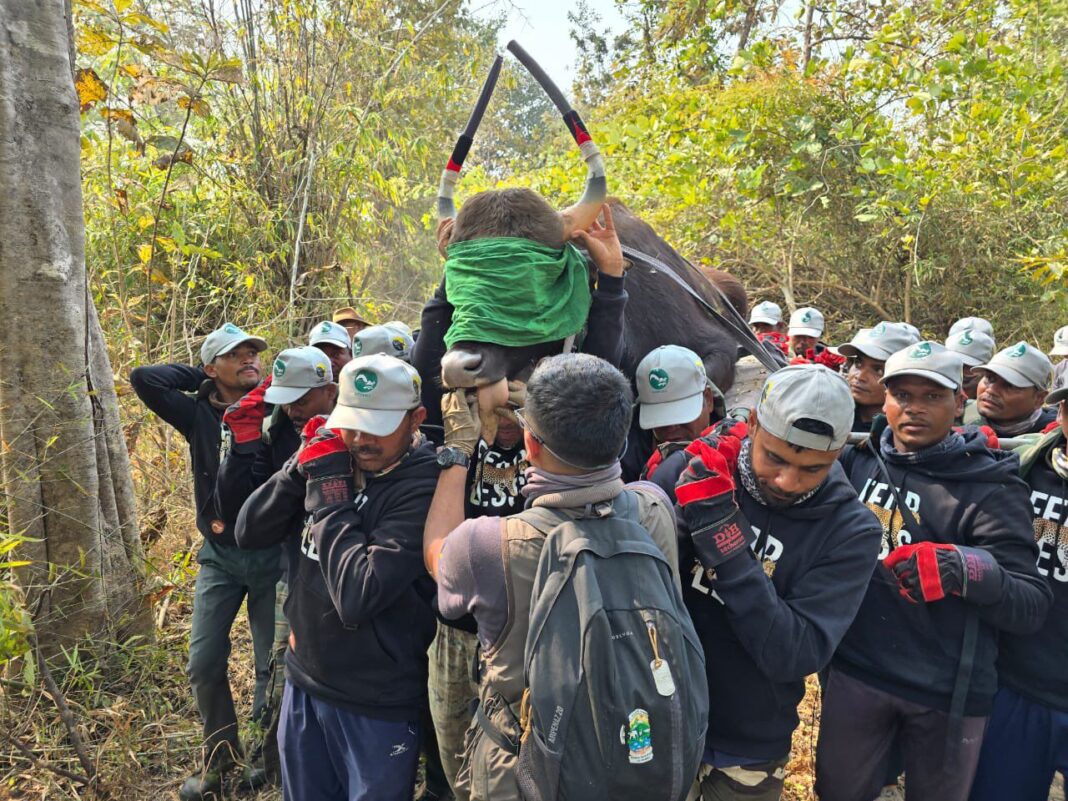

In a massive boost to India’s rewilding efforts, the Madhya Pradesh Forest Department has successfully executed a complex mission to ensure Gaurs translocated to Bandhavgarh are settled into their new habitat. This week, a herd of 19 Indian Bison (Gaur) was moved from the lush expanses of Satpura Tiger Reserve to the hilly terrains of Bandhavgarh. The operation is being hailed as a landmark in active wildlife management, proving that human intervention, when backed by science, can effectively reverse local extinctions and restore ecological balance.
Restoring a Lost Legacy
The history of the Gaur in Bandhavgarh is one of tragedy and triumph. By the late 1990s, the species had completely vanished from the park due to disease and habitat pressure. However, the current initiative to see more Gaurs translocated to Bandhavgarh is part of a long-term restoration plan that began in 2011. By bringing in new genetic lineages from Satpura, authorities are not just increasing numbers but are ensuring the long-term health and vigor of the population, which had previously dwindled to zero.
The Science of the Boma Technique
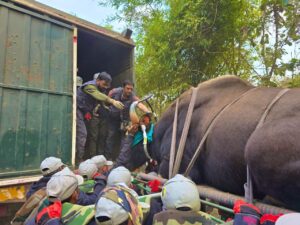
The logistics of moving 19 massive animals, some weighing nearly a ton, required the use of the “Boma” capturing technique. To ensure the Gaurs translocated to Bandhavgarh were captured without injury, forest officials constructed a funnel-like enclosure made of cloth and wooden fencing. This African-origin method allows the herd to be driven into a confined space naturally, reducing the need for stressful chemical tranquilization. It is this sophisticated approach that has made the current translocation a textbook example of modern veterinary excellence.
A Precision-Engineered Journey
The 400-kilometer journey between the two tiger reserves was a race against time and heat. The 19 Gaurs translocated to Bandhavgarh were placed in specially designed, padded trucks that provided ventilation and safety during the long transit. A convoy of veterinarians and wildlife experts followed the vehicles, monitoring the animals’ vitals at every stop. This level of care is essential, as large bovines are highly susceptible to “capture myopathy,” a condition where extreme stress can lead to muscle damage or even heart failure.
Acclimatization and Soft Release
Upon arrival, the work had only just begun for the ground teams in the Tala and Magadhi zones. The Gaurs translocated to Bandhavgarh were not immediately released into the deep forest; instead, they were placed in a “soft-release” enclosure. This protected area allows the animals to recover from the journey’s fatigue, graze on local vegetation, and slowly adapt to the scent and sounds of their new home. This transition period is vital for the herd to establish its social hierarchy before facing the challenges of the open wilderness.
The Ecological Role of the Indian Bison
Why is the presence of these animals so vital for the park? The Gaurs translocated to Bandhavgarh act as “ecosystem engineers.” As mega-herbivores, they consume massive quantities of coarse grass and shrubs, clearing the way for smaller deer species to access fresh growth. Their grazing patterns help maintain the health of the meadows, preventing the landscape from becoming an overgrown monoculture. By reintroducing them, the forest department is effectively repairing the “biological machinery” of the park.
Boosting the Prey Base for Apex Predators
Bandhavgarh is globally famous for its high density of Royal Bengal Tigers, and the Gaurs translocated to Bandhavgarh play a secondary but crucial role in the tiger’s survival. While tigers primarily hunt spotted deer and sambar, a healthy Gaur population provides an alternative, high-protein prey source for the park’s dominant male tigers. This dietary variety helps stabilize the predator-prey ratio, ensuring that the tiger population remains healthy without over-predating on smaller species.
Madhya Pradesh: The Leader in Wildlife Management
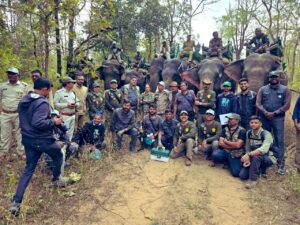
This successful operation further cements Madhya Pradesh’s reputation as the leader in Indian wildlife conservation. The state has pioneered several reintroduction programs, but the frequency and success rate of Gaurs translocated to Bandhavgarh set a new gold standard. It demonstrates a move away from “passive protection” toward “active management,” where forest officials take a proactive role in distributing species to ensure that no single habitat becomes overcrowded while others remain vacant.
The Importance of Genetic Diversity
A major concern in isolated wildlife populations is the risk of inbreeding depression. The 19 Gaurs translocated to Bandhavgarh bring fresh genetic material from the Satpura population, which has evolved in a slightly different climate and terrain. This genetic mixing is the best defense against future disease outbreaks. By diversifying the gene pool, conservationists are building a “biological fortress” that will allow the Bandhavgarh Gaurs to survive for generations to come.
Monitoring with Satellite Collars
To ensure the long-term success of the mission, several individuals among the Gaurs translocated to Bandhavgarh have been fitted with high-tech satellite radio collars. These devices allow researchers to track the herd’s movement patterns, habitat preferences, and interaction with the resident tiger population in real-time. This data is invaluable for forest managers, as it helps them identify which corridors the animals prefer and where they might need additional protection or water resources.
Involving the Local Community
Conservation is never successful without the support of the people living on the fringes of the forest. The news of the Gaurs translocated to Bandhavgarh was met with enthusiasm by local eco-guides and villagers, who view the “Gaur” (locally known as Mithun) as a symbol of the forest’s majesty. Increased biodiversity leads to better eco-tourism opportunities, which in turn provides livelihoods for hundreds of families in the surrounding villages, creating a “win-win” situation for both nature and people.
Challenges Faced During the Operation
Despite the success, the mission was not without its hurdles. The field teams had to navigate difficult weather conditions and ensure the 19 Gaurs translocated to Bandhavgarh remained hydrated during a sudden spike in daytime temperatures. The coordination between the Satpura and Bandhavgarh administrative teams required months of planning, showing that large-scale conservation is as much about human diplomacy as it is about animal biology.
The arrival of this herd is just one chapter in a larger story of ecological revival. As the 19 Gaurs translocated to Bandhavgarh settle in, the forest department is already looking at other species that could benefit from similar moves. There are discussions about further diversifying the herbivore population to include more species that were historically present in the Rewa-Bandhavgarh belt, ensuring the park remains a true representation of Central India’s wild heritage.
CONTINUE READING WITH JUNGLETAK – ECO SENSITIVE ZONE
A Triumphant Milestone
In conclusion, the successful relocation of these majestic bovines is a testament to the dedication of the Indian forest service. The sight of the Gaurs translocated to Bandhavgarh grazing peacefully in their new home is a powerful reminder that we have the tools to heal the planet. Through precision, passion, and scientific rigor, Madhya Pradesh has once again shown the world how to protect the wild, ensuring that the thundering hooves of the Gaur will continue to echo through the forests of Bandhavgarh for years to come.